
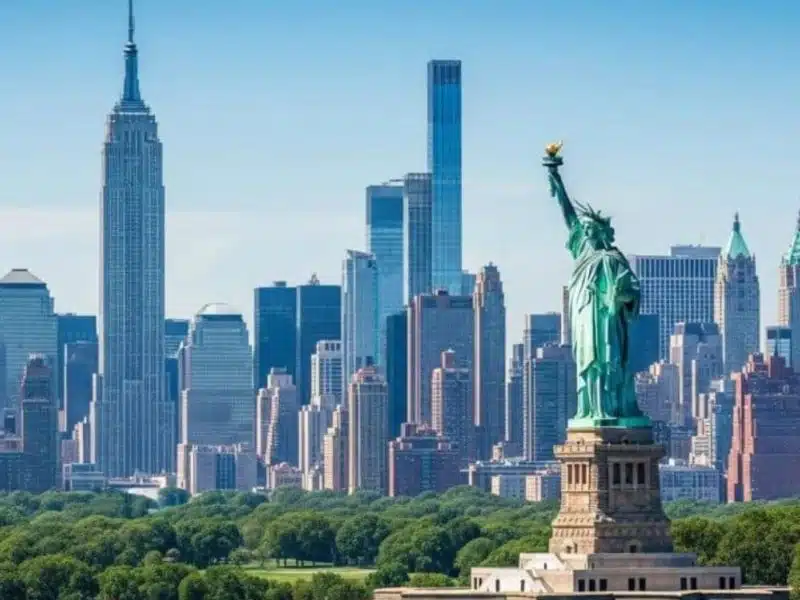
NYC Landmarks: Complete Guide to New York’s Iconic Sites
Disclosure: This post may contain affiliate links. We may earn a commission for purchases made through links in this post, at no cost to you.
NYC Landmarks Guide: Complete and Practical Tour of New York City's Iconic Sites
New York City’s landmarks form a layered story of immigration, commerce, art and architecture, and this guide maps those layers into practical discovery and planning steps. You will learn which iconic NYC sites to prioritize, how to group them by neighborhood for efficient sightseeing, which observation decks deliver the best views, and how to stitch thematic itineraries together for families, history buffs, and couples. The guide explains transportation connections—walking, subway, and ferry—offers lesser-known alternatives, and highlights tools to compare and book nearby hotels, restaurants, and events. Readers who follow this article will be able to create a time-budgeted plan, pick the best vantage points for photography, and use booking tools to streamline reservations and comparisons. Throughout, the guide uses semantic context (landmark relationships, parts of sites, and related entities) to help you understand why each place matters and how to include it in a realistic NYC schedule.
What Are the Top 10 Must-See NYC Landmarks?
- Statue of Liberty: National symbol on Liberty Island that represents freedom and immigration.
Plan Your Visit: Compare ferries and hotels. - Empire State Building: Classic Midtown skyscraper with an observation deck and skyline views.
Plan Your Visit: Use Power Search NYC to compare timed-ticket options. - Central Park: Vast urban park offering walks, bike rentals, and cultural sites within Manhattan.
Plan Your Visit: Search family-friendly hotels near park entrances. - Brooklyn Bridge: Historic suspension bridge linking Manhattan and Brooklyn with scenic pedestrian access.
Plan Your Visit: Find DUMBO hotels via Power Search NYC. - One World Observatory: Memorial-adjacent tower offering harbor and skyline perspectives.
Plan Your Visit: Compare timed-entry options for One World Observatory. - Times Square & Broadway: Neon core and theater district known for shows and street life.
Plan Your Visit: Search for show tickets, on and off-Broadway. - The High Line: Elevated linear park with art, planting, and Hudson River views.
Plan Your Visit: Locate nearby Chelsea boutique hotels. - Grand Central Terminal: Historic Beaux-Arts terminal and public concourse with tours and dining.
Plan Your Visit: Use Power Search NYC to compare Midtown hotel options nearby. - Metropolitan Museum of Art (The Met): World-class collections spanning millennia and cultures.
Plan Your Visit: Compare museum-adjacent accommodations. - Ellis Island / Museum: Gateway museum that narrates immigrant experiences connected to the Statue of Liberty. Plan Your Visit: Check ferry schedules and nearby financial-district hotels with Power Search NYC.
The following table gives quick facts for three representative landmarks to help prioritize times of day and access options. The table focuses on location type and practical entry guidance instead of specific pricing, as they fluctuate throughout the year.
The three-landmark quick facts table helps compare neighborhood, type, and entry options at a glance.
| Landmark | Quick Facts (Neighborhood / Type / Entry Options) | Practical Note |
|---|---|---|
| Statue of Liberty | Liberty Island / Historic monument / Ferry access and pedestal visits | Best visited by morning ferry; reserve ferry seats and pedestal access when available. |
| Empire State Building | Midtown Manhattan / Skyscraper observation deck / Timed tickets for decks | Evening and late-night visits can reduce daytime crowds; advance tickets recommended. |
| Brooklyn Bridge | Manhattan–Brooklyn connector / Historic bridge / Free pedestrian path | Walk early or late to avoid peak foot traffic; combine with DUMBO photo stops. |
Which Features Make the Statue of Liberty a Symbol of Freedom?

The Statue of Liberty symbolizes freedom through its historical role as a welcoming figure for new Americans and its inscriptions that speak to liberty and hope. The monument’s island setting —the pedestal, torch (not open to the public), and visitor center—create layered visitor experiences that range from short harbor views to in-depth museum exploration. Access is primarily via ferry, and visitors should plan for security screening and potential walking to the pedestal; early departures reduce wait times. Understanding these logistical elements helps you decide whether to allocate a morning or combine the visit with nearby Lower Manhattan sites.
What Can You Experience at the Empire State Building Observation Deck?

The Empire State Building observation deck offers sweeping skyline views, especially dramatic at sunset and after dark when the city lights create strong contrast for photography. Visitors choose from different ticket tiers that affect entry time and queue priority, and mobility access is available for main observation areas. Peak mid-day hours bring heavier crowds, so late afternoon or later-evening slots often balance light and foot traffic. Comparing vantage points and ticket tiers—then booking in advance—lets you capture optimal skyline images and spend time at nearby attractions like Bryant Park and Koreatown.
How Can You Plan Your NYC Trip Around Iconic Landmarks?
Efficient planning groups landmarks spatially—Midtown clusters (Empire State, Times Square, Top of the Rock), Upper Manhattan parks and museums (Central Park, The Met), and Lower Manhattan history (Statue of Liberty, Ellis Island, Wall Street). Start with a proximity map, allocate time budgets per site, and identify family-friendly or mobility-accessible options. After creating a baseline itinerary, compare hotels, restaurants, and event options to match your group’s needs; this is where integrated planning tools can save time by consolidating search and booking across categories. The next paragraphs show practical steps for a one- to three-day plan and how to use comparison tools to optimize accommodation and dining choices.
- Identify top-priority landmarks and group them by neighborhood for single-day clusters.
- Allocate realistic time budgets for each site, including transit and security screening.
- Compare hotels and restaurants near clustered sites, prioritizing transit access and amenities.
- Book timed-entry tickets and evening reservations to minimize wait times and optimize sightseeing.
This checklist gives a simple roadmap: choose clusters, assign time, compare nearby services, and confirm bookings to reduce friction during your visit.
The following table helps compare sample itinerary services by proximity, family suitability, and booking availability through an integrated tool. Use it to align accommodation and dining choices with your planned clusters.
| Itinerary / Service | Attribute (Proximity / Family-friendly / Booking Availability) | Value |
|---|---|---|
| Midtown family stay | Near Central Park & theaters / High / Bookable via integrated tool | Family rooms and stroller access; compare options with Power Search NYC. |
| Lower Manhattan history route | Near ferry terminals / Moderate / Timed tickets recommended | Proximity to Statue of Liberty ferries and museums; use comparison tools for timing. |
| Brooklyn cultural stay | Near DUMBO and bridges / Family-friendly / Local dining reservations available | Walkable neighborhoods with family dining; use booking tool to vet restaurants. |
This table demonstrates how proximity and family suitability vary by itinerary and why comparing options through an integrated booking and comparison tool streamlines decision-making. The next subsections explore family hotels and dining choices near key Midtown and Central Park access points.
Where to Find Family-Friendly Hotels Near Central Park and Midtown?
Family-friendly hotels near Central Park and Midtown typically offer suites, complimentary cribs, and easy transit access to major attractions and museums. When choosing a property, weigh walkability to park entrances, proximity to subway lines, and in-house amenities like laundry or family dining that simplify longer stays. Price ranges vary by season, and families often trade a slightly larger room footprint for easier daily logistics and fewer transfers. Use comparison features to filter for family-oriented amenities and transit proximity so you can balance cost, comfort, and access.
Which Restaurants and Events Are Best Near Broadway and Times Square?
Restaurants near Broadway and Times Square range from quick pre-theater bistros to full-service dining suitable for groups before shows, and event calendars change seasonally with premieres and special performances. Plan reservations for pre-theater dining at least an hour before showtime and consider prix-fixe menus that streamline service for groups. For events, secure tickets in advance and use a comparison tool to find nearby restaurants that accommodate timing and party size. Comparing menus, distance, and reservation windows helps coordinate dinner and theater without rushing.
What Are The Best Thematic Itineraries for Exploring NYC Landmarks?
Thematic itineraries help visitors match interests with efficient routes and relevant services, such as a history-focused route or a family activity day. Each itinerary lists stops in sequence, estimated durations, and suggestions for nearby hotels and restaurants that complement the theme. For each suggested itinerary, use an integrated comparison tool to evaluate lodging and dining options by price, family suitability, and proximity to stops. The following itineraries provide half-day to multi-day options and include booking prompts to make implementation straightforward.
- History Buff (Half-day to Full-day): Ellis Island, Statue of Liberty viewpoints, and Financial District museums.
- Family Fun (Full-day): Central Park activities, a child-friendly museum, and DUMBO playground stops.
- Romantic Evening (Half-day + night): Top observation deck at sunset, dinner near the theater district, and a riverside walk.
- Architecture & Photography (Full-day): Flatiron District, Grand Central, and skyline viewpoints across Midtown.
These curated itineraries let visitors pick a thematic focus and map services around it, reducing decision fatigue while preserving flexibility for on-site discovery.
When executing any itinerary, prompt the booking tool to compare hotels, restaurants, and events for the selected route; integrated comparison helps match lodging and dining to the itinerary’s pace and priorities. Power Search NYC’s web-based guide offers discovery, comparison, and booking for hotels, restaurants, and events, which is useful when refining accommodations and reservations for each themed route.
How to Follow the NYC History Buff Itinerary from Ellis Island to Wall Street?
A History Buff route typically begins with ferry travel to Ellis Island and Liberty Island, then proceeds to Lower Manhattan sites like the Immigration Museum and Wall Street, then to adjacent memorials and museums. Plan for ferry security screening, allocate two to three hours for island visits combined, then reserve afternoon for financial district walking tours and museum stops. Use subway or short rides between nearby museums to save time; evening windows often afford quieter streets for photos. Before you go, compare ferry timing, walking-tour options, and nearby historic-district hotels to align arrival and departure logistics.
What Does a Family Fun Landmark Tour Include in Manhattan and Brooklyn?
A family-focused tour balances active play, shorter museum visits, and restful meal breaks with stroller-friendly routes and restrooms nearby. Typical stops include Central Park playgrounds and boat rentals, a child-friendly museum or interactive exhibit, and ferry or bridge walks to Brooklyn for playgrounds and riverfront parks. Plan for frequent breaks and include one sit-down meal at a family-friendly restaurant; reserve family rooms or suites if you need afternoon rest. Use comparison tools to prioritize hotels and dining with family amenities and easy transit to reduce logistical friction.

How Do NYC Observation Decks Compare for Views and Visitor Experience?
Observation decks differ by elevation, sightlines, crowd management, and memorial context, so choose based on whether you prioritize harbor views, Central Park panoramas, or skyline expanses. Compare typical visit times, photography opportunities, accessibility, and whether decks include outdoor terraces or enclosed viewing areas. Use direct-attribute comparisons to match your visual priorities—Central Park framing versus harbor perspective—then book time-specific tickets to capture optimal light. The table below provides a structured comparison of major decks to support selection.
| Observation Deck | Attribute (Best View / Height / Ticket Notes / Accessibility) | Value |
|---|---|---|
| One World Observatory | Harbor and lower Manhattan views / High / Timed-entry recommended / Accessible main platforms | Strong harbor sightlines and memorial context; quieter in early morning. |
| Top of the Rock | Midtown and Central Park views / Mid-high / Best for Park framing / Elevator access to decks | Offers direct Central Park vantage points and layered cityscape photos. |
| Empire State Building | Classic skyline and Midtown focus / High / Multiple tiers, timed tickets / Accessible main deck | Iconic vantage for Midtown silhouettes; night lighting offers dramatic shots. |
| Edge (Hudson Yards) | Glass-floor and angled Hudson views / High / Unique outdoor terrace / Accessibility varies by area | Distinctive angled perspectives toward the river and skyline edges. |

What Are the Unique Features of One World Trade Center and Top of the Rock?
One World Trade Center provides memorial-adjacent context and sweeping harbor and Lower Manhattan vistas, whereas Top of the Rock balances panorama with a strong Central Park framing. Each offers distinct visitor experiences: one emphasizes historical and memorial sensitivity in its surroundings, the other provides layered skyline views that include the Empire State Building. Accessibility, queue structure, and rooftop type vary across these sites, so choosing between them depends on whether you prioritize reflection and harbor perspectives or photographic Central Park alignment. Consider time-of-day light and memorial quiet zones when planning visits.

Which Observation Deck Offers the Best Views of Central Park and the Skyline?
Top of the Rock is widely regarded for unobstructed Central Park framing, while higher decks like the Empire State Building provide broader Midtown-centric panoramas that include the Park from a different elevation. For park-focused photos and layered foregrounds, schedule a late-afternoon slot at Top of the Rock to capture warm light over trees and avenues; for dramatic skyline silhouettes, sunset and post-sunset windows at the Empire State Building yield deep contrasts. Accessibility and crowd flow can affect position choices on the deck, so reserve timed tickets and plan for elevator queues to maximize photo time.
What Transportation Options Help You Visit Multiple NYC Landmarks Efficiently?
Efficient landmark touring relies on grouping walkable clusters, leveraging subway lines for longer hops, and using ferries for harbor-linked sites; ride shares and buses fill in where transit connections are awkward. Learn key subway lines that connect Midtown to Lower Manhattan, and identify ferry terminals for Statue of Liberty and Ellis Island access to avoid redundant transfers. Time budgets should include walking speeds, security screening at ferry terminals, and potential waiting periods for popular observation decks. The next paragraphs outline walking versus transit feasibility for a one-day Midtown-to-Lower Manhattan plan and enumerate ferry and subway linkages.
- Walk between closely clustered Midtown landmarks to save time and see street-level architecture.
- Use subway connections for longer trips between Midtown, Upper Manhattan, and Lower Manhattan.
- Take ferries for harbor-linked sites like the Statue of Liberty and Ellis Island to bypass road congestion.
- Consider ride shares when traveling with luggage, small children, or when quick point-to-point transfers are necessary.
This set of options clarifies when walking, transit, or rides make the most sense and points to ferry/subway choices for harbor and cross-river travel.
Can You Walk Between Midtown and Lower Manhattan Landmarks in One Day?
Yes—walking between Midtown and Lower Manhattan is feasible for determined walkers, but it requires selective stopping and time budgeting; the full walk is approximately 4 to 5 miles and best split into segments. A practical single-day plan pairs Midtown highlights in the morning, takes a midday transit hop toward downtown, and completes lower Manhattan visits in the afternoon and evening. Use subway backups for long stretches or when time is limited, and plan for breaks to manage fatigue and photo opportunities. This balance between walking and rapid transit preserves sight-seeing time without exhausting travelers.
How Do Ferries and Subways Connect Iconic Sites Like Statue of Liberty and Brooklyn Bridge?
Ferries serve Liberty and Ellis islands from dedicated terminals, providing direct harbor access and museum entry points, while subway lines connect to bridgeheads and nearby stations for Brooklyn Bridge and DUMBO access. Combining ferry rides with short subway hops or pedestrian crossings enables efficient multi-site days—for example, ferry to Liberty Island in the morning and subway to Brooklyn for an afternoon DUMBO visit. Be mindful of peak commute times on subways and midday surges at ferry terminals; purchasing timed tickets and planning transfers reduces wait times and aligns schedules for smooth transitions.
What Are Some Lesser-Known NYC Landmarks and Hidden Gems to Explore?
Beyond the marquee icons, New York rewards curiosity with pocket parks, historic plaques, and converted industrial neighborhoods that combine design and local food scenes. Visiting these sites offers a different semantic perspective on the city: small-scale historic sites, preserved architecture, and neighborhood-specific museums add texture to the headline attractions. Pair hidden gems with a major stop to create surprising contrasts—an afternoon at the High Line followed by an evening in DUMBO shows modern adaptive reuse alongside classic waterfront views. The next paragraphs describe the High Line and DUMBO in detail, followed by a list of overlooked cultural sites worth adding to itineraries.

- The High Line: An elevated park blending art, landscaping, and curated views of the Hudson and urban fabric.
- DUMBO: A Brooklyn neighborhood with iconic photo angles, cobblestone streets, and riverfront vistas.
- Small museums and plaques: Local historic sites that reveal neighborhood stories missing from larger museum narratives.
These selections show how short detours enrich understanding of the city’s layers and provide quieter alternatives to crowded landmarks.

Why Visit The High Line and DUMBO for Unique Urban Experiences?
The High Line transforms former rail infrastructure into a linear park with public art, planting designs, and varying views of the Hudson and city blocks, offering a sequence of experiences rather than a single destination. DUMBO provides photogenic streets, waterfront parks, and excellent vantage points for photographing the Manhattan skyline and bridge architecture. Combining a High Line walk with a short trip to DUMBO yields complementary perspectives—an elevated, curated urban promenade followed by intimate street-level photography and local eateries. These paired experiences reward slower exploration and reveal contemporary urban adaptation.
What Historical and Cultural Sites Are Overlooked by Most Tourists?
Numerous small museums, preserved architecture sites, and commemorative plaques offer concentrated history and local stories that larger institutions sometimes gloss over, making them ideal stopovers for curious travelers. Examples include niche cultural museums, historic houses, and neighborhood heritage centers that illuminate immigrant, labor, and artistic histories across boroughs. These sites typically require shorter visits and pair well with major stops, offering focused learning without a full-day commitment. Incorporating one or two overlooked cultural stops into each day diversifies the itinerary and deepens appreciation for New York’s layered narratives.
This article’s itineraries, comparisons, and practical steps aim to convert interest in NYC landmarks into executable, time-aware visits that prioritize perspective, access, and enjoyment. Use mapped clusters, transport choices, and the integrated booking and comparison capability highlighted here to finalize reservations and align days with your group’s needs. Power Search NYC’s semantic-rich guide and booking tools are intended to support discovery, comparison, and booking for hotels, restaurants, and events to streamline trip planning for families, couples, and groups.
No Comments