

Discover NYC's Best Hotel Spots: Time and Cost Savings
Disclosure: This post may contain affiliate links. We may earn a commission for purchases made through links in this post, at no cost to you.
Look, I get it. You’re planning a trip to NYC and staring at a map wondering: should I book near Penn Station where the trains are, Times Square where the lights are, or Central Park where the quiet is? And more importantly, which one won’t bankrupt you?
Here’s the truth: where you stay in Manhattan doesn’t just affect your vibe. It affects your wallet, your daily transit time, and how much energy you’ll have left after schlepping across the city to see the stuff you actually came for.
So let’s break down these three neighborhoods honestly, the good, the annoying, and the “wait, how much?” , so you can book smarter and spend less time on the subway.
Penn Station: The Transit Lover’s Secret Weapon
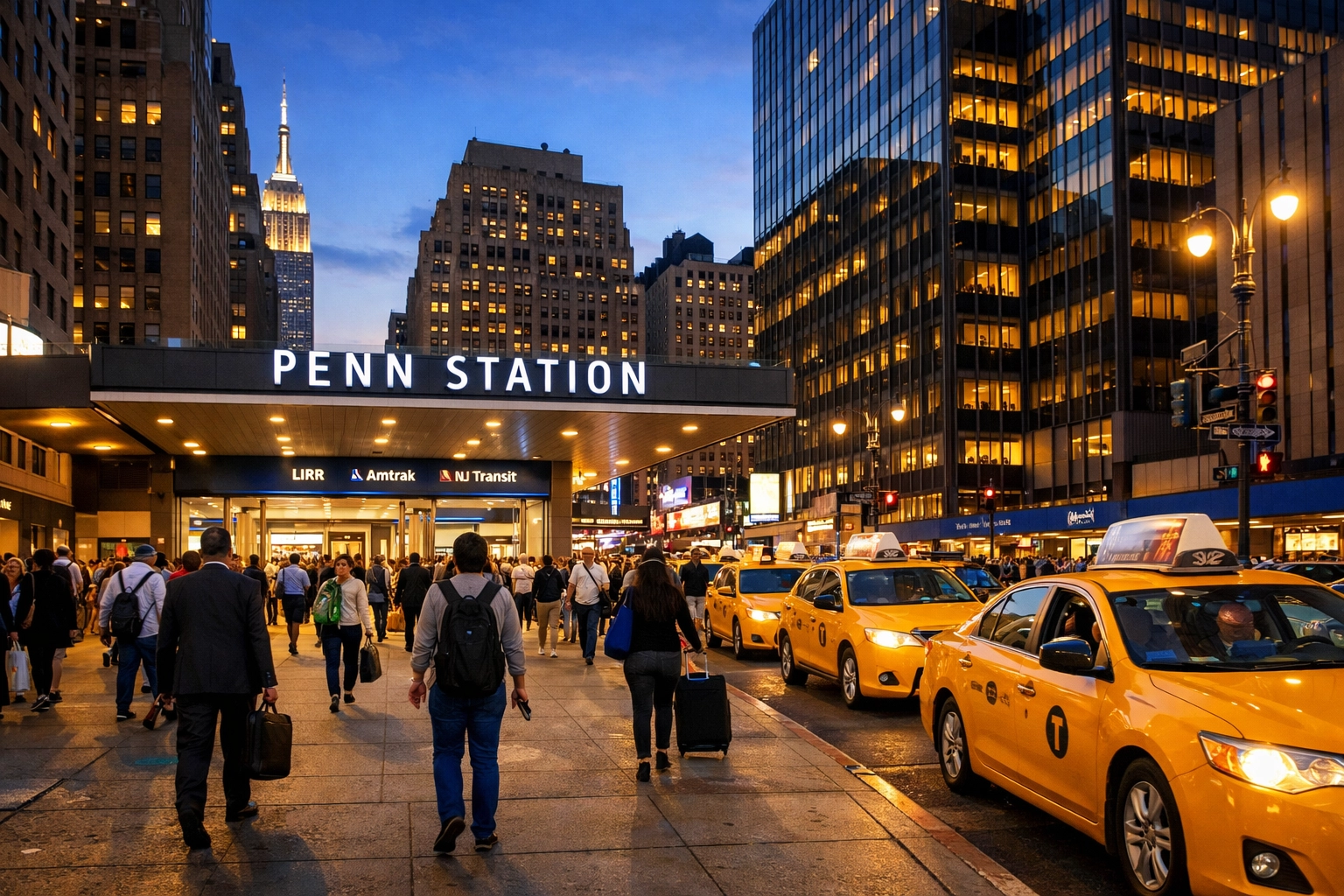
Penn Station doesn’t win any beauty contests. It’s not sexy. You won’t see it on postcards. But if you care about getting around efficiently (and affordably), this is your spot.
Why Penn Station Works
Hotels near Penn Station put you at the center of NYC’s entire transit universe. You’ve got Amtrak, NJ Transit, the LIRR, and seven subway lines all converging in one spot. Need to catch an early train to the airport? You’re already there. Want to hop over to Brooklyn for the afternoon? You’re four stops away.
And here’s the kicker: hotels in this area are typically $120–$140 per night for solid mid-range options. Compare that to Times Square, where you’re looking at $180+ for the same quality, and you’re saving $60 a night minimum. Over a week? That’s an extra $420 in your pocket.
The neighborhood itself, Chelsea and Midtown West, is honestly underrated. You’ve got great restaurants, Madison Square Garden if you’re into sports or concerts, and you’re a 10-15 minute walk from Times Square anyway. So you get the access without the chaos.
The Downsides
Let’s be real: Penn Station itself is a mess. It’s crowded, confusing, and under perpetual construction. Your hotel lobby might be nice, but stepping outside means navigating through commuter traffic and the occasional questionable smell.
Also, this isn’t where the “NYC magic” happens visually. You won’t wake up to sweeping park views or neon lights. It’s functional, not photogenic.
Best for: Budget-conscious travelers, people taking trains in/out of the city, anyone who values transit access over Instagram moments, business travelers who need to move around efficiently.
Times Square: Maximum Energy, Maximum Price
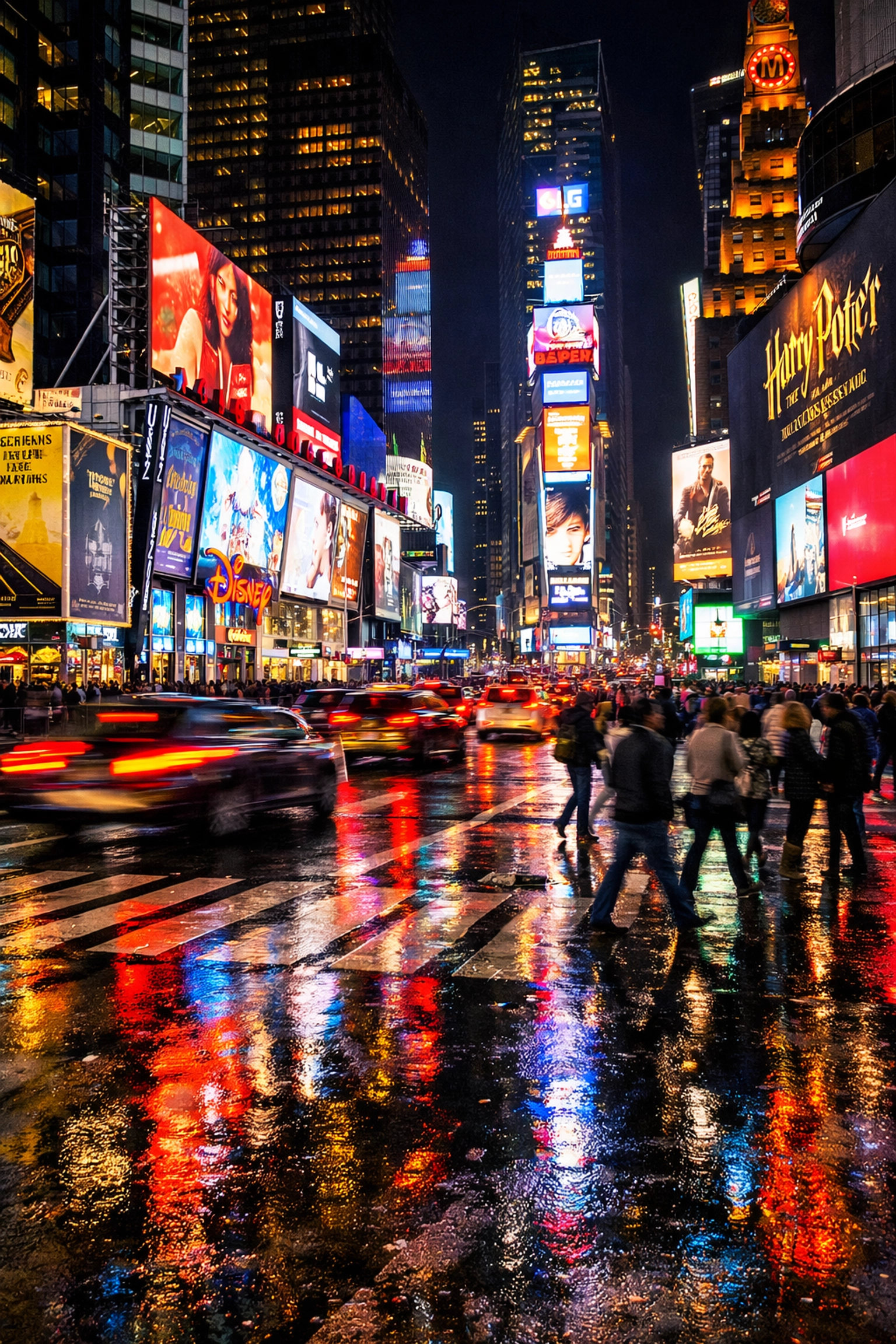
Times Square is the New York that people imagine. Neon billboards, yellow cabs, Broadway theaters, tourists taking photos of everything. It’s sensory overload in the best and worst ways.
Why Times Square Works
If this is your first trip to NYC and you want to be in the thick of it, Times Square delivers. You’re steps from Broadway shows, Rockefeller Center, the Empire State Building, and every chain restaurant you could possibly need at 2 AM.
The energy here is undeniable. There’s something about stepping out of your hotel at night and being surrounded by lights and movement that makes you feel like you’re in a movie. Plus, the subway access is solid, you’ve got the N, Q, R, W, 1, 2, 3, and 7 trains all nearby.
For families with kids who want to “see New York,” this is often the easiest sell. Everything’s walkable, there’s constant entertainment, and you won’t have to explain why you’re staying in a “boring” neighborhood.
The Downsides
Let’s talk money. Hotels in Times Square know they’re prime real estate, and they price accordingly. You’re looking at $180–$250+ per night for mid-range hotels, and even then you’re often getting smaller rooms with zero character. Add in the inevitable tourist traps, overpriced meals, and inflated parking fees, and your budget disappears fast.
Then there’s the noise. Times Square never sleeps, which sounds romantic until you’re trying to actually sleep at midnight on a Wednesday and there’s a full drum circle outside your window.
And the crowds, oh, the crowds. Walking two blocks can take 15 minutes because you’re dodging selfie sticks and street performers. If you value personal space, this will drive you nuts.
Best for: First-time visitors, families with kids, Broadway enthusiasts, people who thrive on chaos and don’t mind paying extra for location.
Central Park: Luxury Meets Tranquility (at a Price)
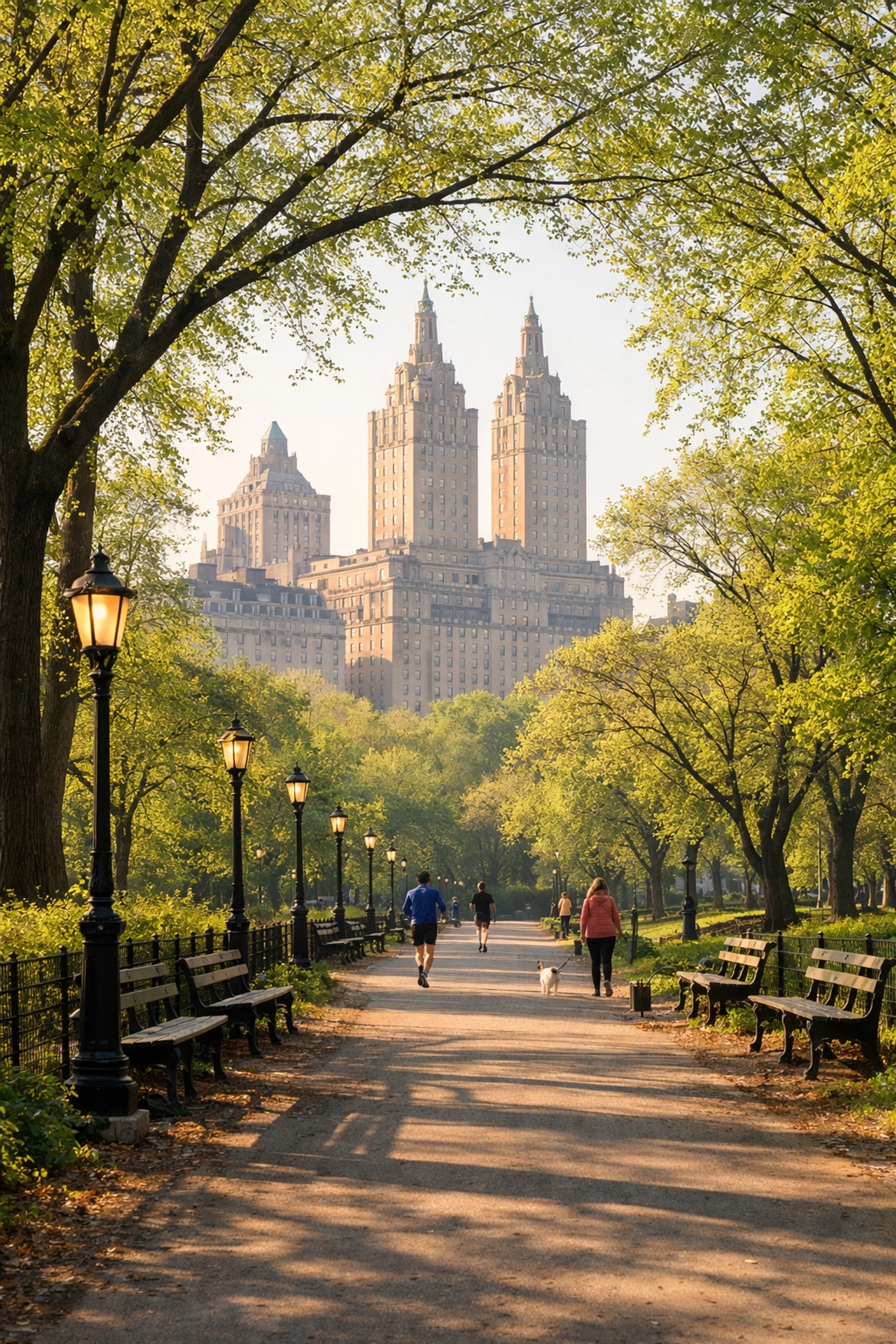
Central Park hotels are where NYC goes upscale. We’re talking Upper East Side and Upper West Side properties, think classic New York elegance, tree-lined streets, and the ability to actually hear yourself think.
Why Central Park Works
Waking up near Central Park feels like a different city. You can go for a morning run, grab a coffee at a neighborhood café, and actually have a conversation at normal volume. The neighborhoods here, especially the Upper West Side, have personality, great local restaurants, and a residential vibe that makes you feel less like a tourist.
Hotels here often deliver on quality. You’re getting better rooms, better service, and actual New York character instead of generic business hotel vibes. Plus, you’re near world-class museums (the Met, Natural History Museum, the Guggenheim), Lincoln Center, and some of the best dining in the city.
Transit-wise, you’ve got solid subway access on the west side (1, 2, 3, B, C trains) and east side (4, 5, 6 trains), though you’ll need to walk a few blocks from most hotels to reach stations.
The Downsides
This is the most expensive option, period. Budget hotels near Central Park barely exist. You’re looking at $200–$350+ per night for decent accommodations, and luxury properties easily hit $500+. If you’re watching your budget, this area will blow through it fast.
You’re also farther from major transit hubs. Getting to Penn Station or Grand Central requires a subway ride, which adds time and cost to any day trips or airport runs. And while the neighborhoods are lovely, they’re decidedly less “New York! New York!” if you’re chasing that tourist energy.
Best for: Luxury travelers, couples seeking romance and quiet, joggers and outdoor enthusiasts, museum lovers, return visitors who’ve “done” the tourist spots.
The Real Money Breakdown: What You’ll Actually Spend
Here’s where location choice gets interesting, because it’s not just about nightly rates: it’s about the ripple effects on your entire trip budget.
Penn Station area: Hotels average $130/night. You’ll save on transit since you’re centrally located, and the neighborhood restaurants are reasonably priced. Weekly stay: ~$910 in lodging, maybe $15/day in extra transit. Total weekly impact: ~$1,015.
Times Square: Hotels average $215/night. Transit savings are minimal, but you’ll overpay for food and drinks. Weekly stay: ~$1,505 in lodging, add $25/day for inflated meal costs. Total weekly impact: ~$1,680.
Central Park: Hotels average $275/night. You’ll spend more on transit getting downtown, but neighborhood dining can actually be affordable if you skip the tourist traps. Weekly stay: ~$1,925 in lodging, add $20/day for extra transit. Total weekly impact: ~$2,065.
That’s a potential difference of $1,050 between Penn Station and Central Park over one week. That’s two more nights in the city, or a really nice dinner, or flights for your next trip.
Time is Money: The Transit Reality Check
Money aside, let’s talk about something nobody mentions: how much time you’ll waste getting around.
Staying near Penn Station means you’re rarely more than 20-30 minutes from anywhere in Manhattan. Need to get to the Financial District? Brooklyn? The Upper East Side? You’ve got direct lines and minimal transfers.
Times Square is similar for Manhattan destinations, but getting to outer boroughs or airports takes longer since you’re farther from major rail connections.
Central Park hotels add 15-20 minutes to any downtown trip. Want to see the Statue of Liberty? That’s subway + train + ferry, and you’re starting from the top of Manhattan. Over a week, those extra minutes add up to hours.
If time = money (and it does), Penn Station wins again.
How to Actually Find the Best Deal
Here’s where PowerSearch NYC comes in handy. Instead of opening 47 browser tabs and getting confused by pricing tricks, use the filters that actually matter:
- “No Resort Fees” filter: Cuts through the hotels that advertise $150/night but charge you $185 after mandatory fees.
- Neighborhood filter: Compare Penn Station, Times Square, and Central Park options side by side.
- “Best Prices” sorting: Shows you legitimate deals, not fake “discounts.”
You’ll see the real nightly rate, the real location pros/cons, and you can book without wondering if you’re getting scammed.
So Which Location Should You Choose?
Choose Penn Station if: You’re budget-conscious, value efficiency over aesthetics, plan to take trains or explore beyond Manhattan, or you’re a business traveler who needs flexibility.
Choose Times Square if: This is your first NYC trip, you’re traveling with kids, you want walkable access to tourist attractions, you don’t mind noise and crowds, or budget isn’t a primary concern.
Choose Central Park if: You’re prioritizing luxury and tranquility, you’re on a romantic trip, you’ve been to NYC before and want a different experience, or you’re spending most of your time near museums and uptown attractions.
For most people, honestly? Penn Station is the sleeper pick. You get 80% of the access at 60% of the price, and you’re still close enough to everything that matters. Times Square makes sense if you’re doing NYC for the first time and want the full tourist experience. Central Park is the splurge option when you’re treating yourself.
Bottom line: where you stay shapes your entire trip. Choose based on what you actually need, not what looks cool on Instagram. Your wallet: and your feet (will thank you.)
No Comments