

NYC Hotel Room Block Reservations: 2026 Group Guide
Disclosure: This post may contain affiliate links. We may earn a commission for purchases made through links in this post, at no cost to you.
NYC hotel room block reservations are a formal agreement where a group secures multiple hotel rooms at a locked-in rate and guaranteed availability for a specific event date. Weddings, corporate conferences, sports tournaments, and family reunions all rely on this process to house out-of-town guests without the chaos of everyone booking separately. Hotels in Midtown, Times Square, and Brooklyn handle hundreds of these group contracts every year. If you’re planning any event that brings 10 or more people to New York City, understanding how NYC hotel room block reservations work is the difference between a smooth experience and a very expensive headache.
What are the minimum requirements for NYC hotel room block reservations?
The industry standard minimum for a group room block contract is 10 or more rooms. That threshold is what separates a group rate from a standard retail booking. Hotels below that number typically won’t assign a dedicated group sales manager or offer negotiated pricing.
Booking lead time matters just as much as size. For most events, book 4–8 months in advance. For peak demand periods or citywide conventions, that window stretches to 8–12 months. NYC’s hotel market is compressed and competitive, so late arrivals often find limited inventory and inflated rates.
Here’s what drives the urgency:
- Peak seasons (spring and fall) fill hotel blocks fast, especially in Midtown and Times Square
- Citywide events like the UN General Assembly, New York Comic Con, or major marathons spike demand across all neighborhoods simultaneously
- Popular wedding dates (Saturday evenings in May, June, September, and October) get claimed by multiple groups competing for the same properties
- Convention center proximity near the Javits Center on the West Side creates demand clusters that ripple out to surrounding hotels
Pro Tip: If your event falls within two weeks of a major NYC event, treat your lead time as if you’re in peak season regardless of the calendar month. Check the NYC & Company events calendar before you set your booking timeline.
The size of your block also needs careful thought. A common planning rule is to book 10–20% fewer rooms than your total expected out-of-town guest count. That buffer protects you from over-committing to rooms that go unfilled, which triggers financial penalties.
How does the NYC hotel room block reservation process work?
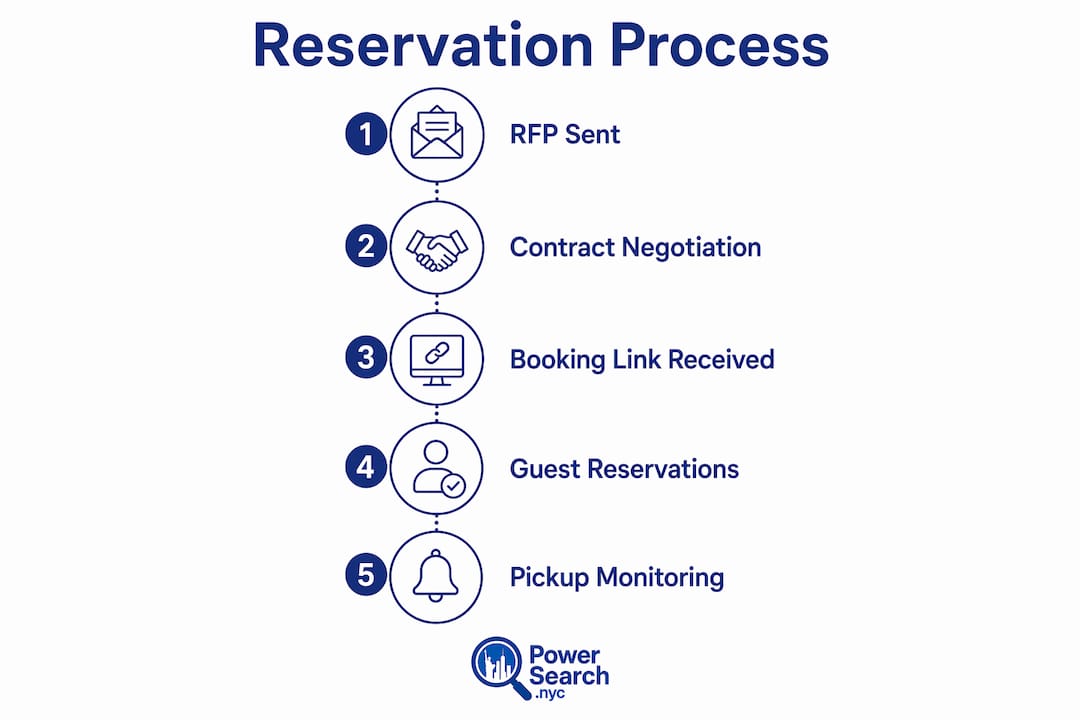
The group booking lifecycle moves through distinct stages: lead, contract, block setup, pickup, pre-arrival, arrival, and reconciliation. Each stage has specific tasks and deadlines. Miss one and you risk penalties or lost inventory.
Here’s how the process unfolds in practice:
- Send an RFP (Request for Proposal). Contact the group sales department at three to five hotels simultaneously. Include your event dates, estimated room count, room type mix, and any meeting space needs. Getting competing proposals gives you real negotiation leverage.
- Compare proposals side by side. Look beyond the nightly rate. Compare attrition thresholds, cutoff dates, deposit requirements, and included amenities. A lower rate with a punishing attrition clause can cost more than a higher rate with flexible terms.
- Negotiate the contract. Focus on attrition percentage, cutoff date, cancellation policy, and any complimentary rooms or upgrades. Hotels expect negotiation at this stage.
- Sign the contract and set up the block. Once signed, the hotel assigns a group code and creates a dedicated inventory of rooms held exclusively for your guests.
- Share the booking link. Request a self-service booking URL that guests use to reserve directly. This gives you real-time visibility into pickup rates without chasing the hotel for updates.
- Monitor pickup velocity. Track how fast guests are booking relative to your cutoff date. If pickup is slow, send reminders early.
- Reconcile after the event. Review the final rooming list, confirm billing accuracy, and verify any attrition charges or credits.
| Stage | Your Key Action |
|---|---|
| RFP | Send to 3–5 hotels, include all event details |
| Contract | Negotiate attrition, cutoff, and cancellation terms |
| Block Setup | Confirm group code and self-service booking link |
| Pickup | Monitor guest reservations weekly |
| Reconciliation | Audit final billing and attrition charges |
Pro Tip: Always request the self-service booking link before you sign. If a hotel can’t provide one, managing reservations manually becomes a full-time job. That friction also discourages guests from booking, which hurts your pickup rate.
What contract terms and negotiation strategies reduce financial risk?
A hotel room block is a risk-sharing agreement. The hotel guarantees availability and rate. You guarantee a minimum number of paid room nights. The financial risk lives in two contract clauses: attrition and cutoff dates.
Attrition is the minimum percentage of your blocked rooms you must fill. If you block 30 rooms and your attrition clause is 80%, you owe payment on 24 rooms regardless of actual bookings. Standard attrition runs 80–90%, but high-value groups can negotiate that down to 75–80%. That difference can represent thousands of dollars in avoided penalties.
Cutoff dates determine when the hotel releases unsold rooms back to general inventory. Standard cutoffs default to 30 days before the event, but negotiating a 14–21 day cutoff is smarter for planners. A shorter cutoff keeps rooms reserved for your guests longer, which improves pickup rates and reduces the chance of guests finding the block sold out.
Here’s what to push for in every contract negotiation:
- Lower attrition threshold. Ask for 75% instead of 80–90%, especially if you have a track record with the hotel or are booking early.
- Resale credit clause. Hotels rarely disclose when they resell attrition-vacated rooms at higher rates. A resale credit clause requires the hotel to credit you for any room they resell, reducing your penalty.
- Shorter cutoff date. Push for 14–21 days instead of 30. This protects your guests’ ability to book closer to the event.
- Complimentary rooms. Many hotels offer one complimentary room for every 25–50 paid rooms. Always ask.
- Waived fees. Negotiate to waive resort fees, parking fees, or meeting room rental for the group organizer.
“Negotiating attrition and cutoff dates consciously transforms a room block contract into a risk-managed agreement rather than a financial trap.” — Hotel Group Block Management 2026
Pro Tip: Bring competing proposals to every negotiation. When a hotel knows you’re talking to three other properties, their flexibility on attrition and cutoff terms increases noticeably.
Which NYC neighborhoods work best for group hotel blocks?
Location shapes both your group’s experience and your budget. The right neighborhood depends on your event type, your guests’ travel patterns, and how much you want to spend per room night.
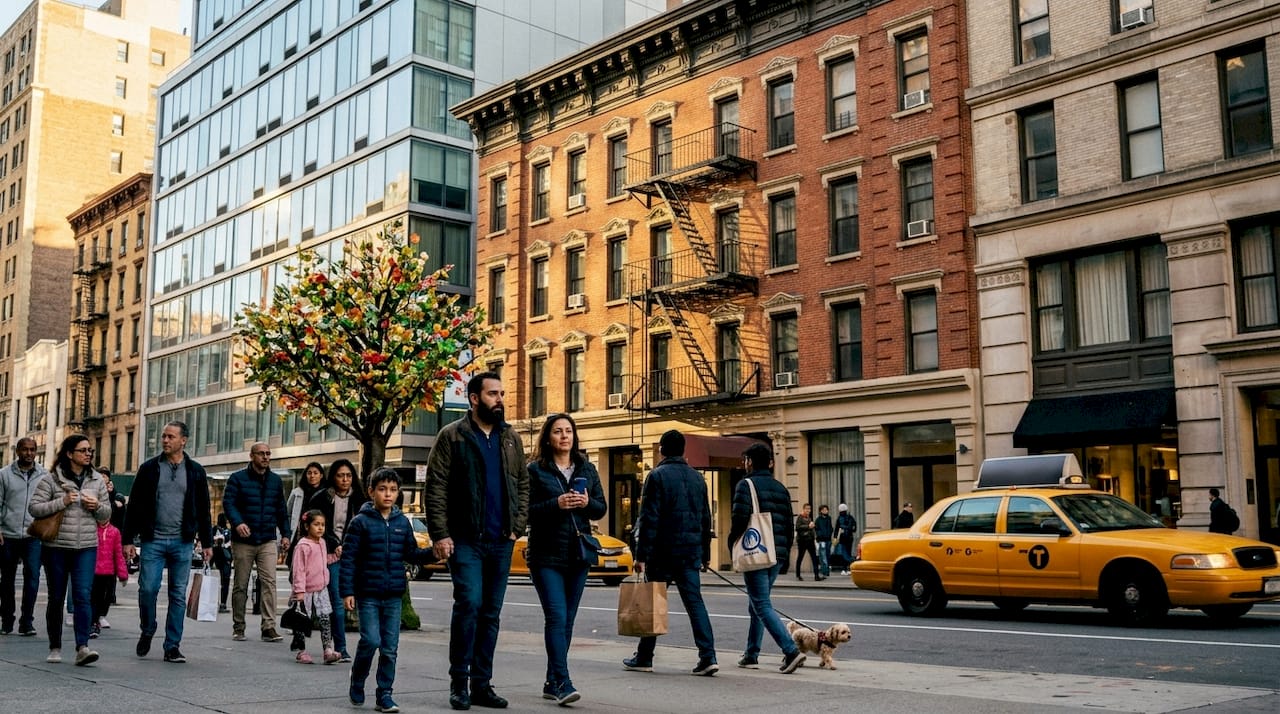
Midtown and Times Square are the default choice for corporate conferences and first-time visitors. Group block rates here typically run $289–$489 per night. The dense hotel inventory means more options and more negotiating leverage. Guests can step outside and immediately feel like they’re in a movie. The tradeoff is noise and crowds, which some guests love and others find overwhelming.
Hudson Yards and the Javits Center area suit conferences and trade shows perfectly. Hotels within walking distance of the Javits Center fill fast during major conventions, so book even earlier for those dates.
Lower Manhattan and Brooklyn offer more budget-friendly rates and a different vibe. Brooklyn properties near Downtown Brooklyn or DUMBO give guests a more local feel while staying connected to Manhattan via subway. Rates can run 20–30% lower than comparable Midtown properties, which matters when you’re managing a large group budget.
| Neighborhood | Best For | Typical Rate Range |
|---|---|---|
| Midtown / Times Square | Corporate events, first-time visitors | $289–$489/night |
| Hudson Yards / Javits | Trade shows, large conferences | $269–$449/night |
| Lower Manhattan | Finance-sector events, boutique groups | $249–$399/night |
| Brooklyn | Budget-conscious groups, creative events | $179–$299/night |
Understanding NYC room rate fluctuation helps you time your contract signing to avoid peak pricing windows. Rates shift significantly based on season and competing demand, so locking in your block rate early protects your budget.
How do you manage guest bookings and maximize block utilization?
Pickup management is where most group blocks succeed or fail. Managing the pickup stage is the single most important factor in avoiding attrition penalties. You can negotiate a great contract and still get burned if guests don’t book on time.
Here’s a practical system that works:
- Share the booking link immediately after the contract is signed. Don’t wait until invitations go out. Early awareness gives guests more time to plan.
- Set an internal deadline two weeks before the hotel’s cutoff. This buffer catches stragglers before the hotel releases inventory.
- Send three reminders. One when the block opens, one at the halfway point, and one one week before your internal deadline. Keep the message short and include the direct booking link every time.
- Track pickup weekly. If you’re at less than 50% pickup with four weeks to go, escalate your outreach immediately.
- Adjust block size proactively. If pickup is running low, contact the hotel before the cutoff to release excess rooms. Most hotels will reduce your block size without penalty if you do it early enough.
For destination wedding room blocks, the communication challenge is even greater because guests are coordinating travel from multiple cities. Building a simple FAQ page or wedding website section that explains the booking process reduces confusion and increases pickup rates.
Pro Tip: Ask the hotel for a weekly pickup report. Most group sales managers will send this automatically once you request it. Seeing the numbers weekly keeps you ahead of any attrition risk before it becomes a real problem.
If your group includes families needing connected rooms or suites, plan that inventory separately. Powersearch has a detailed guide on booking NYC hotels with suites that covers exactly how to request and confirm those room types within a group block.
Key takeaways
NYC hotel room block reservations require early action, careful contract negotiation, and active pickup management to protect your budget and your guests’ experience.
| Point | Details |
|---|---|
| Minimum block size | Most NYC hotels require at least 10 rooms to qualify for group pricing. |
| Book early | Reserve 4–8 months out for standard events; 8–12 months for peak NYC demand periods. |
| Negotiate attrition and cutoff | Push attrition down to 75–80% and cutoff dates to 14–21 days to reduce financial risk. |
| Use self-service booking links | Real-time pickup visibility prevents attrition penalties and reduces admin work. |
| Match neighborhood to event type | Midtown suits corporate groups; Brooklyn offers budget-friendly rates for flexible planners. |
What i’ve learned after years of watching NYC hotel blocks go wrong
The most common mistake I see is treating the contract as a formality. Planners get excited about the rate and sign without reading the attrition clause carefully. Then the event comes, a few guests book outside the block, and suddenly there’s a penalty invoice that nobody budgeted for.
My honest advice: get at least three competing proposals before you sign anything. Early commitments to hotels give you real leverage, but only if the hotel knows you have options. Walk into that negotiation with competing offers and you’ll get better terms every time.
The resale credit clause is the most underused protection in the industry. Hotels resell vacated rooms all the time and pocket the revenue while you pay the attrition penalty. Asking for that clause costs you nothing and can save you a significant amount if your pickup falls short.
NYC’s hotel market is genuinely compressed. There are fewer rooms per event than in most other major cities, and demand spikes are unpredictable. The planners who come out ahead are the ones who book early, negotiate hard, and stay on top of pickup weekly. The ones who struggle wait too long and then panic-manage everything in the final two weeks.
— Mark
Plan your NYC group stay with Powersearch
Planning a group event in New York City is exciting, but the hotel logistics can feel like a full-time job on top of everything else you’re already managing. Powersearch makes it easier by giving you a clear view of NYC hotel options across every neighborhood, price tier, and accommodation type, all in one place.
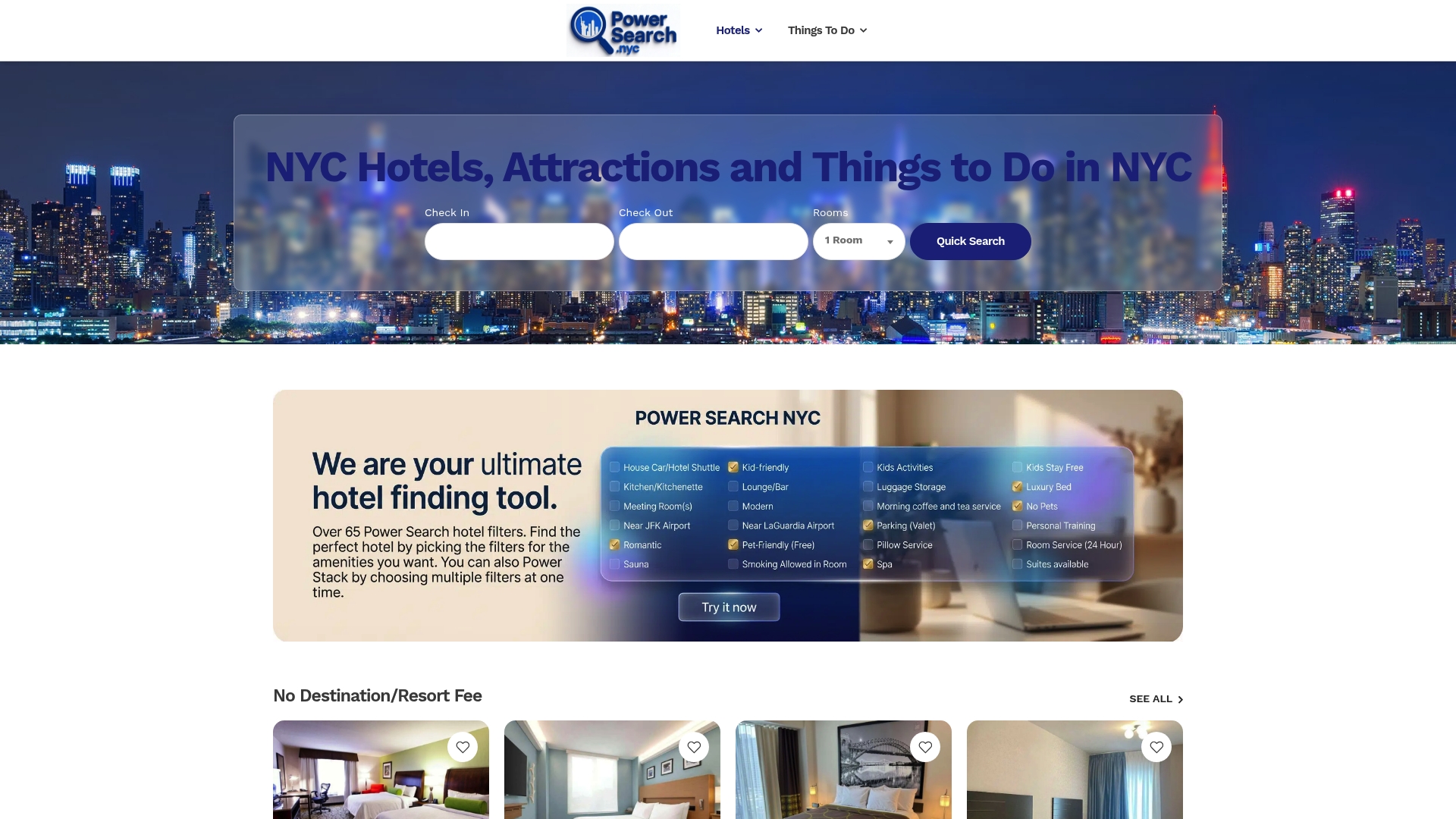
Whether you’re coordinating a corporate conference in Midtown or a wedding block in Brooklyn, Powersearch helps you compare properties, understand rate patterns, and find the right fit for your group. Check out the NYC hotel and travel search to start comparing options, or explore the corporate hotel rates guide for insider tips on securing the best group pricing in the city.
FAQ
What is the minimum group size for NYC hotel room blocks?
Most NYC hotels require a minimum of 10 rooms to qualify for a group block contract and negotiated group pricing.
How far in advance should you book a hotel block in NYC?
Book 4–8 months ahead for standard events and 8–12 months ahead for peak seasons or dates near major citywide conventions.
What is an attrition clause in a hotel block contract?
An attrition clause requires you to pay for a minimum percentage of your blocked rooms regardless of actual guest bookings. Negotiating that threshold down to 75–80% reduces your financial exposure.
How many rooms should you block for a wedding in NYC?
A reliable rule is to block 10–20% fewer rooms than your total expected out-of-town guest count to avoid over-committing to inventory you can’t fill.
What is a cutoff date in a hotel room block?
A cutoff date is the deadline after which the hotel releases unsold rooms back to general inventory. Negotiating a 14–21 day cutoff instead of the standard 30 days keeps rooms available for your guests longer.
No Comments