
Best NYC Neighborhoods for Families: 2026 Guide
Disclosure: This post may contain affiliate links. We may earn a commission for purchases made through links in this post, at no cost to you.
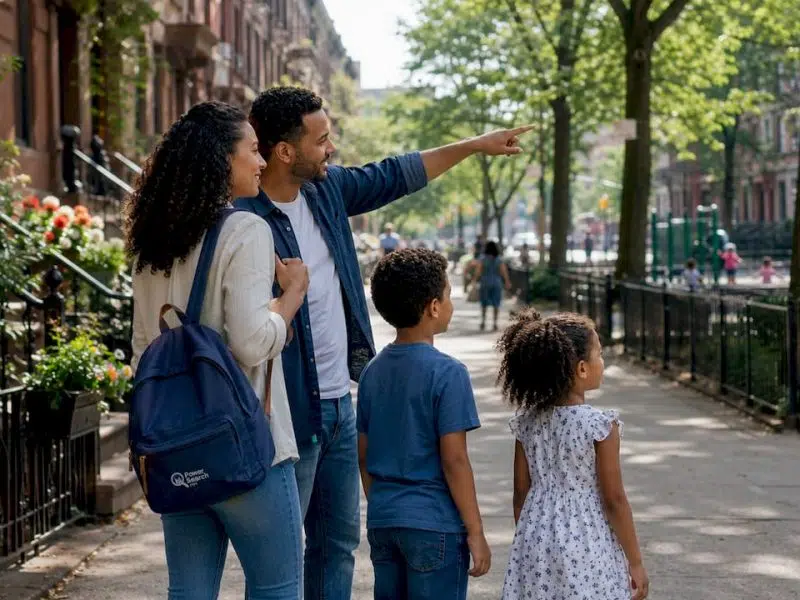
The best NYC neighborhoods for families combine safe streets, large green spaces, family-sized housing, and strong public schools within a reasonable commute. Upper West Side, Park Slope, and Battery Park City rank consistently at the top of every family-friendly list, and for good reason. Each offers something the others don’t, so the right pick depends on your priorities. Whether you’re relocating permanently or scoping out the city for a longer stay, knowing what actually matters will save you a lot of time and frustration.
Which NYC neighborhoods are best for families?
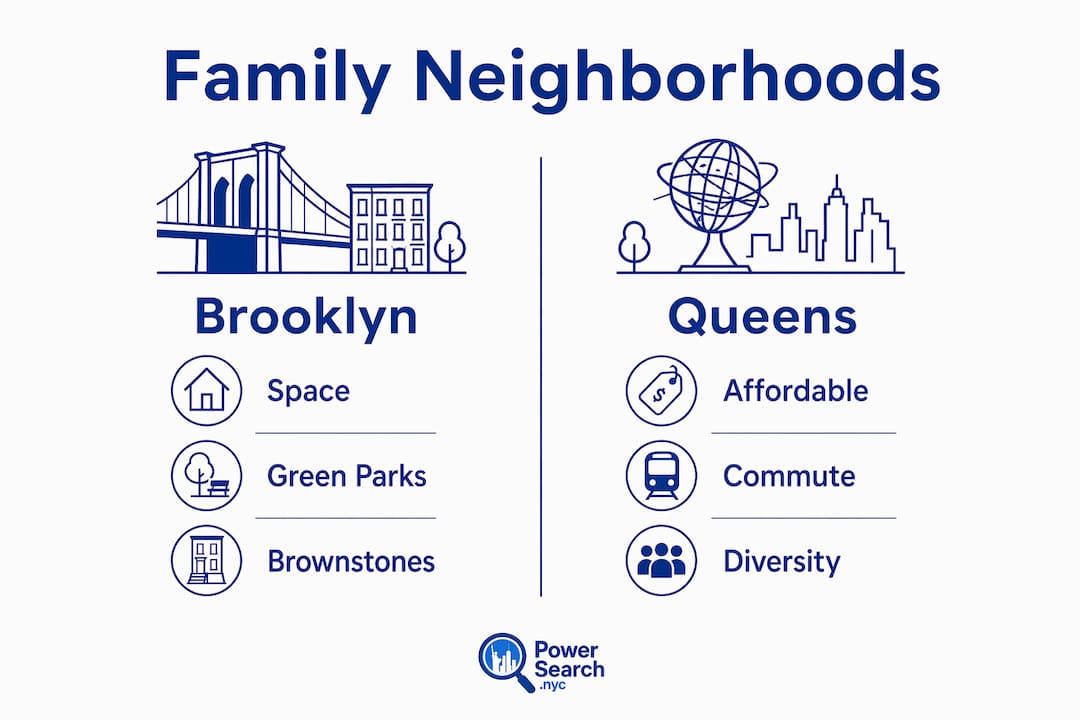
The short answer: Brooklyn and Queens give you the most space for your money, while Manhattan offers convenience at a premium. Upper West Side and Battery Park City lead in Manhattan for family comfort. Park Slope, Cobble Hill, and Windsor Terrace dominate Brooklyn. Forest Hills, Jackson Heights, and Astoria are the Queens standouts. In the Bronx, Riverdale earns its reputation as a quieter, suburban-feeling pocket of the city.
Manhattan neighborhoods feel like living inside the action. The Upper West Side sits next to Central Park and the American Museum of Natural History, giving kids a backyard that most cities can’t match. Battery Park City is purpose-built for families, with waterfront esplanades, age-segmented playgrounds, and a calm residential atmosphere that feels nothing like Midtown. The tradeoff is cost. Three-bedroom apartments in Tribeca can reach $8.5 million, which puts Manhattan out of reach for most families.
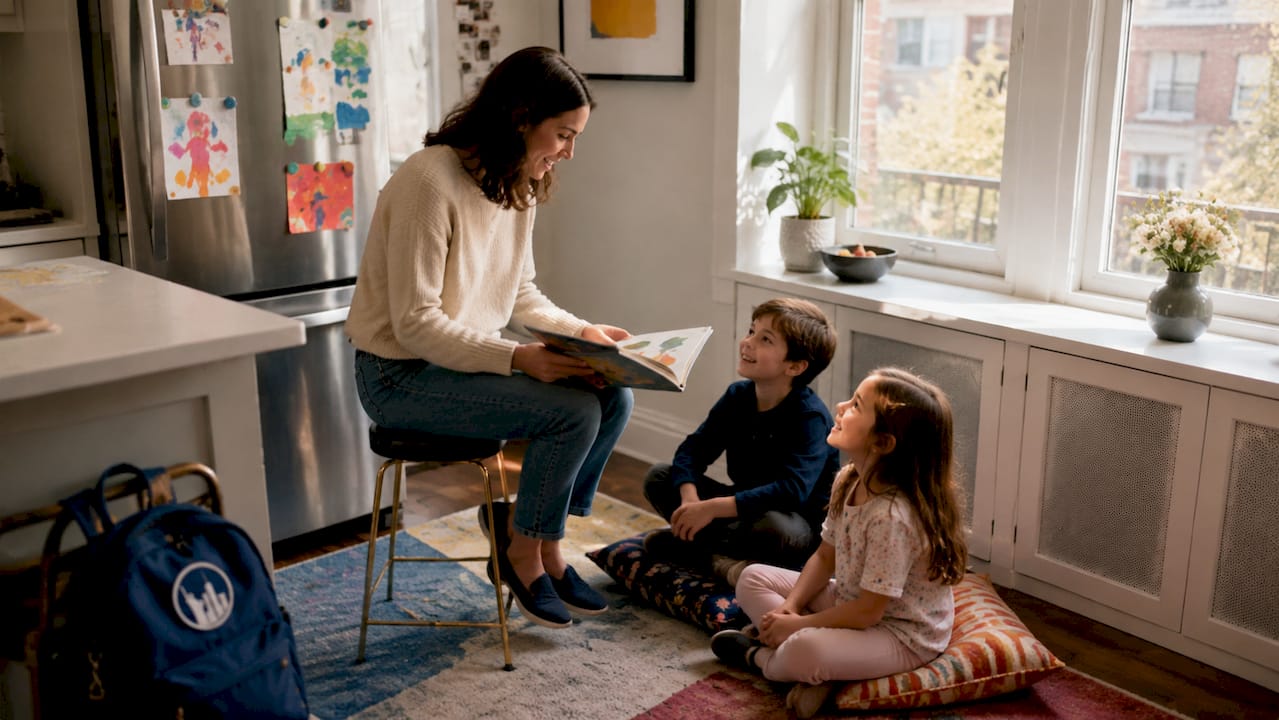
Brooklyn hits a different balance. Park Slope borders Prospect Park, a 585-acre green space that functions as a genuine daily resource for strollers, bikes, and weekend picnics. Windsor Terrace is quieter and slightly more affordable, popular with families who want the Park Slope lifestyle without the Park Slope price tag. Cobble Hill has a small-town feel with brownstone-lined streets and a strong community vibe.
Queens is the underrated option. Jackson Heights has commute times to Midtown as low as 22 minutes, with more affordable rents and larger units than comparable Brooklyn neighborhoods. Forest Hills offers Forest Park, a 538-acre green space, plus a quieter residential feel. Astoria is well-connected and has a growing number of family-friendly amenities.
| Neighborhood | Green Space | School Quality | Housing Type | Midtown Commute |
|---|---|---|---|---|
| Upper West Side | Central Park (843 acres) | Strong | Prewar apartments | 15–25 min |
| Park Slope | Prospect Park (585 acres) | Strong | Brownstones | 30–40 min |
| Battery Park City | Waterfront esplanade | Strong | Purpose-built towers | 20–30 min |
| Forest Hills | Forest Park (538 acres) | Good | Prewar, detached homes | 30–40 min |
| Jackson Heights | Smaller parks | Good | Larger rental units | 22–30 min |
| Riverdale (Bronx) | Van Cortlandt Park | Good | Co-ops, single-family | 35–50 min |
Pro Tip: Don’t just look at rent. Calculate your total monthly cost including transit passes. A Queens apartment that saves you $1,000 per month in rent but adds 20 minutes each way to your commute may or may not be worth it, depending on your work schedule and childcare setup.
How does school zoning affect your neighborhood choice?
School zoning is the single most misunderstood factor in NYC family housing. Public elementary school zones tie strictly to your address, and the zone can change dramatically from one block to the next. Two families living on opposite sides of the same street can be assigned to completely different schools.
The practical consequence is real. A neighborhood with a strong overall reputation can have pockets zoned for underperforming schools. You need to verify the exact school zone for any specific apartment before you sign a lease or make an offer. The NYC Department of Education provides an address-specific search tool for this purpose. Use it early, not after you’ve fallen in love with a place.
School quality has a direct effect on housing prices in NYC. Apartments within the zone of a top-ranked elementary school command a noticeable premium. That premium is real and persistent, which means buying into a strong zone is also a reasonable long-term financial decision.
Here is what to do before committing to a neighborhood:
- Search the NYC Department of Education’s school zone tool using the exact address of any apartment you’re considering
- Visit the school in person during a tour day, not just during a weekend walk-through of the neighborhood
- Check whether the school has a waitlist for out-of-zone students, in case your zoned school isn’t your first choice
- Ask your real estate agent specifically about zone boundaries, not just neighborhood reputation
- Factor school zone into your budget from day one, since strong zones cost more
Pro Tip: If you’re torn between two apartments and one is in a stronger school zone, that zone difference is worth more than most people realize. It affects your child’s daily experience and your resale value.
What housing options do families actually have in NYC?
Three-bedroom apartments are genuinely scarce across the city. Prewar brownstones and purpose-built family towers in Battery Park City and Long Island City offer the most consistent supply of larger units. Everywhere else, you’re competing hard for limited inventory.
Manhattan’s family housing is either very expensive or very small. Tribeca and the Upper West Side have large units, but the price reflects it. Battery Park City is the exception: purpose-built towers with family-sized layouts, good management, and direct access to the waterfront. It’s one of the few Manhattan neighborhoods where a family of four can live comfortably without paying Tribeca prices.
Brooklyn brownstones are the dream for many families, and they deliver. A full-floor apartment in a Park Slope brownstone gives you outdoor space, a real dining room, and a neighborhood where you’ll see locals walking their dogs every morning. The catch is that good brownstone units move fast. Long Island City in Queens offers newer construction with larger floor plans and slightly lower prices than comparable Brooklyn options.
Expert Nitin Gadura recommends starting your search at least 12 months before your intended move-in date. That timeline sounds extreme until you’ve lost three apartments in a row to faster-moving buyers.
| Neighborhood | Avg. 3-Bed Monthly Rent | Housing Style | Inventory Level |
|---|---|---|---|
| Upper West Side | High | Prewar apartments | Moderate |
| Park Slope | Moderate to high | Brownstones | Low |
| Battery Park City | High | Purpose-built towers | Moderate |
| Long Island City | Moderate | New construction | Moderate |
| Jackson Heights | Moderate | Rental buildings | Higher |
| Riverdale | Moderate | Co-ops, houses | Moderate |
- Start your search 12 months out in competitive markets like Park Slope and the Upper West Side
- Prioritize buildings with in-unit laundry and storage, since NYC apartments rarely have enough of either
- Ask about stroller storage in the lobby before signing anything
- Consider co-ops carefully: board approval processes can be slow and selective
- New construction in Long Island City and Battery Park City often has more family-sized units than older stock
Pro Tip: If you find a three-bedroom you love, don’t wait for a second showing. Have your documents ready to apply the same day. The NYC rental market does not reward hesitation.
What family amenities actually matter day to day?
The amenities that matter most to families are not the ones that show up in real estate listings. Pediatrician density, grocery delivery availability, and walkability affect your daily life far more than the number of restaurants on the block. A neighborhood with three coffee shops and no pediatric clinic within walking distance is not a family neighborhood, regardless of what the listing says.
Continuous green space matters more than scattered small parks. A 585-acre park like Prospect Park gives kids room to run, bike, and explore without crossing streets every five minutes. Small pocket parks are fine for a quick break, but they don’t replace the daily utility of a large, connected green space. This is why Park Slope, Forest Hills, and the Upper West Side consistently outperform neighborhoods with technically similar amenities but no major park anchor.
Cultural access is a real bonus in certain neighborhoods. The Upper West Side puts you within walking distance of the American Museum of Natural History and the Children’s Museum of Manhattan. DUMBO gives you Jane’s Carousel and easy Brooklyn Bridge Park access. These aren’t just tourist attractions. They become part of your family’s regular weekend routine.
Here is what to check before choosing a neighborhood:
- Stroller-accessible subway stations within a few blocks of your apartment
- At least one pediatric practice within a 10-minute walk or short subway ride
- A grocery store with delivery service, since carrying bags with a toddler is genuinely difficult
- A large, connected park within walking distance, not just a small playground
- A quiet residential street feel, especially if you have young children who nap on a schedule
Pro Tip: Walk the neighborhood on a Tuesday morning, not a Saturday afternoon. Weekend foot traffic looks great everywhere. Tuesday morning tells you what your actual daily life will feel like.
How should families plan a visit or transition to NYC?
A first visit to New York with kids works best as a 3-4 day stay based in the Upper West Side or Midtown. Both areas give you fast access to Central Park, major museums, and transit connections without requiring long subway rides with tired kids.
A practical itinerary looks like this:
- Day 1: Arrive and settle in. Walk Central Park in the afternoon. Keep the pace slow. Kids need time to adjust to the city’s energy before you pile on activities.
- Day 2: Morning at the American Museum of Natural History, then lunch in the Upper West Side. Afternoon in Central Park at the Heckscher Playground or the Conservatory Garden.
- Day 3: Take the subway to Brooklyn. Walk the Brooklyn Bridge, explore DUMBO, and visit Jane’s Carousel. Take the East River Ferry back for a different view of the skyline.
- Day 4: Midtown at a manageable pace. Top of the Rock or the High Line, depending on your kids’ ages and energy levels. Avoid Times Square with young children if you can. It’s a full sensory overload experience that rarely ends well for anyone under eight.
If you’re planning a longer stay or a relocation scouting trip, families with young children settle better in quieter residential areas like the Upper West Side than in Midtown. The energy of Midtown is exciting for a night or two, but it wears on kids quickly. For accommodation tips tailored to families, Powersearch has a solid NYC family vacation guide worth bookmarking before you book anything.
Key Takeaways
The best NYC neighborhoods for families are defined by continuous green space, address-specific school zones, scarce three-bedroom inventory, and practical daily infrastructure like walkability and pediatric access.
| Point | Details |
|---|---|
| Top neighborhoods | Upper West Side, Park Slope, Battery Park City, Forest Hills, and Jackson Heights lead for family living. |
| School zoning is address-specific | Verify your exact school zone with the NYC Department of Education before signing any lease or purchase agreement. |
| Start housing search early | Begin your search at least 12 months before your move-in date to compete for scarce three-bedroom inventory. |
| Prioritize continuous green space | Large parks like Prospect Park (585 acres) and Forest Park (538 acres) offer daily utility that small pocket parks cannot match. |
| Daily logistics over prestige | Pediatrician access, grocery delivery, and stroller-friendly transit matter more than restaurant counts or neighborhood branding. |
What I’ve learned from watching families choose NYC neighborhoods
People consistently overweight neighborhood prestige and underweight daily logistics. I’ve watched families move to Williamsburg because it felt exciting and cool, only to realize six months later that the nearest large park requires a 20-minute walk and the school zone wasn’t what they expected. Williamsburg is a great neighborhood. It’s just not optimized for families with young kids in the way that Park Slope or the Upper West Side genuinely are.
The other common mistake is treating a neighborhood visit on a Saturday afternoon as reliable research. The city looks great everywhere on a sunny weekend. You need to see it on a gray Tuesday morning when the novelty has worn off and you’re trying to get a stroller onto a subway car during rush hour.
My honest take: Forest Hills and Jackson Heights are the most underrated family neighborhoods in the city right now. They offer real space, strong community infrastructure, reasonable rents by NYC standards, and commute times that don’t punish you. The families who discover them early tend to stay for years. The families chasing the Park Slope brand sometimes end up priced out before they even get settled.
Patience and research beat trend-chasing every time in this city. Give yourself the time to verify school zones, walk the streets at different hours, and understand what your actual daily routine will look like. The right neighborhood for your family exists. It just takes more work to find than a real estate listing will tell you.
— Mark
How Powersearch can help you find the right NYC base
Planning a family trip or relocation scouting visit to New York City involves a lot of moving parts. Powersearch pulls together hotel listings, neighborhood guides, and family-friendly activity searches in one place, so you’re not bouncing between a dozen different tabs trying to piece together a plan.
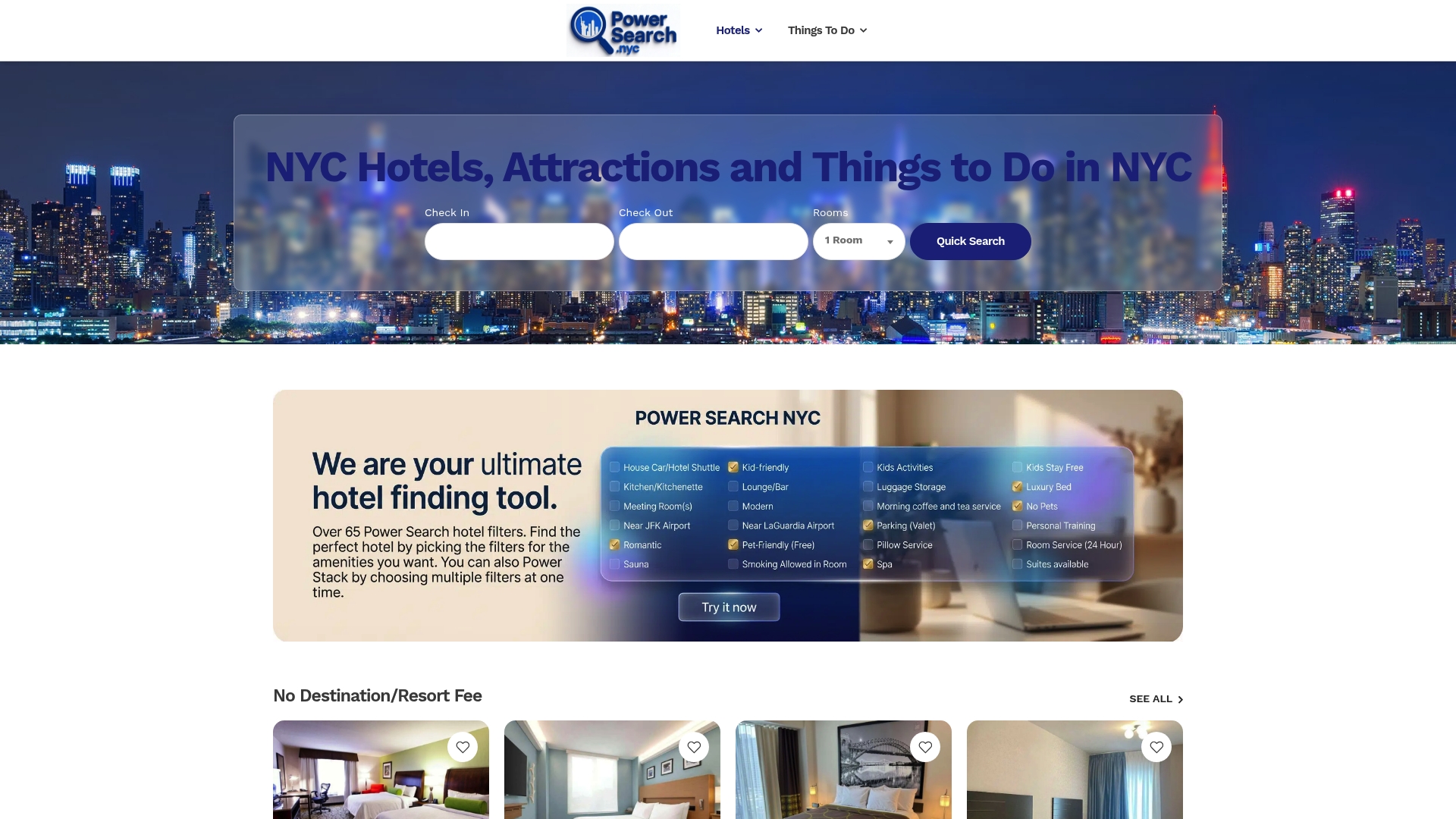
If you’re figuring out where to stay while you explore neighborhoods, the NYC hotel suite booking guide on Powersearch walks you through exactly what to look for in a family-sized hotel room, from connecting rooms to stroller storage. You can also browse stroller-friendly NYC hotels and filter by neighborhood proximity. Whether you’re visiting for four days or scouting for a permanent move, Powersearch gives you a practical starting point without the overwhelm.
FAQ
What are the safest NYC neighborhoods for families?
Battery Park City, the Upper West Side, and Park Slope consistently rank among the safest and most family-friendly areas in New York City. All three offer low-traffic residential streets, large green spaces, and strong community infrastructure.
How do I check my school zone in NYC?
Use the NYC Department of Education’s address-specific search tool to find your exact school zone. School zones can change between adjacent streets, so always verify using the specific apartment address, not just the neighborhood name.
Is Brooklyn or Manhattan better for families?
Brooklyn offers more space per dollar, with brownstones and larger apartments at lower price points than comparable Manhattan units. Manhattan provides greater convenience and proximity to cultural institutions, but at a significantly higher cost.
How far in advance should families start their NYC housing search?
Real estate expert Nitin Gadura recommends starting at least 12 months ahead of your intended move-in date. Three-bedroom inventory is scarce citywide, and competitive markets like Park Slope move extremely fast.
What green spaces are best for families in NYC?
Prospect Park in Brooklyn (585 acres) and Forest Park in Queens (538 acres) offer the most practical daily green space for families. Central Park in Manhattan is larger at 843 acres but surrounded by higher housing costs.
No Comments