

Comparing NYC Hotel Locations: Your 2026 Neighborhood Guide
Disclosure: This post may contain affiliate links. We may earn a commission for purchases made through links in this post, at no cost to you.
Comparing NYC hotel locations means weighing neighborhood character, transit access, proximity to attractions, and nightly rates to find the base that fits your trip. The right choice looks different for a first-timer who wants to step outside and immediately feel like they’re in a movie versus a repeat visitor ready to live like a local in Brooklyn. Midtown Manhattan, the Financial District, Williamsburg, and Long Island City each offer a genuinely different New York experience. This guide breaks down what each area actually delivers so you can match your hotel location to how you want to spend your time.
What are the main neighborhoods for comparing NYC hotel locations?
Midtown Manhattan is the most recommended area for first-time visitors because of its central position, walkable access to major sights, and direct connections to every major subway line. You can drop your bags and go explore Times Square, the Empire State Building, and Bryant Park without ever touching the subway. The tradeoff is noise, crowds, and some of the highest hotel prices in the city.
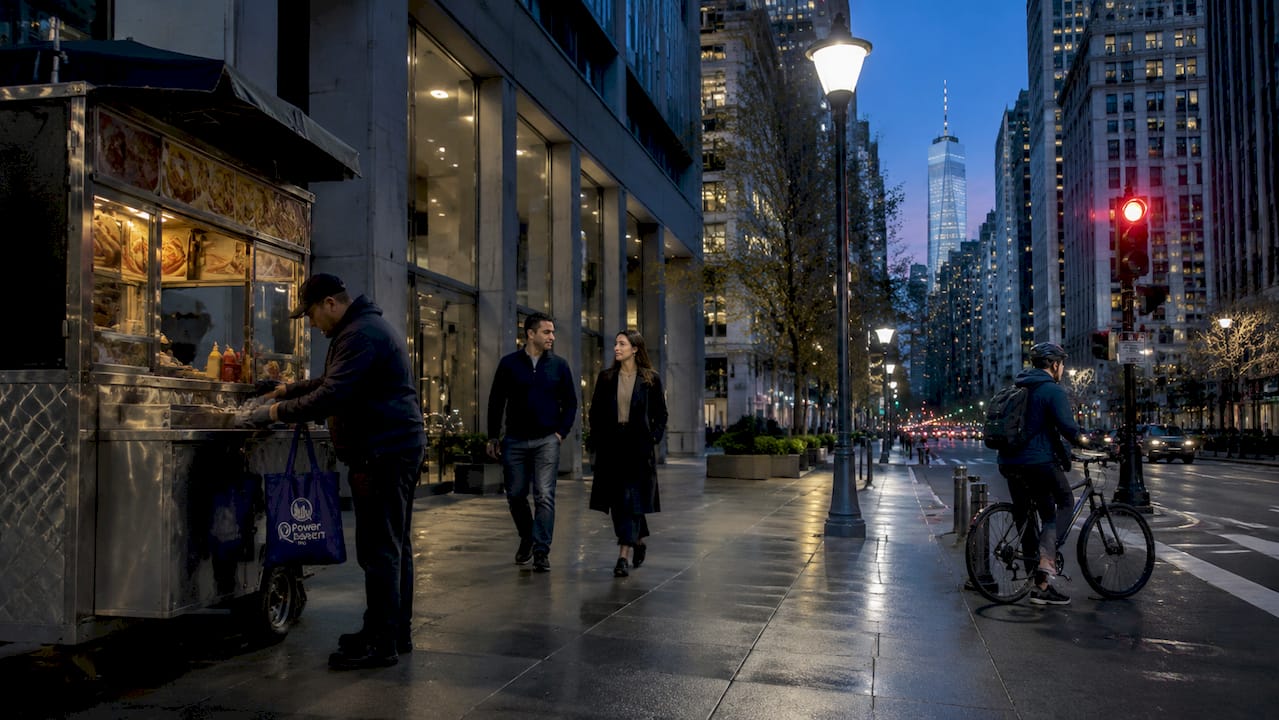
Lower Manhattan and the Financial District run quieter after 6 p.m. The office crowd clears out, and you get a neighborhood that feels almost calm by New York standards. Lower Manhattan offers good value on weekends and quick subway access to the Brooklyn Bridge and the 9/11 Memorial. It suits travelers who want a central address without paying Midtown prices every night.
Brooklyn neighborhoods are where things get interesting. Williamsburg combines lower prices with a trendy vibe and Manhattan skyline views, plus a nightlife scene that locals actually use. It is not a compromise. It is a different kind of New York experience.
Here is a quick breakdown of who fits where:
- Midtown Manhattan: First-time visitors, tourists, business travelers who need central access
- Financial District: Budget-conscious travelers, weekend visitors, history and architecture fans
- Upper West Side: Families, museum lovers, travelers who want a quieter and more residential feel
- Chelsea and SoHo: Shoppers, food lovers, travelers who want nightlife without Times Square chaos
- Williamsburg, Brooklyn: Repeat visitors, younger travelers, anyone wanting a local vibe with easy Manhattan access
- Long Island City, Queens: Value seekers, travelers who prioritize savings and do not mind a short subway ride
How do hotel prices vary across NYC neighborhoods?
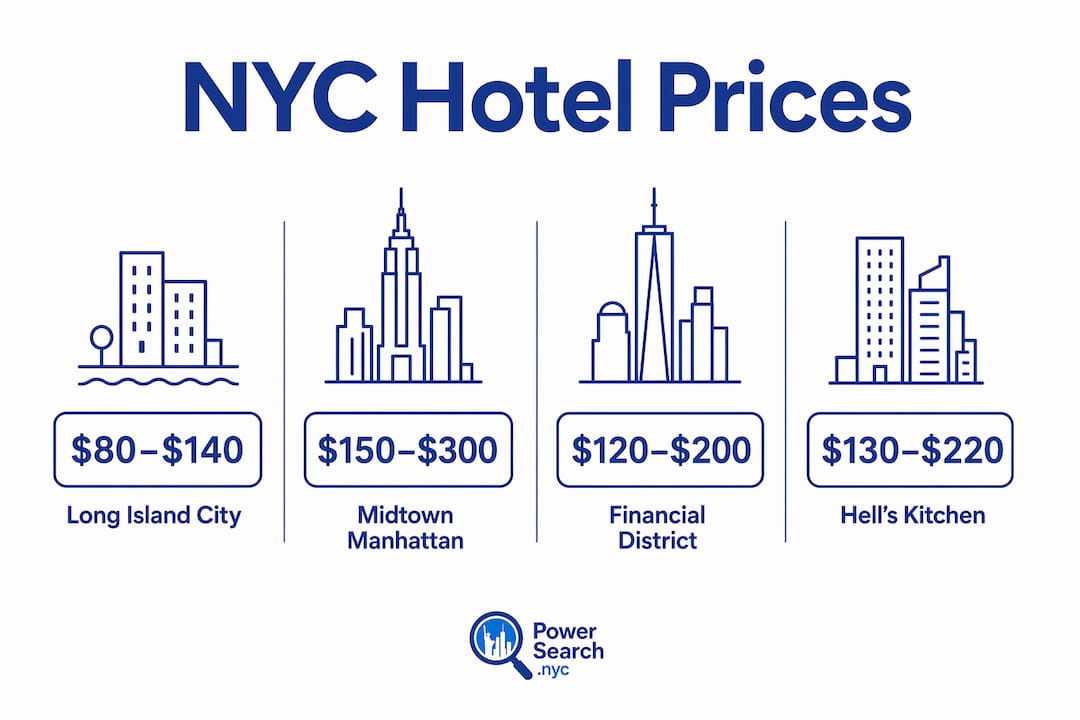
NYC hotel pricing follows a clear geographic pattern. Budget options in Long Island City and the Financial District run roughly $80–$140 per night. Mid-range hotels in Chelsea and the Upper West Side land between $150–$300. Luxury properties in Midtown and SoHo push above $300 per night, often significantly.
| Neighborhood | Price Range (per night) | Best For |
|---|---|---|
| Long Island City, Queens | $80–$140 | Budget travelers |
| Financial District | $80–$140 | Weekend visitors |
| Chelsea / Upper West Side | $150–$300 | Mid-range comfort |
| Midtown Manhattan | $200–$400+ | Convenience seekers |
| SoHo / Tribeca | $300+ | Luxury travelers |
One of the most underused tricks in NYC hotel planning is choosing an adjacent neighborhood. Hell’s Kitchen offers 15–25% lower hotel prices than Times Square while giving you the same access to Midtown and the theater district. You walk the same streets. You pay less. That is not a sacrifice. That is a better deal.
Timing matters just as much as location. Booking 2–3 months in advance during peak seasons can save you 15–25% on rates. Peak seasons in NYC include late spring, summer, and the holiday stretch from late november through new year’s. If your dates are flexible, you will find the best rates by booking early and avoiding those windows. Powersearch has a dedicated guide on early booking savings if you want to dig into the timing strategy.
Pro Tip: If your top choice neighborhood feels out of budget, search one or two subway stops away. The price drops fast, and the commute barely changes.
For travelers who want a deeper look at NYC hotel price comparisons, Powersearch covers the full breakdown by area and season.
What role does transportation play when comparing hotel locations in NYC?
Transit access is the single most practical factor in any NYC hotel location comparison. New York’s subway runs 24 hours a day, 7 days a week, and it connects every major neighborhood to every major attraction. Staying near a subway station is crucial for visitors who want to cover multiple neighborhoods without burning money on taxis or rideshares.
Here is what transit access looks like across the main areas:
- Midtown Manhattan: Multiple subway lines, Penn Station, Grand Central. You are never more than a few blocks from a train.
- Financial District: Fulton Center serves as a major transit hub with access to A, C, E, J, Z, 2, 3, 4, and 5 lines.
- Williamsburg, Brooklyn: The L train puts you 8 minutes from Midtown. That is faster than walking from one end of Times Square to the other.
- Long Island City, Queens: The 7 train reaches Midtown in roughly 10 minutes. It is one of the fastest outer-borough commutes in the city.
- Upper West Side: The 1, 2, and 3 trains run the length of the neighborhood, making Central Park, Lincoln Center, and downtown all easy to reach.
The OMNY card system replaced the old MetroCard for tap-to-pay access across buses and subways. You can use a contactless credit card or phone directly at the turnstile. If you plan to ride more than a few times a day, a weekly unlimited pass saves money fast. Powersearch has a full guide to navigating the NYC subway for first-time visitors.
How does neighborhood vibe affect your hotel choice in NYC?
Neighborhood vibe is not a soft factor. It shapes your entire daily experience, from where you eat breakfast to how loud it is at midnight outside your window. Times Square hotels are expensive and crowded but deliver walkable access to Broadway and iconic landmarks. That full sensory overload experience is exactly what some travelers want. For others, it is exhausting by day two.
The Upper West Side offers a quieter, residential atmosphere close to Central Park and the American Museum of Natural History. You will see locals walking their dogs in the morning and families heading to Riverside Park on weekends. It is a very different New York from Midtown, and for families or longer stays, it is often the better fit.
Brooklyn gives you something neither of those areas can. Williamsburg delivers a local experience with independent restaurants, rooftop bars, and a creative energy that feels genuinely New York without the tourist-heavy crowds. SoHo and the Lower East Side in Manhattan offer a middle ground: trendy, walkable, and packed with good food and nightlife, but still close to major sights.
A few things to weigh when matching vibe to your trip:
- Longer stays (5+ nights): Residential neighborhoods like the Upper West Side or Williamsburg give you more breathing room and a sense of daily life in the city.
- Short trips (2–3 nights): Midtown or SoHo keeps everything close and cuts down on transit time.
- Families: Upper West Side and family-friendly hotels in that area offer calmer streets and easy park access.
- Solo or couple travelers: Williamsburg, Chelsea, and the Lower East Side offer the most interesting food and nightlife scenes.
Key takeaways
Your hotel location in NYC determines your daily pace, your budget, and how much of the real city you actually experience. Choosing the right neighborhood is not about finding the most central spot. It is about matching where you sleep to how you want to live for those days.
| Point | Details |
|---|---|
| Midtown suits first-timers | Central location and transit access make it the easiest base for new visitors. |
| Adjacent neighborhoods save money | Hell’s Kitchen costs 15–25% less than Times Square with the same Midtown access. |
| Outer boroughs are practical | Williamsburg reaches Midtown in 8 minutes by subway, making it a real option. |
| Book early for best rates | Reserving 2–3 months ahead during peak season saves 15–25% on nightly rates. |
| Vibe shapes the whole trip | Neighborhood character affects dining, noise, crowds, and your daily experience. |
What I have learned from staying across NYC neighborhoods
I have stayed in Midtown on a work trip, in Williamsburg for a long weekend, and in the Financial District during a quiet january visit. Each one felt like a different city. That is not a complaint. That is the point.
Most travelers I talk to assume that staying outside Manhattan means sacrificing convenience. That assumption is wrong, and it costs them money. The L train from Williamsburg to Union Square takes less time than walking from the north end of Times Square to the south end. The subway is the great equalizer in this city. Once you trust it, your hotel location options open up dramatically.
My honest advice for first-time visitors: start in Midtown or Hell’s Kitchen. You will be close to everything, and you will not spend your first trip figuring out the subway. But if you are coming back, or if you are staying more than four nights, seriously consider Brooklyn or the Upper West Side. You will eat better, sleep quieter, and spend less.
One thing I see people get wrong repeatedly: they pick a hotel based on the neighborhood name without checking the actual block. The Financial District has streets that feel like a canyon at night and others that are lively and well-lit. Williamsburg has pockets that are very residential and others that are right in the middle of the action. Always look at the specific address on a map before booking.
— Mark
How Powersearch helps you find the right NYC hotel location
Planning a New York trip means making a lot of decisions at once, and hotel location is the one that affects everything else. Powersearch brings together hotel listings, neighborhood filters, and attraction maps in one place so you can see exactly what you are getting before you book.
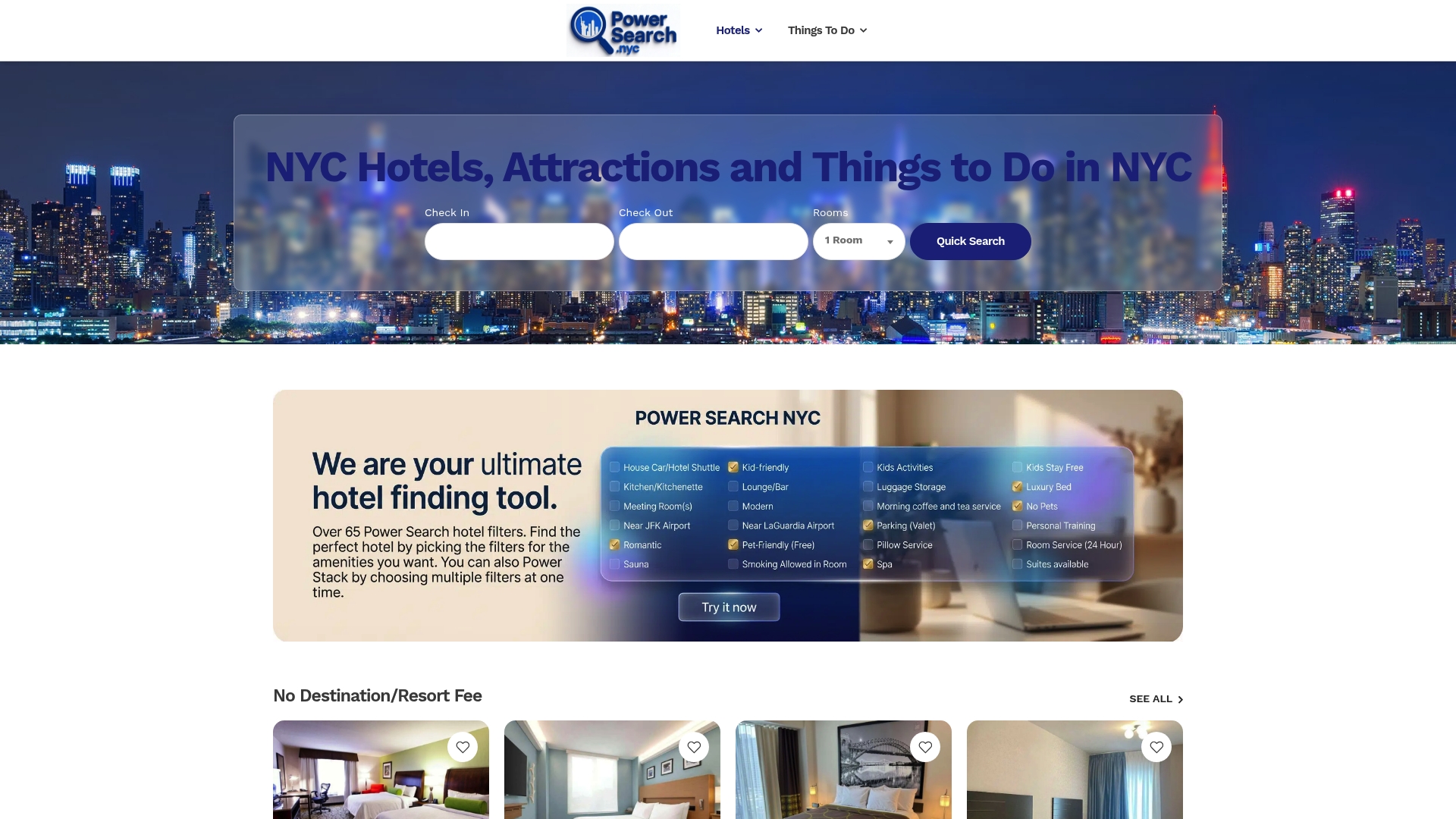
Whether you are searching for budget-friendly NYC hotels in Long Island City or looking at options closer to Midtown, Powersearch lets you filter by neighborhood, price, and amenities. Planning a group trip or corporate stay? The corporate hotel rates guide covers how to lock in the best rates for business travel. You can also browse NYC attractions and things to do alongside your hotel search so your location and your itinerary line up from the start.
FAQ
What is the best area to stay in NYC for first-time visitors?
Midtown Manhattan is the top recommendation for first-time visitors because of its central location, walkable sights, and access to major transit hubs. Hell’s Kitchen is a strong alternative at 15–25% lower cost with the same access.
Is it worth staying in Brooklyn instead of Manhattan?
Yes, especially for repeat visitors or longer stays. Williamsburg sits just 8 minutes from Midtown by subway and offers lower prices, a local vibe, and Manhattan skyline views.
How much does a hotel in NYC cost per night?
Prices range from $80–$140 per night in budget areas like Long Island City, $150–$300 in mid-range neighborhoods like Chelsea, and $300 or more in Midtown and SoHo. Rates shift based on season and how far in advance you book.
When should I book an NYC hotel to get the best price?
Booking 2–3 months ahead during peak travel seasons saves 15–25% compared to last-minute rates. Peak periods include summer, late spring, and the holiday season.
Does neighborhood choice really affect the NYC experience?
Absolutely. A hotel in the Upper West Side gives you a quiet, residential feel near Central Park, while Times Square puts you in the middle of constant activity. Your neighborhood shapes your dining options, noise level, and daily pace throughout the trip.
No Comments