

NYC Hotel Commission Rates Guide for Travel Planners
Disclosure: This post may contain affiliate links. We may earn a commission for purchases made through links in this post, at no cost to you.
NYC hotel commission rates are defined as the percentage of a booking’s room revenue paid to travel agents, OTAs, or planners as compensation for generating the reservation. Rates typically run 10%–25%, depending on the hotel category, booking channel, and your relationship with the property. If you’re a travel planner trying to figure out how NYC hotel commission structures work, the range can feel wide and confusing at first. This guide breaks it all down so you know exactly what to expect, what tools to use, and how to get paid faster and more.
What are current NYC hotel commission rates and how do they vary?
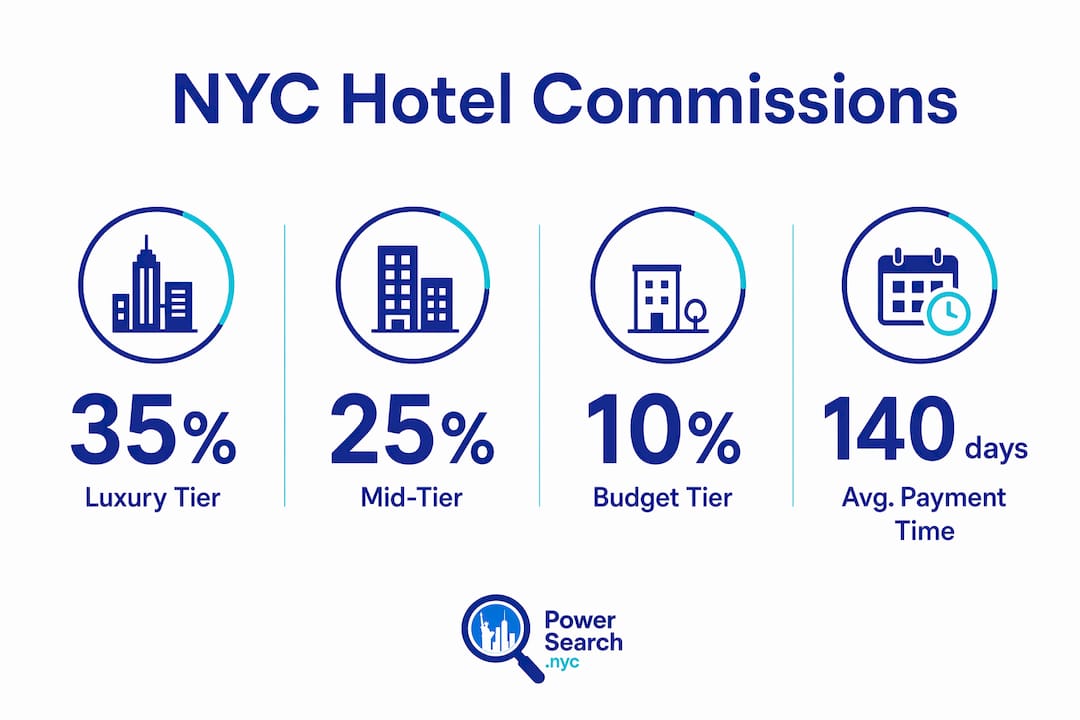
NYC hotel commission rates vary significantly by hotel tier and booking channel. Retail commissions for travel agents booking NYC hotels typically run 10%–15% for standard properties, 15%–20% through preferred consortia access, and 20%–35% margins via net-rate B2B platforms. That spread matters a lot when you’re booking multiple rooms at $300+ per night.
Luxury properties pay the most. Hotels like the Ritz-Carlton, Four Seasons, and St. Regis in New York offer premium commissions that often exceed 20%, while large chains like Marriott and Hilton typically pay 10%–15%. Boutique hotels sit in the middle, often paying 12%–18% with volume incentives pushing rates higher.

Here’s how the commission structure for NYC hotels breaks down by channel:
| Booking Channel | Typical Commission Range | Notes |
|---|---|---|
| Direct booking (agent to hotel) | 10%–15% | Standard retail rate, no platform fee |
| OTA (Expedia, Booking.com) | 15%–25% | OTA average was 15% in 2023, down from 18% in 2020 |
| Preferred consortia (Virtuoso) | 15%–20% | Higher tiers plus guest perks |
| B2B net-rate platforms | 20%–35% margin | Agent marks up net rate |
The OTA channel dominates volume. 62% of NYC hotel bookings occur via OTAs, with average daily rates around $301.61 to $338. That volume gives OTAs pricing power, but it also means agents who go direct or use consortia can often earn more per booking.
- Luxury NYC hotels: 18%–30% commission
- Business-focused hotels: 10%–15%
- Boutique hotels: 12%–18% with volume incentives
- Budget properties: typically 8%–12%
Pro Tip: If you’re booking a luxury property in Midtown or the Upper East Side, always ask the hotel’s group sales desk about their preferred agent rate before defaulting to an OTA. You may unlock a higher commission and a client amenity in the same conversation.
How do payment terms and commission collection work for NYC bookings?
Most hotel commission agreements follow Net 30 payment terms on paper. The reality is very different. Real-world payment delays average around 140 days without automated processing. That gap between when a guest checks out and when you actually see the money is the biggest frustration in the business.
Here’s why delays happen and how to protect yourself:
- Stay data submission lag. The gap between stay data submission and funds remittance is the chief cause of lengthy delays. Hotels often batch process commission reports weekly or monthly, not per stay.
- Agency pay cycles. If you work as an independent contractor under a host agency, most agencies only pay out once or twice monthly. That adds another layer of delay on top of the hotel’s own timeline.
- Manual processing errors. Manual payment systems create mismatches between booking records and payment amounts, leading to short payments or missed commissions entirely.
- Late payment penalties. Most agreements allow a 1.5% monthly interest penalty after 30 days. Few agents actually enforce this, but knowing it exists gives you leverage.
- Direct debit systems. Platforms like Onyx use direct debit as the gold standard for commission payments. Direct debit enables simultaneous data and funds transfer, cutting that 140-day average down dramatically.
Pro Tip: Keep a simple spreadsheet tracking every booking by hotel, stay date, commission amount owed, and expected payment date. When a payment is late, you have the documentation to follow up immediately rather than chasing vague records.
NYC’s layered tax structure also affects your net revenue math. The city imposes a 5.875% room occupancy tax plus a $1.50 per unit daily fee. Commissions are calculated on the room rate before tax, so knowing the pre-tax rate is the number you work from when calculating hotel commissions.
Which tools and consortia help you maximize NYC hotel commissions?
The single biggest lever travel planners have is access. Joining the right consortia or host agency changes your commission tier immediately. Travel advisors in consortia or host agencies gain higher commission tiers of 12% and above, plus guest perks that independent agents simply cannot access on their own.
Here are the main options worth knowing:
- Virtuoso. One of the most recognized luxury travel consortia globally. Virtuoso membership gives advisors preferred rates, amenity programs, and direct relationships with high-end NYC properties like the Peninsula and the Loews Regency.
- Fora Advisors. Fora is a modern host agency built for independent travel advisors. It provides access to preferred hotel rates, commission tracking tools, and a community of advisors sharing real-time intel on which NYC properties are paying well.
- B2B wholesale platforms. These platforms give agents access to net rates, meaning the hotel’s wholesale price. Agents can add markups of 20%–35%, which often yields higher absolute dollars per booking than a fixed commission percentage.
- Host agencies. Beyond Fora, host agencies like Travel Experts and Brownell provide IATA accreditation, supplier relationships, and back-office support that make it easier to collect commissions reliably.
“Host agencies provide both higher commission tiers and desirable client perks, making them strategic partners rather than just administrative middlemen.” — Fora Advisors
The practical difference is real. An independent agent booking a $400-per-night room at a Midtown business hotel might earn 10%, or $40 per night. The same agent booking through a Virtuoso-affiliated relationship at a preferred property could earn 18%, or $72 per night. On a five-night stay for two rooms, that’s a $320 difference from one booking.
For planners handling corporate hotel bookings in NYC, preferred partnership access is even more valuable because volume compounds those rate differences fast.
What strategies help travel planners negotiate higher commissions?
Negotiation is where planners leave the most money on the table. Hotels want reliable, repeat business. If you can demonstrate volume, you have real leverage.
- Lead with volume commitments. Volume-based corporate travel bookings often boost standard commissions by 2%–5% through negotiated incentives. Come to the conversation with a specific number: “I expect to send 20 room nights per quarter to your property.” That’s a number a hotel sales manager can work with.
- Bundle group and corporate bookings. Group bookings trigger different rate structures entirely. A group of 10 or more rooms often qualifies for a dedicated group sales contract with commission terms negotiated separately from retail rates.
- Ask for add-ons, not just rate bumps. Sometimes a hotel won’t move on the commission percentage but will add a complimentary breakfast, room upgrade, or late checkout for your clients. Those perks increase your client’s perceived value and make you look great, even if the commission number stays the same.
- Build a direct relationship with the hotel’s sales team. OTAs are anonymous. You are not. A hotel sales manager who knows your name and trusts your bookings will go to bat for you internally when commission rates are reviewed.
- Avoid negotiating during peak season. NYC hotels in october and november, when occupancy is high, have no incentive to offer better terms. Approach negotiations in slower months like january or february when hotels are more motivated.
Hotels absorb commissions as a marketing cost similar to OTA fees. Your clients are not paying more because they booked through you. That’s a common misconception worth clearing up with clients who hesitate to use an agent.
Pro Tip: When negotiating with a boutique NYC hotel, ask specifically about their “preferred agent” program. Many boutique properties have informal programs that aren’t advertised publicly but offer 15%–18% plus a welcome amenity for clients.
Key Takeaways
Understanding NYC hotel commission structures gives travel planners a direct path to higher earnings and better client experiences.
| Point | Details |
|---|---|
| Commission rates vary widely | NYC hotel commissions range from 10%–35% depending on hotel tier, channel, and consortia access. |
| OTAs dominate volume but not margins | OTAs handle 62% of NYC bookings but net-rate B2B platforms yield higher per-booking margins. |
| Payment delays are the norm | Real-world commission payments average 140 days without automated direct debit systems. |
| Consortia access changes your rate tier | Joining Virtuoso or Fora Advisors unlocks 12%+ commission tiers and guest perks unavailable to independent agents. |
| Volume is your best negotiating tool | Corporate and group bookings can boost standard commissions by 2%–5% through direct hotel agreements. |
What I’ve learned about NYC hotel commissions after years in the field
The thing nobody tells you upfront is that the commission rate is only half the equation. Getting paid on time is the other half, and it’s the part that actually affects your cash flow.
I’ve seen planners celebrate landing an 18% commission on a luxury Midtown property, only to wait five months to see the money. The hotel wasn’t being dishonest. The system was just broken. Manual processing, batched reports, and agency pay cycles stacked on top of each other until the money felt like it would never arrive. Switching to a host agency that used direct debit payment processing changed that experience completely.
The other thing I’d push back on is the instinct to chase the highest commission percentage at all costs. A hotel that pays 22% but has a history of short payments or disputes is a worse deal than one paying 15% reliably every 30 days. Track your actual received commissions, not just your contracted rates. The gap between those two numbers will tell you which hotel relationships are actually worth your time.
NYC’s hotel market is competitive enough that properties genuinely want reliable agent partners. If you show up with volume, consistency, and a professional approach, most sales managers will work with you. The planners who struggle are usually the ones who treat every booking as a one-off transaction instead of building a relationship.
The commission landscape is also shifting. Hotels are watching OTA costs closely and many are actively trying to shift volume back to direct and agent channels. That’s good news for planners who position themselves as a reliable alternative to OTA dependency.
— Mark
How Powersearch can help you find the right NYC hotels
Knowing the commission structure is one thing. Finding the right properties to book is another.
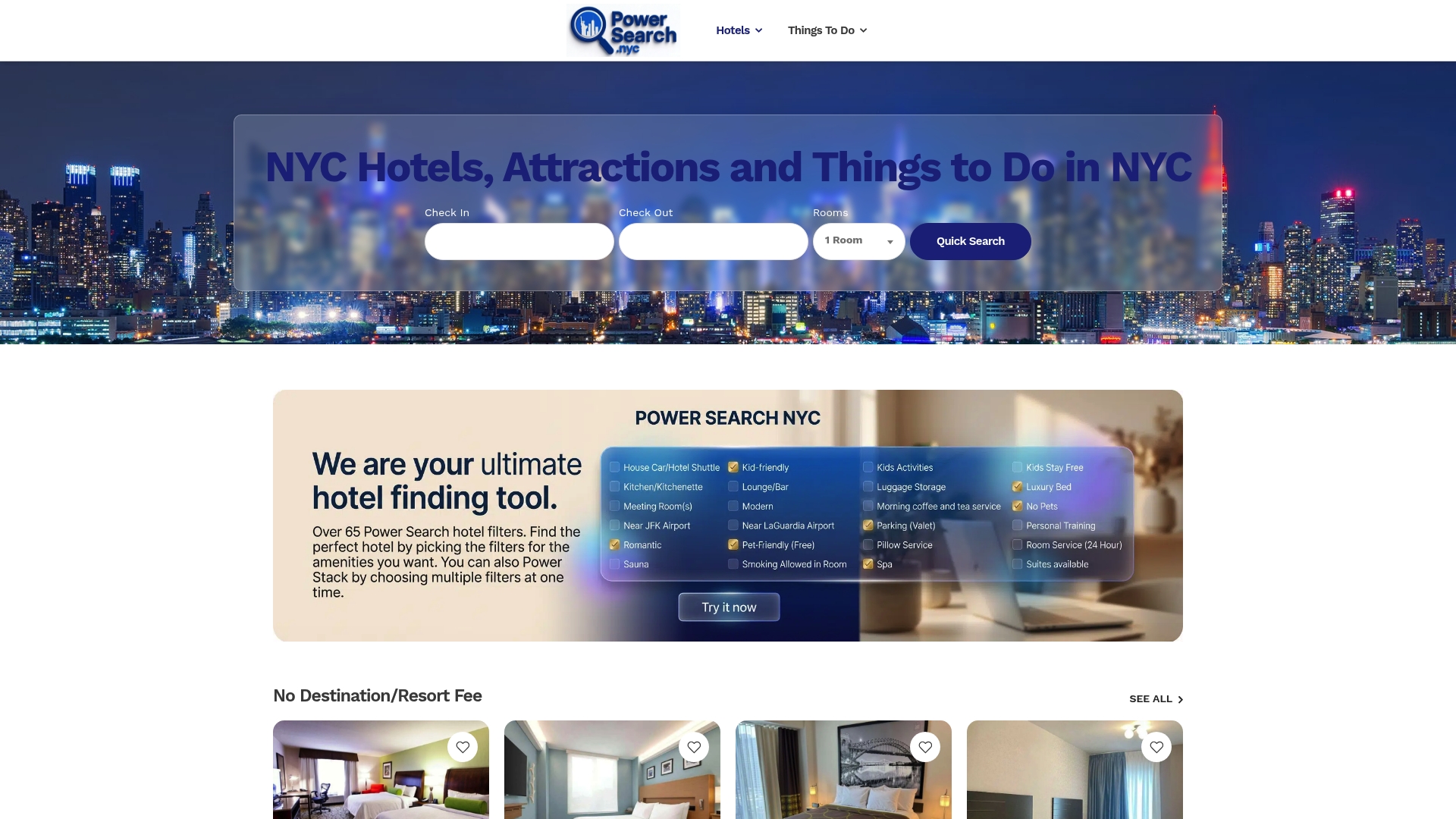
Powersearch is built specifically for travelers and planners researching New York City hotels. The NYC hotel search platform lets you filter by neighborhood, price point, hotel type, and amenities so you can quickly identify properties that match your clients’ needs and your commission goals. Whether you’re looking at luxury Midtown options with premium agent rates or boutique properties in Brooklyn with strong volume incentive programs, Powersearch gives you a clear view of the inventory. You can also browse the full NYC travel planning hub for guides, neighborhood breakdowns, and booking tips that help you advise clients with confidence.
FAQ
What is the average hotel commission rate in NYC?
NYC hotel commission rates typically range from 10%–25% for travel agents, with luxury properties like the Four Seasons and Ritz-Carlton often exceeding 20% and standard chains like Marriott paying 10%–15%.
How long does it take to receive hotel commission payments?
Most hotel commission agreements use Net 30 payment terms, but real-world payments average around 140 days without automated processing systems like direct debit.
Do clients pay more when booking through a travel agent?
No. Hotels treat agent commissions as a marketing cost, similar to OTA fees. Clients booking through a travel agent pay the same room rate as direct bookers.
What is the benefit of joining a travel consortia like Virtuoso?
Consortia members access commission tiers of 12% and above, plus guest perks like complimentary amenities and upgrades that independent agents cannot negotiate on their own.
How do B2B net-rate platforms increase commission earnings?
B2B wholesale platforms provide agents with net rates, the hotel’s wholesale price, allowing markups of 20%–35%. That markup often yields higher absolute dollars per booking than a fixed retail commission percentage.
No Comments