

Types of Budget Hotels NYC: Your Guide to Affordable Stays
Disclosure: This post may contain affiliate links. We may earn a commission for purchases made through links in this post, at no cost to you.
New York City is thrilling, chaotic, and wildly expensive — at least on the surface. Finding the right place to sleep without blowing your entire trip budget feels impossible when average Manhattan hotel rates can top $300 a night. But the types of budget hotels NYC offers are more varied than most travelers realize, and knowing the difference between them can save you real money. This guide breaks down micro-hotels, budget chains, and local boutique options across multiple boroughs so you can stop guessing and start booking with confidence.
Contents: Budget Hotel Types & Booking Tips for NYC
- How to evaluate budget hotels in NYC
- Micro-hotels: compact, modern, and budget-friendly
- Budget hotel chains in outer boroughs: value and reliability
- Local boutique and neighborhood hotels: authentic and affordable
- Comparing budget hotel types in NYC: micro, chain, and local boutique
- Our honest take on budget hotels in NYC
- Find your perfect NYC budget hotel with PowerSearch NYC
- Frequently asked questions
Key Takeaways
| Point | Details |
|---|---|
| Location matters | Choosing budget hotels near subway lines in Queens or Brooklyn saves both money and travel time. |
| Room size tradeoffs | Micro-hotels offer low prices but very small rooms best for short stays and light packing. |
| Budget chains offer comforts | Outer borough budget chains often include free breakfast and larger rooms for a moderate price. |
| Neighborhoods add value | Staying in authentic neighborhoods like Astoria or Williamsburg offers cultural experience and local dining. |
| Plan for your needs | Match your hotel type to your travel style: privacy, space, price, or social experience. |
How to evaluate budget hotels in NYC
Before you start comparing prices, it helps to know what actually matters when choosing a budget hotel in this city. Not all affordable options are created equal, and a cheap rate can quickly feel expensive if you end up far from the subway or stuck in a room the size of a closet with no storage.
Here are the key things to look at before you book:
- Location near the subway. This is non-negotiable in NYC. A hotel 10 minutes from a major subway line is worth more than one that’s technically cheaper but forces you to pay for taxis or rideshares every day.
- Room size vs. your needs. Budget hotels range from 100 sq ft micro-rooms to 230 sq ft standard rooms. If you’re traveling with a partner and two suitcases, size matters more than you think.
- Extras that add real value. Free breakfast, luggage storage, and Wi-Fi can each save you $15 to $30 a day. That adds up fast over a week-long trip.
- Chain vs. boutique vs. micro-hotel. Each has a different service model, vibe, and price point. Budget hotels often offer basics like Wi-Fi, safe locks, and limited services but vary significantly in location, room size, and extras.
- Noise levels. Midtown hotels near Times Square can be loud around the clock. Outer borough options tend to be quieter, which matters if you’re a light sleeper.
- Price by borough. Manhattan commands the highest rates. Queens and Brooklyn typically run 30 to 50% lower for comparable quality.
Pro Tip: Use our budget hotel search tips to filter by neighborhood, subway access, and amenities before you commit to anything.
Now that you know what to consider, let’s explore the common types of budget hotels found in NYC.
Micro-hotels: compact, modern, and budget-friendly
Micro-hotels are one of the most interesting developments in New York City’s accommodation scene. These are purpose-built hotels with very small rooms, typically between 100 and 180 sq ft, designed for travelers who plan to spend most of their time out in the city rather than hanging around the room.
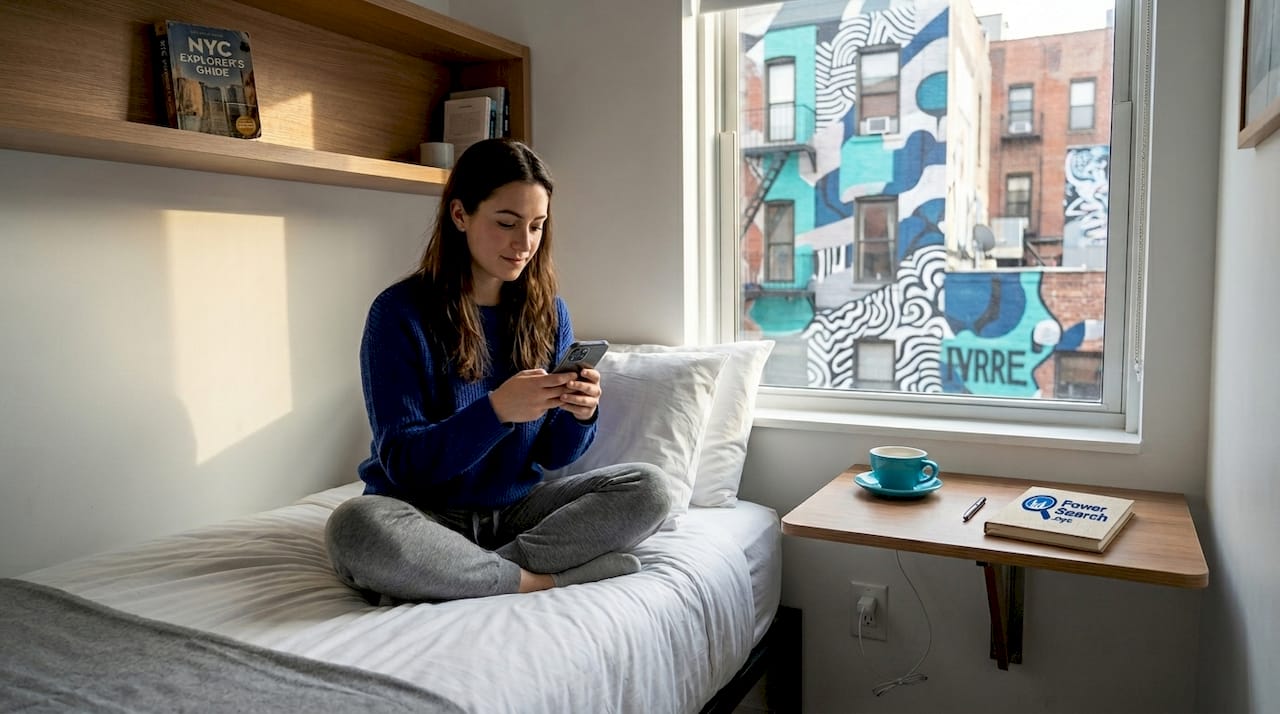
Pod Hotels are the most well-known example. Their rooms are small but smartly designed, with built-in storage, platform beds, and everything positioned so the space doesn’t feel suffocating. Micro-hotels like Pod offer compact rooms at $120 to $220 per night with rooftop decks and free Wi-Fi, making them a solid choice for solo travelers or couples on short trips.
Here’s what makes micro-hotels work for budget travelers:
- Price point. At $120 to $220 per night, they often land well under the Manhattan average while keeping you in central locations like Midtown East, Times Square, or Williamsburg.
- Included amenities. Free Wi-Fi, rooftop decks, and sometimes communal kitchens mean you’re getting more than just a bed.
- Social atmosphere. Communal spaces attract other travelers, which can make solo trips feel less isolating.
- Location. Many micro-hotels sit in prime spots, so you step outside and immediately feel like you’re in a movie.
The trade-off is real, though. If you’re bringing two large suitcases, you will struggle. One carry-on bag is the recommended approach for micro-hotel stays. Families with kids should look elsewhere. But for the solo traveler or couple focused on sightseeing, a micro-hotel in a great location beats a spacious room in a far-flung neighborhood every time.
Pro Tip: Check out micro-hotel deals in Manhattan to compare current rates across Pod locations and similar properties.
Micro-hotels suit those comfortable with small rooms. Next, let’s look at budget hotel chains offering more traditional comforts.
Budget hotel chains in outer boroughs: value and reliability
If the idea of a 100 sq ft room makes you anxious, budget hotel chains in Queens and Brooklyn are your best friends. Names like Hampton Inn and Holiday Inn Express might not sound exciting, but they deliver something micro-hotels often can’t: predictability, space, and free breakfast.
Budget chains in outer boroughs like Hampton Inn offer free breakfast and often cost 30 to 50% less than comparable Manhattan hotels, making them especially appealing for travelers over 30 who value privacy and a reliable experience.
Here’s why outer borough chains deserve serious consideration:
- Room size. Expect 180 to 230 sq ft rooms, sometimes with two queen beds, which is a game changer for families or anyone who needs to spread out.
- Free breakfast. This is a bigger deal than it sounds. In NYC, a decent breakfast for two can easily run $30 to $50. Over five days, that’s $150 to $250 back in your pocket.
- Price advantage. A Hampton Inn in Long Island City, Queens, or near JFK might run $130 to $160 per night when a comparable Manhattan hotel would cost $220 or more.
- Quiet neighborhoods. Outer borough chain hotels tend to sit in calmer residential or commercial areas, away from the tourist chaos of Midtown.
- Subway access. Most of these properties are within a 5 to 10 minute walk of a subway station, putting you 15 to 25 minutes from Midtown.
The one honest downside is the commute factor. You will spend time on the subway. If your schedule is packed with early morning activities and late-night events, that 20-minute ride each way adds up. But for most travelers, the savings and comfort more than justify it.
Pro Tip: Book chains at least three to four weeks out. Their rates spike quickly as availability drops, especially around holidays and major events.
Having reviewed traditional chains, let’s explore boutique and local budget hotels offering unique neighborhood character.
Local boutique and neighborhood hotels: authentic and affordable
This is the category most travelers overlook, and it’s often where the best value hides. Smaller, independently owned hotels in neighborhoods like Long Island City (LIC), Astoria, Harlem, Williamsburg, and Sunset Park offer something the big chains can’t: a genuine sense of place.
Neighborhoods like Long Island City and Astoria provide budget hotels with Manhattan skyline views and fast transit, plus an authentic local flavor that makes your trip feel less like a theme park visit and more like actually being in New York.
Here’s what makes local boutique hotels worth considering:
- Larger rooms at lower prices. A boutique hotel in Harlem or Astoria might offer a 200 sq ft room with a proper closet and a neighborhood view for $110 to $150 per night.
- Local dining access. You’ll eat better and cheaper when you’re surrounded by neighborhood restaurants instead of tourist-trap spots near Times Square.
- Cultural experience. Staying in Harlem means you’re near the Apollo Theater, Marcus Samuelsson’s Red Rooster, and some of the best soul food in the city. Astoria puts you in the middle of one of NYC’s most diverse food scenes.
- Fast transit. The 7 train from LIC gets you to Midtown in about 10 minutes. The A train from Sunset Park is similarly quick.
Here’s a practical breakdown of neighborhood options to help you compare:
| Neighborhood | Avg. nightly rate | Transit to Midtown | Room size avg. | Best for |
|---|---|---|---|---|
| Long Island City, Queens | $120 to $155 | 10 to 15 min | 180 to 210 sq ft | Value seekers, skyline views |
| Astoria, Queens | $110 to $145 | 20 to 25 min | 185 to 220 sq ft | Food lovers, longer stays |
| Harlem, Manhattan | $115 to $160 | 15 to 20 min | 175 to 200 sq ft | Culture seekers, families |
| Williamsburg, Brooklyn | $130 to $175 | 20 to 30 min | 170 to 210 sq ft | Younger travelers, nightlife |
| Sunset Park, Brooklyn | $100 to $130 | 25 to 35 min | 190 to 230 sq ft | Budget-first travelers |
Smart booking tips for boutique and neighborhood hotels:
- Book directly with the hotel when possible. Many smaller properties offer better rates or perks (like late checkout) when you skip third-party platforms.
- Verify subway line access before booking. Check that the line runs frequently on weekends, not just weekdays.
- Confirm amenities in writing. Smaller hotels sometimes list amenities that are seasonal or inconsistently available.
- Read recent reviews specifically about noise and cleanliness. Boutique hotels vary more than chains.
- Ask about luggage storage if you’re arriving before check-in or leaving after checkout. Not all small hotels offer this.
Before wrapping up, here’s a direct comparison of the main budget hotel types to help you choose the best fit.
Comparing budget hotel types in NYC: micro, chain, and local boutique
Understanding the differences between budget hotel types in NYC comes down to matching your travel style with the right property. Price alone won’t tell you the full story.
| Feature | Micro-hotel | Budget chain | Local boutique |
|---|---|---|---|
| Price per night | $120 to $220 | $110 to $180 | $100 to $175 |
| Room size | 100 to 180 sq ft | 180 to 230 sq ft | 175 to 230 sq ft |
| Free breakfast | Rarely | Often included | Occasionally |
| Free Wi-Fi | Yes | Yes | Usually yes |
| Luggage storage | Usually yes | Yes | Varies |
| Noise level | Moderate to high | Low to moderate | Low to moderate |
| Best borough | Manhattan | Queens, Brooklyn | Queens, Brooklyn, Harlem |
| Transit to Midtown | 5 to 20 min | 10 to 30 min | 10 to 35 min |
Use our budget hotel comparison guide to filter these options by your specific dates and priorities.
Here’s a quick summary of who each type suits best:
- Micro-hotels work best for solo travelers and couples on short trips who want a central location and don’t mind a small room.
- Budget chains are ideal for travelers who want comfort, reliability, free breakfast, and more space, especially for stays of three nights or more.
- Local boutique hotels suit travelers who want a real neighborhood experience, better value for longer stays, and access to authentic local dining and culture.
With this clear comparison, you can decide which budget hotel type fits your trip best.
Our honest take on budget hotels in NYC
Here’s something most travel guides won’t tell you: the “best” budget hotel in NYC is not the cheapest one. It’s the one that costs you the least overall when you factor in transportation, meals, and the energy you spend getting around.
We’ve seen travelers book a $95 per night room in a far corner of the Bronx and end up spending $40 a day on rideshares because the subway access was poor. That’s not a deal. Meanwhile, a $155 per night micro-hotel in Midtown East with free Wi-Fi and luggage storage, walking distance from three subway lines, often ends up being the smarter financial choice.
The outer boroughs genuinely offer great value, but only if you pick the right neighborhoods. Long Island City and Astoria in Queens are the sweet spots. Sunset Park in Brooklyn is worth considering if you’re on an extremely tight budget and don’t mind a longer commute. Harlem is underrated for travelers who want to stay in Manhattan without paying Manhattan prices.
One more thing: don’t overlook the hostel vs. budget hotel question entirely. If you’re a solo traveler in your 20s and open to shared dorms, NYC hostels can run $40 to $70 per night and often include social programming and communal kitchens. But if you value privacy and a decent night’s sleep, even the most affordable budget hotel is worth the extra cost. The best value NYC accommodation types are the ones that match your actual habits, not just your wishlist.
Find your perfect NYC budget hotel with PowerSearch NYC
Planning a trip to New York City doesn’t have to feel overwhelming. Whether you’re eyeing a micro-hotel near Times Square, a chain property in Queens, or a boutique spot in Harlem, the right affordable option is out there waiting for you.

At PowerSearch NYC, we make it easy to compare all types of budget accommodations across every borough, filter by subway access, amenities, and price range, and find deals that actually fit your travel style. No guesswork, no surprises. Browse our NYC hotel search to start comparing real rates today, or explore our neighborhood guide to figure out exactly where in the city you want to base yourself.
Frequently asked questions
What are typical price ranges for budget hotels in NYC?
Budget hotel rates in NYC generally range from $110 to $220 per night depending on the borough, hotel type, and time of year, with outer borough options consistently landing on the lower end.
Are micro-hotels like Pod suitable for families?
Micro-hotels are not a great fit for families. Pod Hotels feature compact rooms around 100 to 180 sq ft, which works well for solo travelers or couples but leaves little room for kids, extra luggage, or any real comfort with more than two people.
Which borough offers the best value for budget hotels with subway access to Manhattan?
Queens is the top pick, particularly Long Island City and Astoria. Queens (LIC/Astoria) offers some of the lowest rates in the metro area with a 10 to 15 minute subway ride to Midtown and impressive Manhattan skyline views thrown in.
Do budget chains provide free breakfast in NYC?
Yes, many do. Budget chains offer free breakfast and cost 30 to 50% less than Manhattan hotels, making them one of the most practical choices for travelers who want reliable value without sacrificing comfort.
How can I maximize cost savings when staying in micro-hotels?
Pack light, ideally one carry-on, to make the most of the limited storage. Micro-hotels recommend using communal kitchens and participating in free programming like Pod Walks to cut daily expenses without sacrificing the NYC experience.
No Comments