

Top 5 ijustwanttoeat.com Alternatives 2026
Disclosure: This post may contain affiliate links. We may earn a commission for purchases made through links in this post, at no cost to you.
Comparing delivery fees, hidden charges, and reliable online ordering across restaurant and grocery platforms is confusing for operators and diners who need predictable costs and service. Most existing online food ordering and delivery solutions either charge commissions that cut into margins or lack transparency around surcharges and customer data control. This comparison details fee structures, order management, and platform transparency among five alternatives so you can choose one that protects your bottom line and fits your service model.
Table of Contents
Power Search NYC
At a Glance
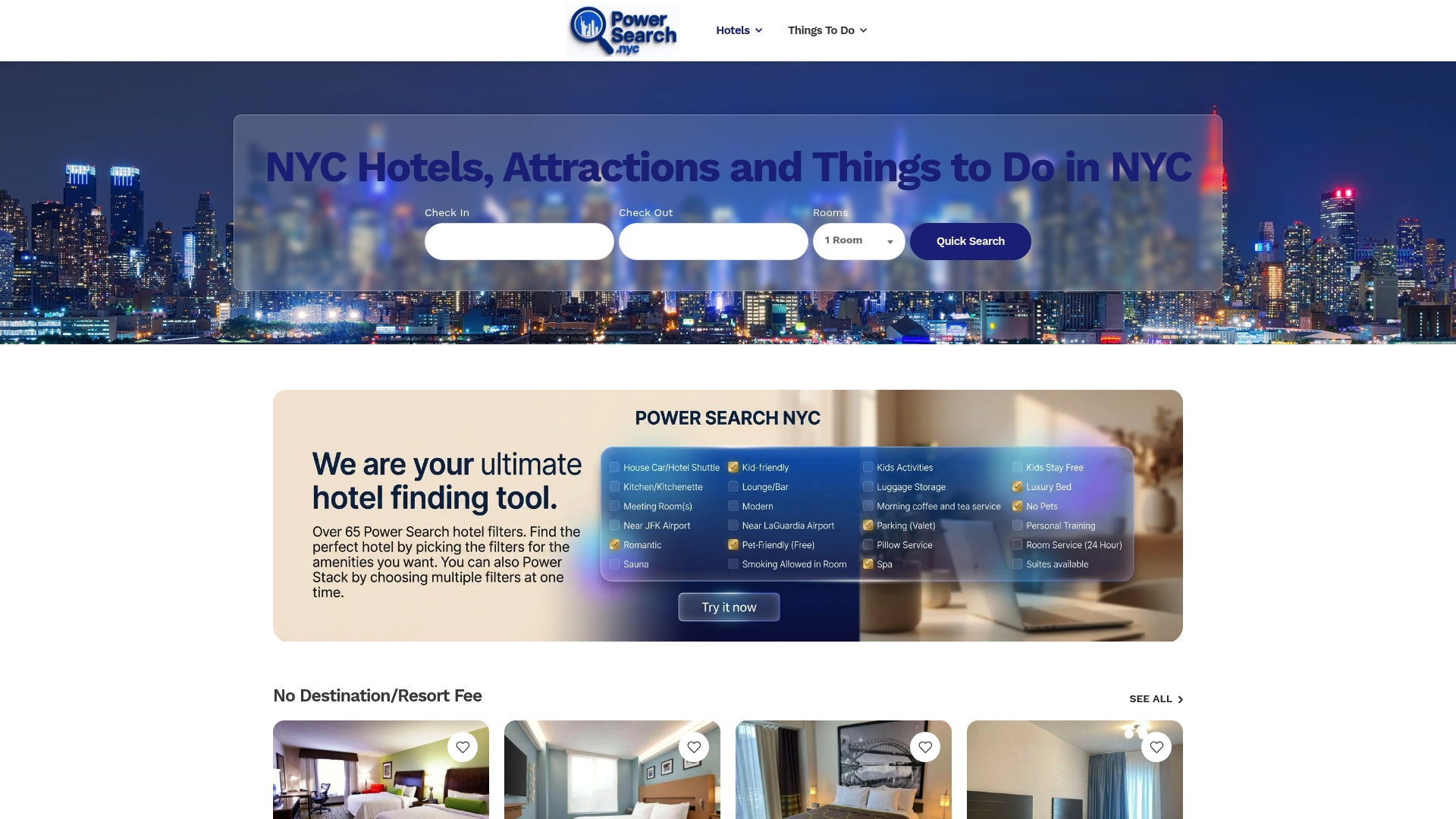
PowerSearch flags resort fees and destination fees in search results so you can compare true nightly costs before booking. The site aggregates hotel listings, attractions, tours, and things to do across New York City and combines that with neighborhood-focused search.
Core Features
-
Fee transparency: Filters and labels surface resort fees, destination fees, and other add-ons so the price you see is closer to the price you pay.
-
Extensive hotel filtering: Search by neighborhood, amenities, and categories like family-friendly, budget, luxury, and pet-friendly to narrow options quickly.
-
Listings plus editorial: Aggregated hotel listings sit alongside curated blog posts and neighborhood guides that explain booking tips and hidden charges.
-
Activities and tours: A searchable collection of attractions, tours, and activities complements hotel results for one-stop trip planning in NYC.
Key Differentiator
PowerSearch centers its comparison around fee visibility. Rather than surfacing only headline rates, the platform highlights extra charges and lets you filter by them. That makes apples-to-apples comparisons between listings in the same neighborhood much faster when you care about total cost.
Pros
-
Detailed cost filtering helps you avoid surprises. Seeing fees up front reduces check-in friction for families and first-time visitors.
-
Neighborhood-first search organizes hotels by commute time and nearby attractions, which speeds up decisions when you want a specific subway line or park nearby.
-
Curated guides and blog posts provide practical booking tips and neighborhood context instead of just a price grid.
-
Listings cover a broad set of accommodation types and attractions, so you can compare a boutique hotel against a family suite and nearby kid-friendly tours in one search.
-
The platform appears to monetize through affiliate links, hotel partnerships, and sponsored listings while keeping fee labels visible, which helps you spot sponsored entries before clicking.
Cons
- Content depends on scraped website data and may omit some hotels or specific activities in certain categories.
Who It’s For
Travelers to New York City who want transparent, fee-inclusive hotel and activity comparisons. Families, solo business travelers, and travel advisors benefit from neighborhood filters and clear fee labeling when they must present accurate total-cost options.
Unique Value Proposition
The platform shows the total nightly cost early in the funnel so you can compare hotels by out-the-door price rather than by a lower headline rate. That changes booking math for anyone managing a travel budget, especially families and trip planners who need predictable final charges.
Real World Use Case
A family planning a week near Central Park uses PowerSearch to filter for pet-friendly, family-friendly hotels with no resort fees, then reads the neighborhood guide to pick three hotels within a ten-minute walk of the park and books a kid-focused tour with clear pricing.
Website: https://powersearch.nyc
ChowNow
At a Glance
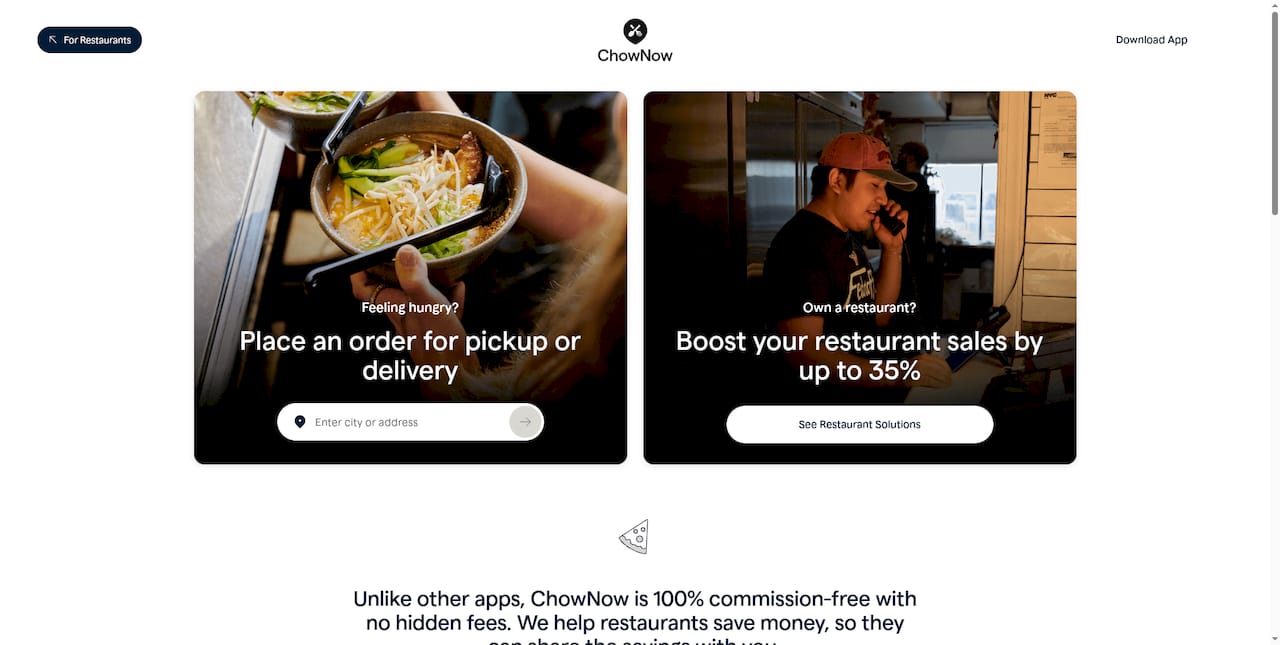
ChowNow reports working with over 20,000 restaurants and advertises a 100% commission-free online ordering model aimed at independent operators. The platform bundles branded ordering, listings on partner sites, and marketing tools so restaurants keep more revenue from each sale.
Core Features
Core capabilities center on direct online ordering and brand control.
- Commission-free online ordering app that restaurants can brand with their own logo and menu. This replaces third-party marketplaces for direct pickup and takeout orders.
- Listing on partner sites to increase discoverability and capture orders outside a restaurant’s native channels.
- Customized online ordering solutions including basic marketing tools, menu management, and optional branded app packaging.
Key Differentiator
ChowNow’s stated edge is the 100% commission-free model designed for independent restaurants that want to avoid per-order marketplace fees. That focus prioritizes revenue retention and branded customer touchpoints rather than driving marketplace volume for big chains.
Pros
- Easy to get live. The setup workflow and menu management are straightforward, which helps kitchen staff start taking online orders with minimal training.
- No commissions or hidden fees means restaurants keep more revenue and can pass savings to customers through lower delivery fees or promotions.
- Reliable enough for daily operations according to users who praise uptime for order processing and menu edits.
- Branded app and ordering microsite improve brand continuity compared with generic marketplace pages.
- Marketing tools for promotions and listings help small operators increase visibility without hiring a separate agency.
Cons
- Delivery reliability is inconsistent for some restaurants, which can lead to customer complaints when the vendor network handles last-mile fulfillment.
- Frequent order errors have been reported by users, creating extra workload for front-of-house staff reconciling tickets.
- Customer support responsiveness is uneven, making problem resolution slower during peak service hours.
- Refunds and unexpected surcharges are a pain point for some operators and their customers.
When It May Not Fit
If your business depends on a fully managed, high-quality delivery network out of the box, ChowNow may not meet expectations. The limitations above mean restaurants that need guaranteed delivery performance or rapid support during rush periods should plan a contingency, like an in-house driver or a backup fulfillment partner.
Who It’s For
Independent restaurant owners and small multi-location operators who prioritize keeping order revenue and controlling their brand experience. It fits teams that can handle some operational complexity in exchange for lower per-order costs.
Real World Use Case
A local café adopts ChowNow to run branded pickup orders and list on partner sites. The café reduces marketplace commission spend, runs targeted promotions through the platform, and increases repeat direct orders while handling delivery with its own staff.
Pricing
Not applicable in the provided data. This review is informational only and does not list specific plan rates. Contact ChowNow directly for current pricing, package options, and any setup or platform fees.
Website: https://chownow.com
MealMe API
At a Glance
The vendor advertises integration with over 1 million stores’ point of sale systems, enabling menus, inventory, and orders to flow directly from apps to merchant terminals. The API is used by TripAdvisor, Favor, Jupiter, Amenify, DashTrack, and Liifer on their platforms.
Core Features
Start with a single integration point for both restaurant and grocery data. The API exposes menu items, inventory status, and order endpoints so your product shows real availability and pricing.
- Unified API for restaurant and grocery menus and inventory across store types.
- Order sending that connects to over 1 million stores’ point of sale systems and supports thousands of delivery providers.
- Embeddable checkout and a white labeled solution that includes tracking and customer support options.
Key Differentiator
MealMe’s pitch is the combination of broad store coverage and direct point of sale links. That store count above lets platforms surface local options without stitching multiple vendor feeds together, and direct POS paths reduce manual reconciliation.
Pros
- Offers extensive store and product coverage which helps reduce integration work when you need national reach rather than one-off store feeds.
- Supports multiple delivery options so you can choose between third party couriers or merchant drivers to tune cost and speed per order.
- Integration patterns are developer friendly and support embeddable checkout, which lowers UI work on your side and speeds time to market.
- The API already powers recognizable apps which shows practical versatility and real production usage across different verticals.
Cons
- Third party reviews and user feedback are not available, so independent experience reports are absent and you must rely on vendor materials.
- Several public pages such as pricing and detailed docs return errors or 404 responses, indicating limited transparency in online documentation.
- The publicly available feature list omits specifics about support SLAs and customization options which raises questions about enterprise readiness.
When It May Not Fit
If you require fully public documentation and a published SDK ecosystem for self service, MealMe’s current site gaps will slow evaluation. If you need explicit SLAs, onshore support, or deep customization details before pilot, expect extra discovery work.
Who It’s For
Developers and platform owners who need to embed food and grocery ordering at scale. Ideal when you want broad store coverage and flexible delivery wiring rather than building per-merchant integrations from scratch.
Real World Use Case
TripAdvisor reportedly integrated MealMe to add on-page food ordering for restaurant listings. Favor and Jupiter use the API to connect local stores and grocery lists to checkout flows, showing how the API supports both discovery and transactional experiences.
Pricing
Pricing is not published. The product data lists pricing as not applicable for public display and the vendor does not expose a standard rate card on the site. Expect to contact sales or request API access for commercial terms and pilot pricing.
Website: https://mealme.ai
FreshDirect
At a Glance
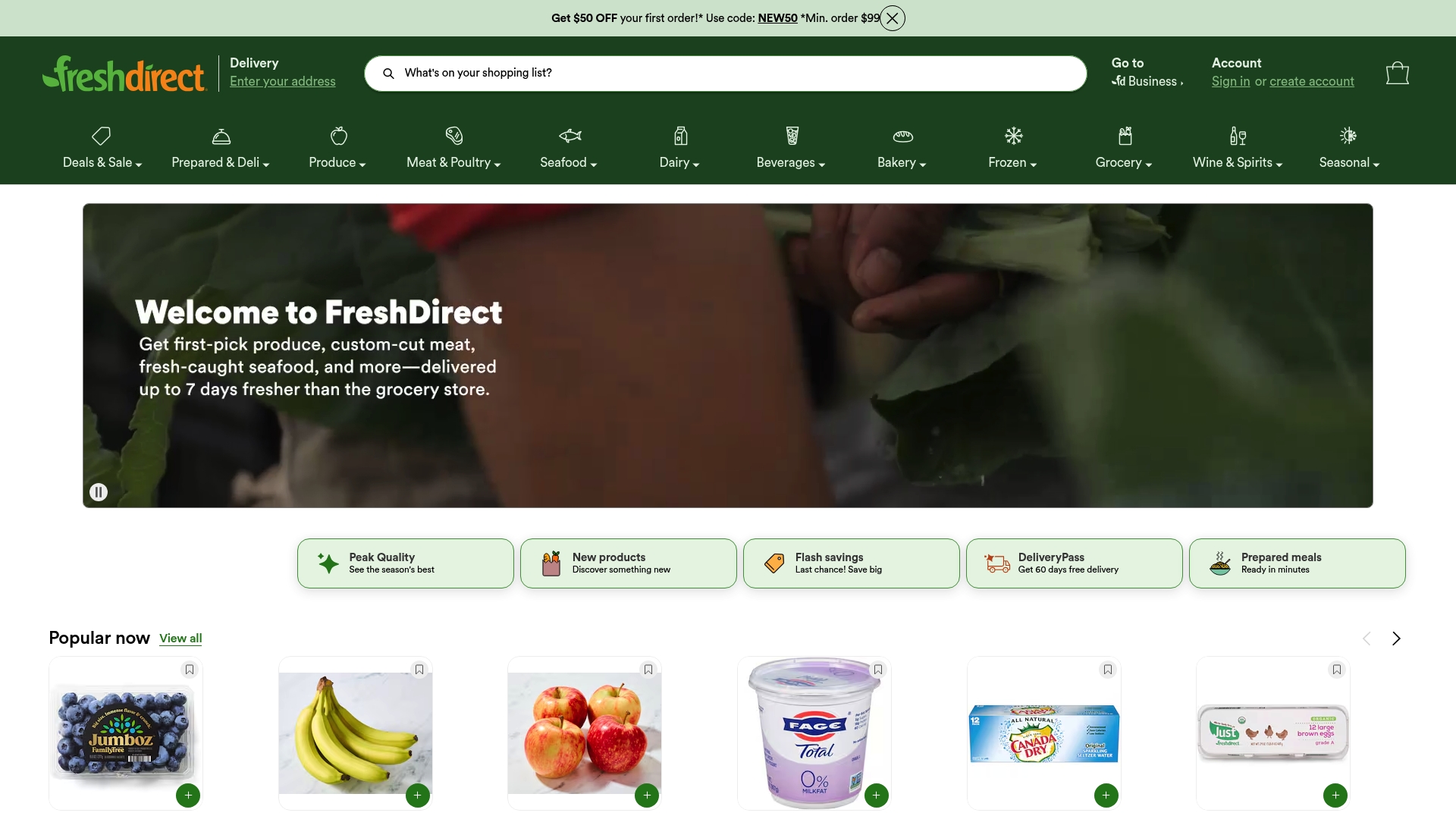
FreshDirect’s marketing materials advertise a subscription delivery pass that provides 60 days of free delivery and a steady rotation of seasonal specialty items. The site combines single-order checkout with a pass option aimed at repeat home shoppers in the Northeast.
Core Features
FreshDirect centers on a broad grocery roster and flexible delivery scheduling. The interface highlights produce quality and lets you pick delivery windows by time of day.
- Wide selection of fresh produce, dairy, meats, and pantry staples.
- Convenient online ordering and delivery scheduling with time-window selection.
- Subscription delivery pass for recurring shoppers and specialty products for seasonal or hard-to-find items.
- Deals and sales surfaced on product pages and the homepage.
Key Differentiator
The standout is that delivery pass mentioned above. That subscription model bundles free or discounted deliveries for a set period and pairs it with curated seasonal offerings, which nudges regular shoppers toward predictable cost and menu planning.
Pros
- High-quality fresh produce and meats are consistently featured, which matters when you want restaurant-grade ingredients at home.
- The checkout flow is straightforward; adding substitutions and notes for drivers is quick and visible during order review.
- The delivery pass removes per-order delivery friction when you order weekly, making repeat orders feel cheaper and faster.
- A respectable range of specialty and seasonal items means you can find regional or limited-run products without visiting a specialty shop.
- Promotional deals appear often, helping offset the perception of higher prices when you time purchases around sales.
Cons
- Delivery reliability is uneven; frequent delays and late windows are reported by customers and show up in review threads.
- Orders sometimes arrive with missing or incorrect items, which requires time on customer service to resolve.
- Pricing leans higher than some local grocers, so value-conscious shoppers may prefer in-store runs for staples.
- Packaging often uses a lot of plastic, which has drawn complaints from environmentally minded customers.
When It May Not Fit
FreshDirect is limited to specific regions, primarily the Northeast US. If you travel frequently or live outside that footprint, the site is unusable. Also, if your priority is lowest-cost staples rather than specialty produce, local discount grocers will usually beat FreshDirect on price.
Who It’s For
Busy families and professionals in the Northeast who prefer home delivery of higher-quality groceries and who place value on convenience over the absolute lowest price. Good for people who order weekly and want predictable delivery windows.
Real World Use Case
A working parent subscribes to the delivery pass and schedules weekly evening windows. They order produce, proteins, and a couple of specialty items, skip the store run, and use delivery notes to manage substitutions during peak weeks.
Website: https://freshdirect.com
Sauce
At a Glance
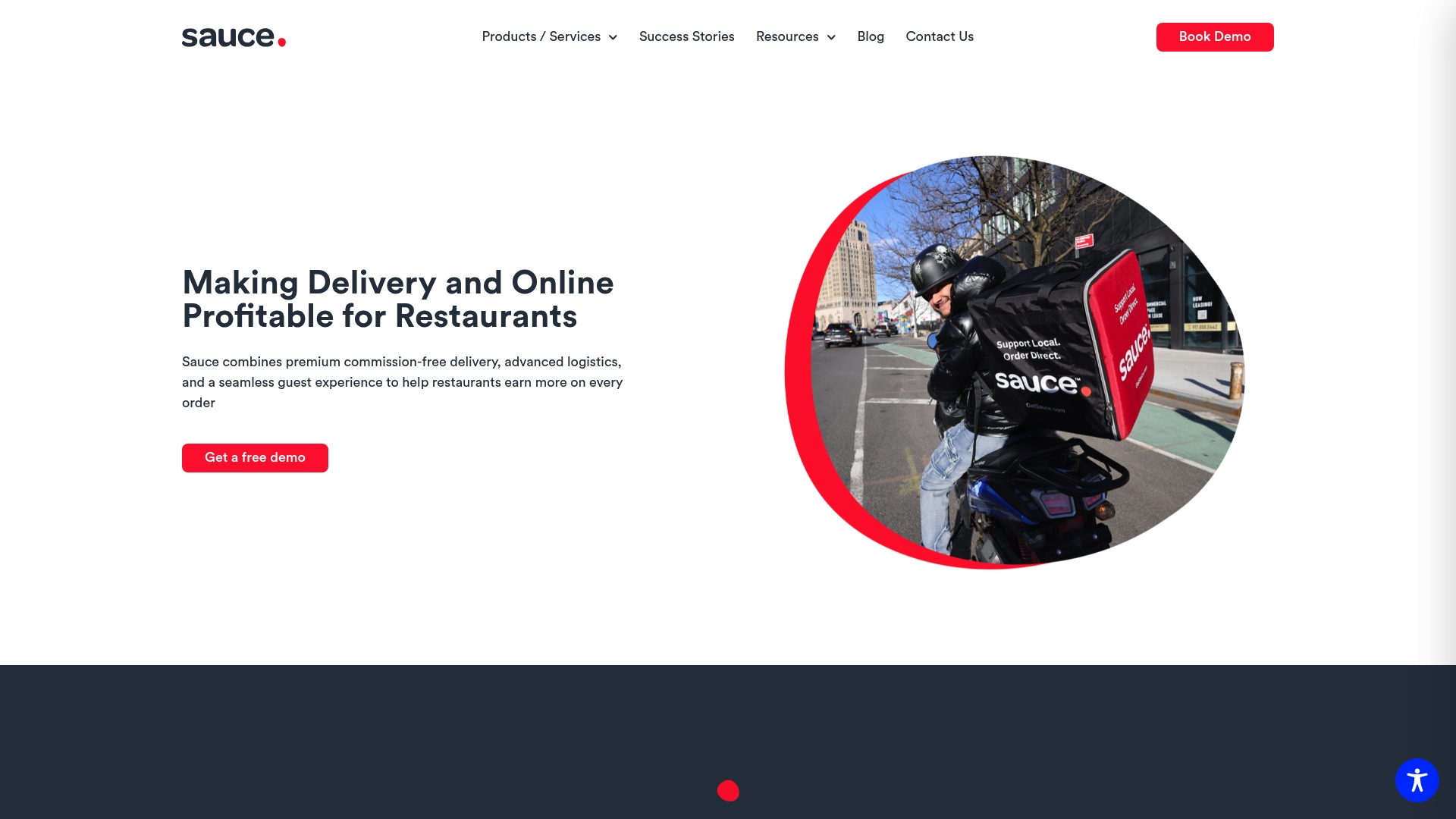
Commission-free premium delivery across multiple courier fleets is Sauce’s standout claim, paired with tools that let restaurants keep their own customer data and marketing lists. The platform mixes direct ordering, managed delivery, and automation to cut what restaurants pay per order.
Core Features
Sauce bundles restaurant-facing ordering and delivery controls with customer tools.
- Direct online ordering with SEO-powered website integration to capture orders off third-party marketplaces.
- Commission-free premium delivery that routes through multiple courier fleets rather than a single in-house network.
- AI-powered customer retention and re-ordering automation for targeted campaigns and repeat visits.
- Delivery operations features including refund processing, analytics, and live order tracking for guests.
Key Differentiator
Sauce frames its product around two linked ideas: removing commission fees on deliveries and letting restaurants own customer data. That combo aims to shift margin back to operators while giving them a CRM-style view of order behavior across channels.
Pros
-
Fast, intuitive interface that most staff learn quickly; dashboards and menus are straightforward to navigate.
-
The commission-free claim reduces per-order fees on paper, which helps restaurants testing direct-order volume without onboarding marketplace contracts.
-
Built-in marketing and re-order automation reduces manual promo work; teams can schedule messages and win back one-off customers.
-
Live order tracking and real-time feedback give guests visibility, which helps reduce call volume at peak times.
Cons
-
Delivery reliability is inconsistent according to the product data, and late or failed drops will hurt guest satisfaction and repeat business.
-
Customer support responsiveness is reported as poor, making operational issues harder to resolve during busy service windows.
-
Refund and dispute handling is slow and cumbersome in some cases, which can erode trust with both guests and staff.
When It May Not Fit
If you run a high-volume operation where late deliveries directly translate to lost revenue, Sauce’s reported performance reliability issues may create unacceptable risk. Teams that require rapid support escalation or guaranteed refund turnarounds will likely find the current support posture limiting.
Who It’s For
Independent restaurants and small regional groups focused on cutting delivery commissions and centralizing customer data. Best for operators willing to pilot an alternate delivery stack and to accept some operational risk while they migrate orders off third-party marketplaces.
Real World Use Case
A neighborhood restaurant switches its web ordering to Sauce to avoid third-party commission fees. They move repeat-customer promos into Sauce’s automation, track order trends in the dashboard, and reclaim revenue that previously went to marketplaces while retaining guest emails and order histories.
Pricing
The product data lists pricing as “Not applicable — informational only.” Sauce does not publish pricing in this dataset; contact Sauce for current fees, delivery program costs, and any managed service charges.
Website: https://getsauce.com
Comparative Analysis
Choosing the right service often requires understanding critical tradeoffs between products. Here, we explore key dimensions to evaluate PowerSearch NYC against its competitors.
Pricing Transparency and Comparison Tools
PowerSearch NYC emphasizes fee visibility, highlighting resort and destination charges directly within search results. This feature uniquely benefits travelers needing accurate budgeting for accommodations. Competitors like FreshDirect present challenges for transparent pricing due to regional availability limitations, whereas tools such as MealMe API focus on development scalability but lack direct consumer pricing insights. Travelers aiming for clear out-of-pocket expense viewing find PowerSearch NYC particularly fitting for this objective.
Product Coverage and Niche Utility
While PowerSearch NYC stands out for its neighborhood-based hotel listings and local recommendations tailored to visitors in New York City, other competitors provide specific advantages for their unique demographics. For instance:
- ChowNow specializes in allowing restaurants full revenue retention, making it ideal for independent operators controlling costs.
- FreshDirect serves Northeast shoppers seeking rotating specialty ingredients alongside subscription delivery ease. However, delivery reliability there can be inconsistent.
- Sauce enables restaurants direct customer interaction through commission-free ordering, which avoids third-party dependency but requires tempering operational risks.
Best Fit
- Travelers planning NYC trips: PowerSearch NYC’s fee transparency enables clear comparisons inclusive of neighborhood-focused recommendations.
- Developers requiring integrated scale: MealMe API powers worldwide menu and fulfillment integrations.
- Independent restaurants saving margins: ChowNow excels in brand-focused, commission-free ordering.
- Busy groceries seeking unique finds: FreshDirect ensures convenient delivery of standout seasonal products.
Our Pick
PowerSearch NYC’s specialized fee transparency and local advice are ideal for travelers managing budgets and investigating specific NYC neighborhoods. If fee details are secondary and integration scale leads concern, competitors like MealMe API could provide alternative solutions. At its best, PowerSearch NYC’s precise methodology empowers well-informed visitor decisions for NYC accommodations.
Hotel and Activity Booking Platforms Comparison
Compare platforms for booking accommodations and activities, focusing on fee transparency and versatility.
| Product | Core Feature | Best For | Pricing | Notable Limitation |
|---|---|---|---|---|
| PowerSearch NYC | Aggregates hotels, attractions, and fee-inclusive pricing for New York City | Travelers who need detailed cost and neighborhood-focused search | Not disclosed | Data may omit certain hotels or activities. |
| ChowNow | Direct ordering and branded solutions for independent restaurants | Restaurant owners prioritizing direct revenue | Not disclosed | Inconsistent delivery reliability. |
| MealMe API | Unified food and grocery API connecting to over 1 million store’s point-of-sale systems | Developers needing broad integration and delivery flexibility | Not disclosed | Limited public documentation. |
| FreshDirect | Online grocery delivery with a subscription option for frequent shoppers | Busy families preferring home delivery of high-quality groceries in the Northeast | Not disclosed | Service limited to the Northeast US; higher pricing than in-store |
| Sauce | Commission-free, data-centric restaurant ordering platform | Restaurants aiming to cut commissions while retaining full customer data | Not disclosed | Reliability issues with delivery operations. |
Find Transparent Hotel Pricing and Neighborhood Insights with PowerSearch
Planning a trip to New York City can be confusing when headline hotel rates hide extra fees and neighborhood choices affect your experience. The challenge is clear: travelers want to compare true nightly costs including resort and destination fees while also narrowing searches by nearby attractions and amenities. PowerSearch solves this by flagging hidden fees upfront and letting you filter hotels by pet-friendly options, family suitability, and proximity to parks or subway lines.
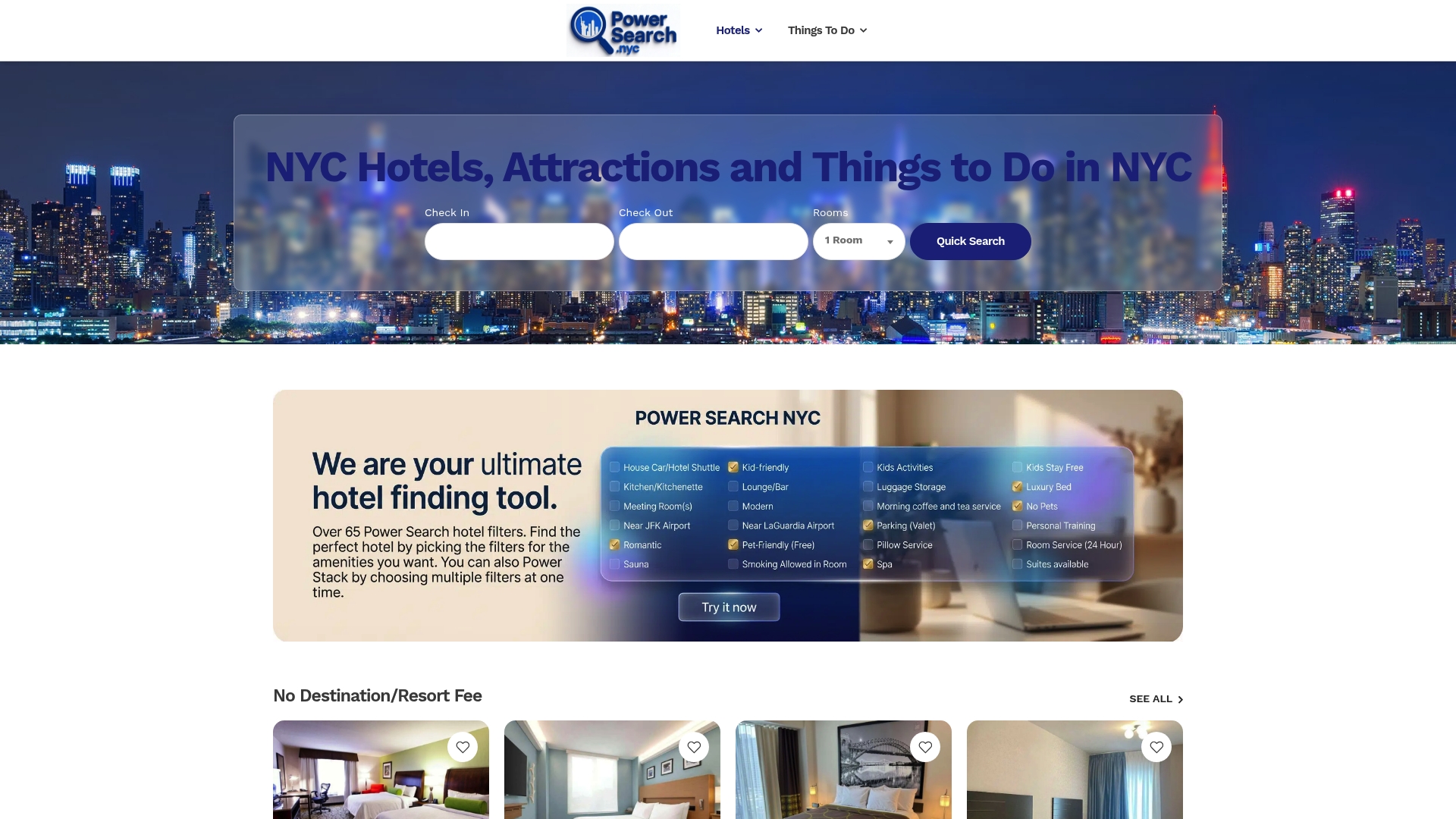
Visit PowerSearch NYC now to make fair price comparisons and discover curated neighborhood guides. Start your search today and find hotels with transparent pricing and trusted booking advice so you can pick accommodations confidently and plan complementary tours within your budget.
Frequently Asked Questions
What specific advantage does Powersearch offer for fee transparency in hotel bookings?
Powersearch highlights resort fees, destination fees, and other add-ons in its search results. This fee transparency enables users to compare true nightly costs before finalizing their bookings. Travelers should use Powersearch to avoid unexpected extra charges during check-in.
How does Powersearch’s neighborhood filtering differ from other platforms?
Powersearch organizes hotel listings by neighborhood, allowing users to filter options based on proximity to transit and attractions. This focus on neighborhood-first search accelerates decision-making, especially for those who prioritize certain locations or experiences. Consider using Powersearch for a streamlined search tailored to specific areas of interest in New York City.
Can Powersearch help families find hotels without hidden fees?
Yes, Powersearch specializes in providing clear labeling of fees, which helps families avoid surprises in hotel bookings. Many travelers, especially families, can benefit from seeing fees upfront as this reduces check-in friction and makes budgeting easier. Families planning a trip should explore Powersearch to identify truly family-friendly options with no hidden costs.
How does Powersearch compare to competitors like ChowNow for restaurant online ordering?
ChowNow excels with a commission-free online ordering system, enabling independent restaurants to maintain a direct relationship with customers. Powersearch, while not a direct competitor, centers on travel accommodations and fee visibility, making it ideal for travelers needing transparent hotel price comparisons. If you seek a dining solution with zero commissions, ChowNow is worth considering, but for hotel bookings, Powersearch is the better fit.
What types of attractions can I find alongside hotel listings on Powersearch?
Powersearch hosts a searchable collection of attractions, tours, and activities in addition to hotel results. This integration assists travelers in planning their entire NYC experience from a single platform. Potential visitors should utilize this feature to discover and book interesting activities while securing accommodations.
No Comments