

NYC Hotel Resort Fee Explained: 2026 Traveler Guide
Disclosure: This post may contain affiliate links. We may earn a commission for purchases made through links in this post, at no cost to you.
An NYC hotel resort fee is a mandatory charge added on top of your base room rate, often labeled as a “destination fee” or “hospitality service fee,” and 2026 regulations now require hotels to show this cost upfront before you book. The industry term for these charges is “mandatory ancillary fees,” and understanding them is the difference between a budget that holds and one that blows up at checkout. New York City’s Department of Consumer and Worker Protection (DCWP) classified these as hidden junk fees that appeared late in the booking process, making fair price comparisons nearly impossible. That changes now, and this guide tells you exactly what to expect.
What is an NYC hotel resort fee and why does it exist?
An NYC hotel resort fee is a mandatory extra charge tacked onto your room rate to cover a bundle of hotel amenities and services. Hotels present it as a convenience, but the reality is that it inflates the advertised price in a way that makes comparison shopping harder than it should be.
Hotels justify these fees by pointing to services they claim are included in the package. According to the FTC, resort fees cover amenities like pool access, gym use, in-room Wi-Fi, newspaper delivery, and sometimes local phone calls. The argument from hotels is that bundling these services into one fee is simpler than charging for each individually.

The problem is that most travelers never asked for half of those services. You might not use the gym or the pool, but you pay for them regardless. The FTC notes that because these fees are automatically charged at check-in with little real consumer choice, they function as mandatory costs, not optional add-ons.
Common services bundled into NYC hotel resort fees include:
- High-speed Wi-Fi (in-room and lobby)
- Fitness center or spa access
- Pool or rooftop lounge access
- In-room coffee or minibar credits
- Local and toll-free phone calls
- Newspaper or streaming service access
- Luggage storage or concierge services
Pro Tip: Just because a fee is labeled “destination fee” or “facility fee” does not make it optional. If the hotel charges it automatically to every guest, it is a mandatory ancillary fee by definition, and the total price you see should include it.
How 2026 NYC regulations changed hotel fee disclosures
New York City’s DCWP rule, effective February 21, 2026, bans hidden junk fees and requires hotels to display the total price, including all mandatory resort and destination fees, from the very first moment a price appears in a booking flow. This is the most significant shift in NYC hotel pricing transparency in years.
Here is what the new rule requires hotels to do:
- Display the full all-in price, including resort fees and mandatory charges, before the traveler reaches the payment screen.
- Clearly disclose any credit card hold amounts that will be placed at check-in, including the reason for the hold.
- State the exact timeline for refunding any deposit or hold after checkout.
- Avoid any pricing display that shows a lower base rate while burying the resort fee in fine print or a later step.
NYC’s rule mirrors federal FTC standards but goes further by adding mandatory credit card hold transparency, which the FTC does not specifically require. That extra layer matters because a hotel can quote an accurate nightly rate and still temporarily tie up hundreds of dollars of your money through an undisclosed hold.
The scale of the problem before this rule took effect was significant. NYC received over 300 complaints about hidden hotel fees in 2025 alone, and economists estimated that junk fees cost New Yorkers and visitors more than $65 million annually in wasted time and money. That figure puts the consumer harm in concrete terms: this was not a minor inconvenience but a city-wide financial drain.
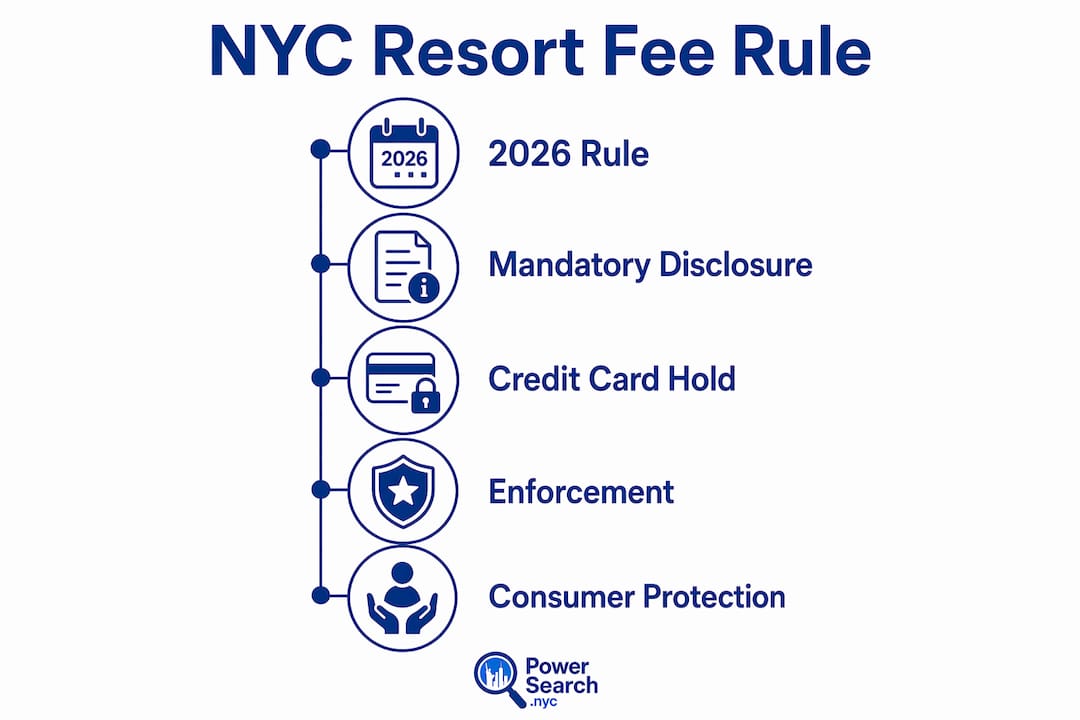
The Mamdani administration framed this rule as a consumer protection priority, and the DCWP has enforcement authority to act against hotels that continue to mislead travelers. If you book a hotel in NYC after February 21, 2026, and the total price shown at the start of your search does not include all mandatory fees, that hotel may be in violation of city rules.
How to identify and compare true hotel costs in NYC
Comparing NYC hotel prices by base rate alone is like comparing flights by ticket price while ignoring baggage fees. The number looks better than it is. Starting in 2026, all-in pre-tax totals should appear at the top of every compliant booking flow, which makes real comparison far more practical.
Here is a straightforward example of how the math changes when you factor in resort fees:
| Hotel | Advertised nightly rate | Resort fee per night | True nightly cost |
|---|---|---|---|
| Midtown property A | $189 | $35 | $224 |
| Times Square property B | $210 | $0 | $210 |
| Lower Manhattan property C | $175 | $45 | $220 |
Property B looks the most expensive at first glance. It is actually the cheapest once you account for the full cost. This kind of gap is exactly what the 2026 rules are designed to eliminate by surfacing the true number from the start.
When you are browsing hotel listings, look for these signals that a price is genuinely all-in:
- The listing explicitly states “total price includes all mandatory fees”
- The nightly rate shown matches the per-night breakdown on the checkout page
- No additional line items appear between the room rate and the tax calculation
You should also check the credit card hold policy before you book. Hotels must now disclose hold amounts and refund timelines under the new NYC rules. A $200 incidental hold on a debit card can cause real cash flow problems for travelers on a tight budget, even if it is eventually refunded.
Pro Tip: Use Powersearch’s hotel price comparison tools to filter by total cost, not just the base rate. Sorting by all-in price gives you an honest ranking of what each stay will actually cost.
Tips for avoiding or managing NYC hotel resort fees
The best defense against surprise resort charges is doing your homework before you commit to a booking. These strategies work whether you are visiting NYC for the first time or the tenth time.
- Book early and read the full fee disclosure. Hotels compliant with the 2026 DCWP rule will show all mandatory fees upfront. If a listing does not show a total price that includes resort fees, that is a red flag worth investigating before you pay.
- Consider fee-free alternatives. Boutique hotels, independent properties, and some extended-stay hotels in neighborhoods like Astoria, Long Island City, and the Financial District are less likely to charge resort fees than large chain properties in Midtown or Times Square. Comparing direct booking vs. vacation rental fees can also reveal cheaper all-in options.
- Ask about waivers directly. If you are a loyalty program member with Marriott Bonvoy, Hilton Honors, or World of Hyatt, call the hotel directly and ask whether resort fees are waived for your status tier. Some properties waive fees for elite members, though this is not guaranteed.
- Budget with the total cost, not the base rate. When you are planning your NYC trip budget, always use the all-in nightly rate as your baseline. A $30 per night resort fee adds $210 to a seven-night stay. That is real money.
- Verify credit card hold terms. Under the new NYC rules, hotels must tell you the hold amount and when it will be released. Ask for this in writing at check-in if it was not clearly disclosed during booking.
- Check the early booking advantages for 2026. Booking further in advance gives you more time to compare all-in prices across properties and lock in rates before demand spikes.
One more thing worth knowing: if you believe a hotel has violated the 2026 DCWP rule by hiding fees or failing to disclose credit card holds, you can file a complaint directly with the NYC Department of Consumer and Worker Protection. The rule has teeth, and enforcement is active.
Key takeaways
NYC hotel resort fees are mandatory ancillary charges that must now be disclosed upfront in all booking flows under the 2026 DCWP rule, making true price comparison finally possible for travelers.
| Point | Details |
|---|---|
| Resort fees are mandatory | These charges are not optional. Hotels bundle them with amenities like Wi-Fi, gym access, and pool use. |
| 2026 rules require full disclosure | NYC’s DCWP rule effective February 21, 2026 bans hidden fees and requires all-in pricing from the first search result. |
| Base rates are misleading alone | Always compare total pre-tax costs, not nightly base rates, to get an accurate picture of what you will pay. |
| Credit card holds matter too | Hotels must now disclose hold amounts and refund timelines, protecting your cash flow during your stay. |
| Alternatives exist | Boutique and independent hotels, plus vacation rentals, often carry lower or zero resort fees compared to large chain properties. |
Why this change is long overdue, from someone who tracks NYC hotels closely
I have spent years watching travelers get blindsided at checkout by fees that were technically disclosed somewhere in the fine print but practically invisible during the booking process. The frustration is real and completely understandable. You think you found a great deal at $180 a night, and then a $40 destination fee appears at the payment screen after you have already invested twenty minutes comparing options.
The 2026 DCWP rule is a genuine win for travelers, and I say that without reservation. The requirement to show all-in pricing from the first search result shifts the power back to you. It means the hotel that was hiding a $45 resort fee behind a low base rate now has to compete on honest terms with the property that was already pricing transparently.
That said, I would encourage you to stay alert even with the new rules in place. Compliance takes time to become universal, and some smaller or independent properties may lag behind. If the price on the search results page does not match the price on the checkout page before taxes, something is off. Trust your instincts and keep looking.
The other thing I would watch is credit card holds. The rule now requires disclosure, but holds can still tie up significant funds for days after checkout. If you are traveling on a debit card or a card with a low limit, ask the hotel about their hold policy before you arrive. It is a small step that can save you a lot of stress.
NYC is one of the most exciting cities in the world to visit, and you should be spending your mental energy figuring out which neighborhoods to explore, not decoding a hotel’s fee structure. The 2026 rules make that a lot more achievable.
— Mark
Plan your NYC stay with Powersearch

Powersearch takes the guesswork out of finding a hotel in New York City. The platform aggregates listings across every neighborhood and price point, with filters that help you sort by total cost so you are never surprised by fees at checkout. Whether you are traveling solo, as a couple, or with the whole family, Powersearch surfaces the real numbers from the start. Families planning a longer stay can explore the NYC hotel suite guide for transparent pricing on larger rooms. For everything else your trip needs, from hotel bookings to local attractions, start your search at Powersearch NYC and plan with confidence.
FAQ
What is an NYC hotel resort fee?
An NYC hotel resort fee is a mandatory charge added to your base room rate, often labeled as a destination fee or hospitality service fee, covering amenities like Wi-Fi, gym access, and pool use. Under 2026 DCWP rules, this fee must be included in the total price shown at the start of any booking flow.
Do all NYC hotels charge resort fees?
Not all NYC hotels charge resort fees. Large chain properties in Midtown and Times Square are the most likely to include them, while boutique hotels and independent properties in outer neighborhoods often do not.
Can I get an NYC hotel resort fee waived?
Some hotels waive resort fees for loyalty program members at elite status tiers, such as Marriott Bonvoy or Hilton Honors members. Call the hotel directly before booking to ask, as this is not guaranteed and varies by property.
How do 2026 NYC rules protect me from hidden hotel fees?
The DCWP rule effective February 21, 2026 requires hotels to display the total price including all mandatory fees upfront, and to disclose credit card hold amounts and refund timelines before payment. Hotels that fail to comply may face enforcement action from the NYC Department of Consumer and Worker Protection.
What is the difference between a resort fee and a credit card hold?
A resort fee is a mandatory charge added to your room cost for amenities. A credit card hold is a temporary authorization placed on your card at check-in as a security deposit. Under 2026 NYC rules, hotels must disclose both the hold amount and when it will be released.
No Comments