

Booking Corporate Hotel Rates NYC: Your Insider Guide
Disclosure: This post may contain affiliate links. We may earn a commission for purchases made through links in this post, at no cost to you.
Getting a competitive deal on corporate hotel rates in NYC feels like a full-contact sport some days. The city runs on business travel year-round, rates stay elevated even when leisure destinations go soft, and group bookings add a whole new layer of complexity on top of that. If you’ve ever refreshed a booking portal only to watch the rate climb $40 overnight, you already know the frustration. This guide covers the real mechanics of booking corporate hotel rates NYC planners actually use — from preparation and timing to direct negotiation and perks you didn’t know to ask for.
Table of Contents
- Key takeaways
- How corporate hotel rates and group booking work in NYC
- Preparation before you request rates
- How to negotiate and book group rates step by step
- Common mistakes that cost corporate planners money
- Timing strategies for better NYC corporate hotel discounts
- My honest take on negotiating NYC hotel rates
- Find your next group hotel rate with Powersearch
- FAQ
Key takeaways
| Point | Details |
|---|---|
| Direct sales contact wins | Contacting hotel sales teams directly gets you perks and flexibility that no third-party platform can match. |
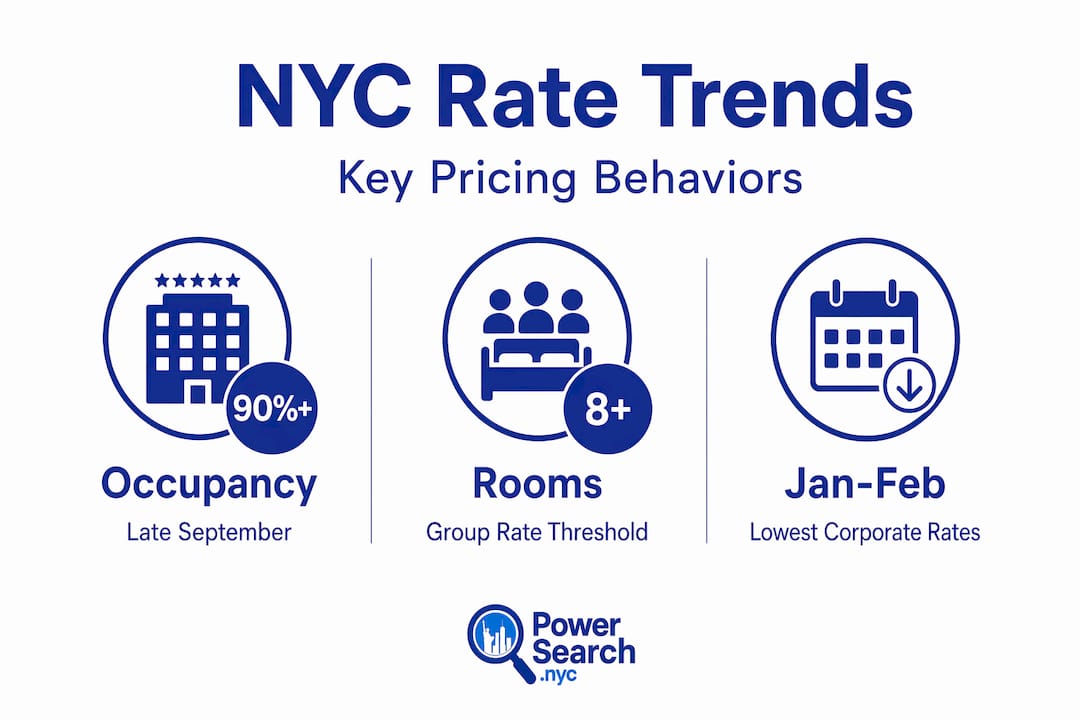
| Group thresholds unlock deals | Booking 8 or more rooms typically qualifies your team for customized corporate proposals with waived fees. |
| Timing is everything in NYC | September and October are the most expensive months; January, February, and midweek arrivals offer real savings. |
| GDS codes speed things up | Travel agents and planners should use GDS codes to access commissionable corporate rates efficiently. |
| Loyalty programs cut costs | Programs like IHG Business Rewards can offset group costs with double points on qualifying bookings. |
How corporate hotel rates and group booking work in NYC
Before you start sending RFP emails, it helps to understand what you’re actually working with. Corporate hotel rates are negotiated pricing agreements between companies and hotels, usually tied to a booking volume commitment over a set period. They differ from standard rack rates in a few meaningful ways.
Most properties in Midtown Manhattan offer negotiated corporate rates with starting savings of 10% off Best Available Rate, plus perks like complimentary room upgrades and waived resort or amenity fees. Group bookings typically qualify for customized proposals when you’re reserving anywhere from 8 to 50 rooms under one agreement.
Here’s what those proposals usually include:
- Discounted nightly rates tied to your committed room block
- Waived fees like parking, Wi-Fi, or resort charges
- Early check-in or late checkout flexibility
- Dedicated group coordinator contact on property
- Attrition clauses (how many rooms you actually need to use)
One thing that catches planners off guard is NYC’s pricing behavior. Unlike resort cities or leisure destinations, NYC business hotels maintain elevated rates year-round because corporate demand never really dries up. There’s no reliable slow season the way you’d find in, say, Miami or Las Vegas. That means your approach has to be more precise than simply waiting for a deal.
Pro Tip: If your company already has a corporate account with a hotel brand, check internally with your finance or procurement team before booking anything. You may have a GDS code or negotiated rate already in place that nobody told you about.
Preparation before you request rates
The hotels that take you seriously are the ones that see you as a volume client, not a one-time group. That perception starts with how prepared you are before your first call or email.
Here’s the preparation sequence that actually works:
- Gather your travel volume data. How many room nights per year does your company book in NYC? Even a rough annual estimate gives the sales team a reason to negotiate seriously.
- Nail down your dates and room count. Specific is better than vague. “We need 15 rooms from October 6 to October 10” gets a faster and better response than “sometime in fall.”
- Research high-demand NYC event periods. The UN General Assembly in September, New York Fashion Week in February and September, and major trade shows at the Javits Center all spike demand. Knowing what’s happening lets you plan around or within those windows.
- Check for flexible date options. If your dates have any give, say so. Hotels reward flexibility with better pricing, especially if you can shift to midweek arrival.
- Contact finance or procurement first. Ask whether any existing contracts or preferred vendor agreements cover NYC hotels. You might already have access to pre-negotiated executive hotel rates NYC planners aren’t using.
Pro Tip: The UN General Assembly alone can push Midtown hotels to 90%+ occupancy in late September. If your trip overlaps with it, book at least 4 to 6 weeks ahead or expect to pay a steep premium.
NYC’s event calendar is genuinely relentless. Javits hosts dozens of major conventions annually, and events like NYC Marathon weekend or major product launches at the Intrepid fill hotels with zero warning. A simple calendar check before you lock in dates takes 10 minutes and can save thousands.

How to negotiate and book group rates step by step
This is where most corporate planners either leave money on the table or pick it up. The difference is almost always process.
Here is a practical sequence for securing the best available group rates:
- Contact hotel sales teams directly. Skip the booking engine. Direct contact with sales teams for groups of 8 or more rooms typically results in responses within 2 business hours and personalized proposals that include waived fees, flexible check-in, and perks you cannot get through an algorithm.
- Send a concise RFP. Your Request for Proposal should include dates, room count, room type preferences, meeting space needs (if any), and your budget ceiling. Keep it to one page or less.
- Use GDS codes if working through a travel agent. GDS codes are essential for travel agents to access commissionable and pre-negotiated corporate rates without going back and forth on pricing each time.
- Bid multiple hotels simultaneously. Contact three to five properties that fit your location needs at the same time. Let each one know you’re evaluating options. Hotels respond to competition.
- Negotiate perks, not just rate. Once you have proposals in hand, push for added value before you push for a lower number. Waived Wi-Fi fees, complimentary breakfast for VIP rooms, upgraded room category at standard rate, and flexible attrition policies are all fair asks.
- Get everything in writing before signing. Cancellation terms, attrition clauses, and cut-off dates should be spelled out clearly in the contract.
Here’s a quick comparison of what direct booking versus third-party booking typically gets you:
| Factor | Direct with sales team | Third-party platform |
|---|---|---|
| Rate negotiability | High | None |
| Fee waivers | Common | Rarely available |
| Custom perks | Yes | No |
| Cancellation flexibility | Negotiable | Fixed by platform |
| Response speed | Within hours | Automated, variable |
| Loyalty points eligibility | Usually yes | Often excluded |
Pro Tip: When you get competing proposals, share the best terms from one hotel with another. You don’t have to reveal which property it came from. Simply say “another property is offering X” and ask if they can match or improve it. It works more often than people expect.
Common mistakes that cost corporate planners money
Even experienced planners make these errors. Knowing them ahead of time is the difference between a smooth trip and a painful budget conversation afterward.
- Booking too late during peak NYC periods. September and October are the most congested months for business travel in NYC. Booking at least 4 weeks in advance is the standard recommendation, but for major event weeks, 8 to 12 weeks is safer.
- Relying entirely on third-party platforms. Booking engines are convenient, but they can’t give you the negotiated terms, waived fees, or flexible policies that direct hotel contact delivers. Use them for research, not for finalizing group bookings.
- Ignoring weekday versus weekend rate swings. Midweek nights in NYC business hotels are often meaningfully lower than Friday or Saturday. If your team has scheduling flexibility, use it.
- Skipping the fine print on attrition. If your room block requires you to fill 80% of reserved rooms, and attendance drops, you may owe the hotel for unused rooms. Negotiate that clause before you sign.
- Forgetting loyalty programs. Programs like IHG Business Rewards are offering double points on meetings and events booked through August 31, 2026. That kind of incentive offsets real cost over the year.
- Underestimating total cost. NYC hotels layer on occupancy taxes, facility fees, and amenity charges. Always ask for an all-in rate estimate, not just the base nightly price.
Corporate lodging options in NYC are abundant, but the best deals go to planners who show up prepared, ask the right questions, and build real relationships with sales teams. The hotels that love your business will take care of you. The ones who just see a transaction won’t.
Pro Tip: Always ask for a written summary of all fees before confirming a group block. What looks like a $250 rate can land closer to $340 after taxes, resort fees, and facility charges.
Timing strategies for better NYC corporate hotel discounts
NYC does not follow a simple seasonal pricing curve. That said, there are real windows where rates soften and real periods where they spike hard.
For lower rates, target these windows:
- January and February. Post-holiday demand drops off, and many corporate travel calendars are still light. Midweek arrivals in January and February consistently offer some of the best corporate rates available in NYC.
- Tuesday and Wednesday arrivals. Midweek stays cost less because business travelers tend to cluster arrivals on Sunday night or Monday, then check out Thursday or Friday.
- Summer 2026 (selective windows). NYC World Cup hotel bookings are running below expectations, with rates down 24% from December 2025 to April 2026 and June to July 2026 bookings only 18% filled. That creates real negotiation room for corporate groups that can time their NYC presence to non-match days.
For the highest-risk booking windows, watch these periods:
- Late September (UN General Assembly)
- February and September (New York Fashion Week)
- Major Javits Center conventions
- NYC Marathon weekend (early November)
The practical takeaway on booking directly versus using a third-party site comes down to this: third-party platforms are useful for price comparison research, but they almost never offer the flexibility, perks, or negotiated terms that a direct relationship with a hotel’s sales team provides. Use Powersearch to compare and identify properties, then go directly to the hotel to close the deal.
You should also factor in trip duration when calculating cost efficiency. Two-night stays are the practical minimum for most NYC business trips to justify rate premiums and make the most of Midtown’s walkable business district. One-night bookings rarely pencil out, especially after you factor in transit and time.
My honest take on negotiating NYC hotel rates
I’ve talked to enough corporate travel planners and watched enough booking cycles to have a strong opinion here. The single biggest mistake I see is over-relying on automated tools and booking platforms when the real leverage is in a five-minute phone call.
In my experience, the planners who get the best rates are not necessarily the ones with the largest budgets. They’re the ones who treat hotel sales managers like partners instead of vendors. I’ve seen mid-size companies get better terms than Fortune 500 teams simply because they communicated consistently, followed through on commitments, and called to say thank you after a group stayed.
The contrarian view I’ll offer on timing is this: don’t always wait for the “right” season. I’ve seen planners lock in surprisingly strong rates during high-demand periods because they got in early and gave the hotel predictable business at a time when the property needed booking certainty more than rack rate. Certainty has value to a hotel. Use that.
Finally, location matters more than most planners admit. Choosing a hotel two subway stops from your meeting venue to save $30 per night often costs more in lost time and cab fees than the savings are worth. Midtown and proximity to your actual business activity should drive hotel selection first, price second.
— Mark
Find your next group hotel rate with Powersearch
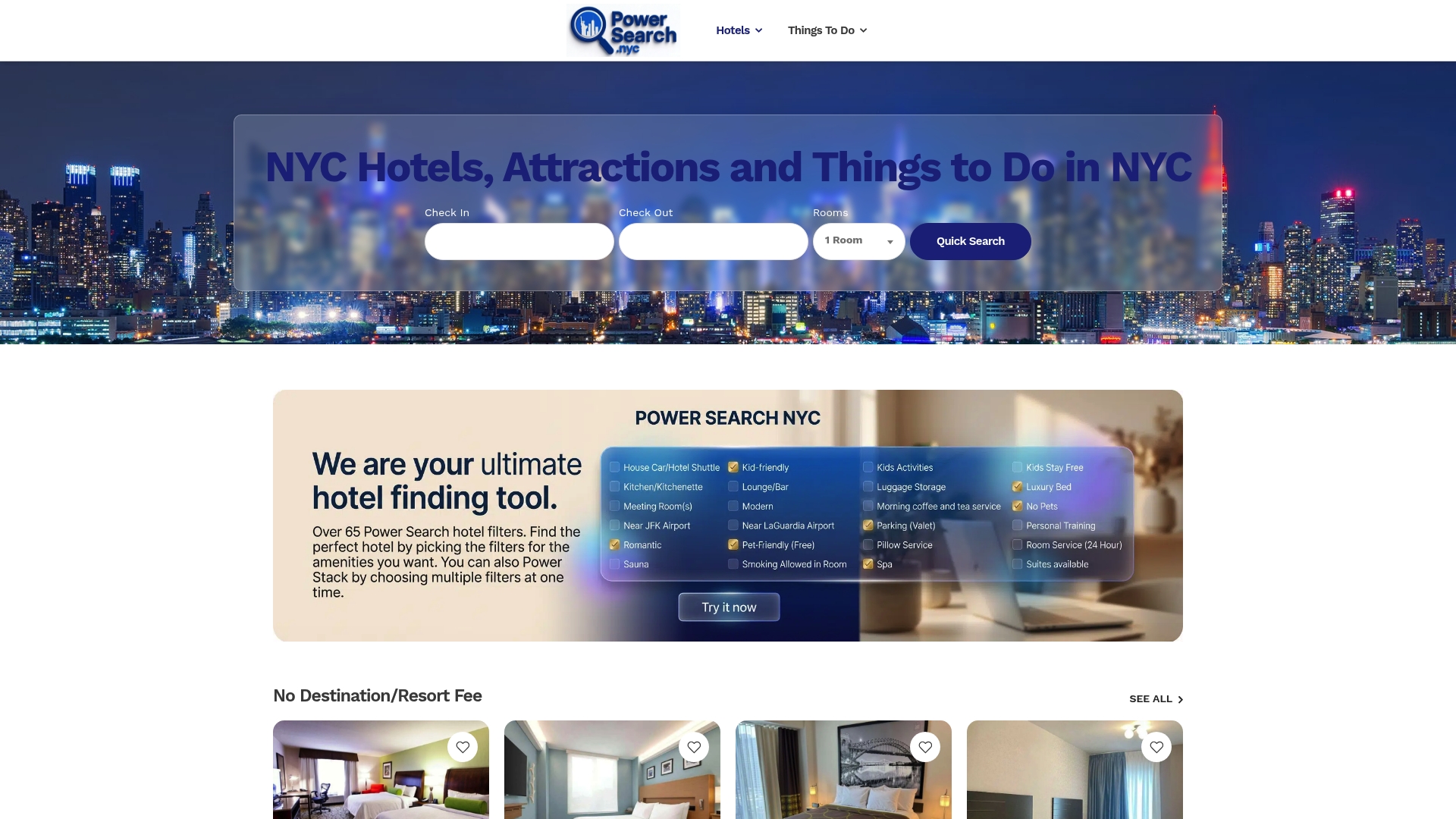
Comparing corporate lodging options across all of Manhattan takes hours when you’re doing it manually. Powersearch makes that process faster and less painful. The platform aggregates hotel listings across every NYC neighborhood, with filters for price range, amenities, proximity to business hubs, and accommodation type so you can zero in on the right property before you ever pick up the phone to negotiate.
Whether you’re looking for affordable Manhattan hotel deals for a budget-conscious group or executive-tier properties for a senior leadership offsite, Powersearch gives you the comparison data you need to walk into a negotiation informed. Start your NYC hotel search today and get a clear picture of what’s available, what it costs, and where the best value actually sits for your specific dates and team size.
FAQ
What qualifies as a group hotel rate in NYC?
Most NYC hotels define a group booking as 8 or more rooms per night. Once you hit that threshold, you typically qualify for a customized proposal that includes discounted rates, waived fees, and dedicated service.
Is it better to book corporate hotel rates directly or through a travel platform?
Direct booking with a hotel’s sales team almost always yields better terms, including fee waivers, flexible cancellation, and perks that third-party platforms cannot offer. Use comparison platforms like Powersearch to identify your shortlist, then negotiate directly.
When is the cheapest time to book business hotels in NYC?
January and February offer the most consistently lower rates for corporate travelers. Midweek arrivals on Tuesday or Wednesday also reduce costs compared to Sunday or Monday check-ins, regardless of the month.
How far in advance should I book group hotel rates in NYC?
For September and October travel, book at least 4 to 8 weeks ahead due to high occupancy from major events like the UN General Assembly. For other periods, 3 to 4 weeks is generally sufficient to get competitive proposals.
Can loyalty programs really offset corporate hotel costs in NYC?
Yes. Programs like IHG Business Rewards are currently offering double points on meetings and events booked through August 31, 2026, which can meaningfully reduce the effective cost of repeat group bookings over a full travel year.
No Comments