

NYC Hotel Price Drop Alerts: Your 2026 Savings Guide
Disclosure: This post may contain affiliate links. We may earn a commission for purchases made through links in this post, at no cost to you.
NYC hotel price drop alerts are automated notifications that tell you the moment a hotel room rate falls for your chosen dates. New York City hotel prices shift constantly, sometimes by $50 or more overnight, so waiting and watching manually is a losing game. The good news is that free tools now make it easy to track rates without refreshing booking sites all day. Google’s individual hotel tracking feature, launched in 2026, expanded these options significantly. This guide covers how hotel price alert tools work, how to set them up, and how to keep saving even after you’ve already booked.
How do NYC hotel price drop alerts work?
Hotel price alerts, also called rate drop notifications, are the standard industry term for automated systems that monitor room rates and email you when prices fall. Google Hotels provides a free native version of this system, notifying you of significant rate changes for a specific hotel and travel dates. Setup takes about 30 seconds at google.com/hotels when you’re signed into your Google account.
The system tracks both direct hotel rates and OTA prices across all major booking platforms simultaneously. It does not alert you for every tiny fluctuation. Alerts fire only for meaningful drops, typically around $10 or more, which keeps your inbox manageable.

Google’s 2026 individual hotel tracking update works globally in English and Spanish and integrates AI-driven trip planning. That means Google is no longer just a search engine for travel. It now guides you through the entire booking process, from discovery to rebooking after a price drop.
Here’s a quick look at the two main alert approaches:
| Alert type | What it tracks | Best for |
|---|---|---|
| Individual hotel tracking | One specific property and date | When you’ve found your ideal hotel |
| City-wide tracking | All hotels in NYC for your dates | When you’re still comparing options |
Pro Tip: Use city-wide tracking first to narrow your shortlist, then switch to individual hotel alerts once you’ve picked your top two or three properties. This cuts down on irrelevant notifications and keeps you focused on deals that actually matter to you.
How to set up NYC hotel price alerts effectively
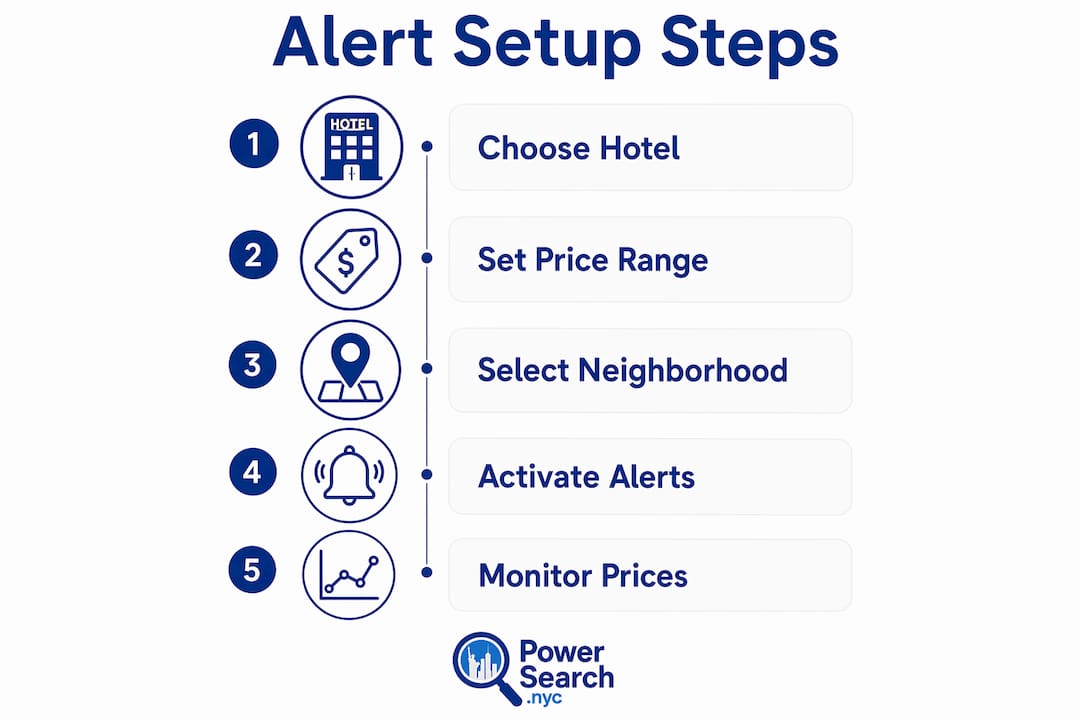
Setting up alerts on Google Hotels is straightforward. Follow these steps on desktop or mobile:
- Go to google.com/hotels and enter New York City as your destination.
- Enter your check-in and check-out dates.
- Click on a specific hotel from the results.
- Look for the “Track prices” toggle on the hotel detail page and switch it on.
- Make sure you’re signed into your Google account so alerts reach your email.
- Repeat for each hotel you want to monitor.
You can track multiple hotels at the same time. Google sends each alert to your Gmail inbox, so you’ll want to check it regularly during the weeks before your trip.
A few best practices before you start:
- Book refundable rates whenever possible. A price drop alert is useless if you’re locked into a non-refundable reservation.
- Set alerts at least 30 days before your check-in date to catch the most common price drop windows.
- Sign up for direct hotel email newsletters in addition to Google alerts. Many NYC hotels offer exclusive deals only to subscribers.
- Check your alert emails promptly. NYC hotel deals at lower prices can sell out within hours.
Pro Tip: Focus your alert filters on star rating, price range, and neighborhood to avoid a flood of notifications for hotels that don’t fit your needs. Fewer, more relevant alerts mean faster action when a real deal appears.
Understanding NYC room rate fluctuation patterns also helps you know when to expect alerts to fire, so you’re not caught off guard.
Leveraging post-booking price drop alerts and cancellation windows
Most travelers stop tracking prices the moment they book. That’s a mistake. Prices in NYC often drop after you’ve already made a reservation, and you can rebook at the lower rate if you’re still within the cancellation window.
Services like StayHawk solve this problem directly. You forward your booking confirmation email to the service, and it monitors your actual reservation daily. It tracks prices across multiple booking sites and alerts you when a lower rate appears before your cancellation deadline expires.
Here’s how to use post-booking monitoring effectively:
- Forward your hotel confirmation email to a post-booking tracking service immediately after booking.
- Note your cancellation deadline and keep it visible. Missing it means you’re stuck at the original rate.
- When an alert fires, cancel the original booking and rebook at the lower rate right away.
- Always confirm the new booking is confirmed before canceling the old one.
Price drop alerts also benefit travelers using hotel loyalty points. Dynamic award pricing ties the points required for a stay to the cash price. When cash rates fall, the points needed often drop too. That means a price drop alert can save you points, not just dollars.
Pro Tip: Combine pre-booking Google Hotel alerts with a post-booking service like StayHawk. A hybrid alert strategy gives you the best chance of catching savings both before and after you lock in a reservation.
When are NYC hotel prices most likely to drop?
NYC hotel pricing follows predictable patterns once you know what to look for. The three most reliable price drop windows are 21–30 days before check-in, 72 hours before arrival, and the final 24 hours before check-in. Hotels prefer filling rooms at a discount over leaving them empty.
Midweek arrivals, particularly Sunday through Wednesday, consistently show lower rates than Friday and Saturday nights. Business travel drives weekend demand in some NYC neighborhoods, while leisure travel spikes on weekends in others. Knowing your neighborhood matters here, and comparing NYC hotel locations before setting alerts helps you target the right properties.
| Timing window | Typical price behavior | Alert strategy |
|---|---|---|
| 30+ days out | Rates stable or rising | Set initial alerts, book refundable rate |
| 21–30 days out | First drop window | Watch closely, rebook if significant drop |
| 72 hours before | Second drop window | Act fast, limited availability |
| 24 hours before | Last-minute discounts | High risk, best for flexible travelers |
| Midweek vs. weekend | Midweek often 10–20% lower | Target Sunday–Wednesday arrivals |
Off-peak seasons in NYC, roughly january through early march and late august through september, also produce more frequent and deeper discounts. Major events like the New York Marathon or Fashion Week push rates up sharply, so set alerts well in advance if your trip overlaps with those dates.
How to maximize savings by combining alerts with direct hotel discounts
Price alerts get you in the door, but layering in direct hotel discounts can push your savings further. Many NYC hotels offer exclusive 10–20% discounts to direct email subscribers, plus perks like early check-in or complimentary breakfast that you won’t find on third-party platforms.
AAA and AARP memberships unlock additional rate reductions at many NYC hotel chains. Hotel loyalty programs add another layer, giving you points, status credits, and member-only rates that stack on top of any price drop you’ve already captured.
Here’s a quick summary of complementary discount sources worth using alongside your alerts:
- Direct hotel newsletters: Sign up before your trip for subscriber-only rates and flash sales.
- AAA and AARP discounts: Present your membership at booking for an immediate rate reduction.
- Loyalty program rates: Book direct through the hotel’s own site to protect points and status credits.
- Price match requests: If your alert shows a lower OTA rate, call the hotel directly to request a match. Many will honor it to keep the direct booking.
Booking direct after receiving an alert also protects your loyalty benefits. OTA bookings often earn reduced or no points, so a direct rebook at the same price is almost always the better move. Check out NYC discount booking strategies for a full breakdown of how to stack these savings.
Key Takeaways
A hybrid alert strategy combining pre-booking and post-booking monitoring gives budget-conscious travelers the best chance of saving on NYC hotel rates.
| Point | Details |
|---|---|
| Set alerts early | Start tracking 30+ days out to catch the most common NYC price drop windows. |
| Book refundable rates | Always choose a refundable rate so you can rebook when an alert fires. |
| Monitor after booking | Forward your confirmation to a post-booking service to track prices past your booking date. |
| Time your stays midweek | Sunday through Wednesday arrivals consistently show lower NYC hotel rates. |
| Stack direct discounts | Combine alert savings with hotel newsletters, AAA/AARP, and loyalty programs for maximum value. |
Why I think most travelers leave NYC hotel savings on the table
I’ve watched a lot of travelers do the same thing: they check prices once, book whatever looks reasonable, and never look again. NYC hotel rates are genuinely chaotic. A room that costs $280 on Monday can drop to $190 by Thursday for the same dates. The market moves that fast.
The single biggest mistake I see is booking non-refundable rates to save a few dollars upfront. That locks you out of every price drop that comes after. A refundable rate that costs $20 more today is almost always worth it if you’re actively monitoring. The math works out in your favor more often than not.
Post-booking monitoring is the part most travelers skip entirely, and it’s where some of the best savings hide. I’ve seen travelers rebook the same room for $60 less just by catching a drop four days before check-in. That’s not luck. That’s a system.
The other thing worth saying: don’t let alert fatigue set in. If you’re getting too many notifications, tighten your filters. Alerts only work if you actually act on them. A good alert strategy is a quiet one. You want a few precise signals, not a flood of noise.
For first-time visitors, pairing your alert strategy with solid neighborhood research makes a real difference. Knowing where to stay in NYC before you set alerts means you’re tracking the right hotels from the start.
— Mark
Plan your NYC trip with Powersearch
Powersearch makes it easy to put your price alert savings to work. Once you’ve locked in a great hotel rate, you can search hotels, attractions, and things to do all in one place.
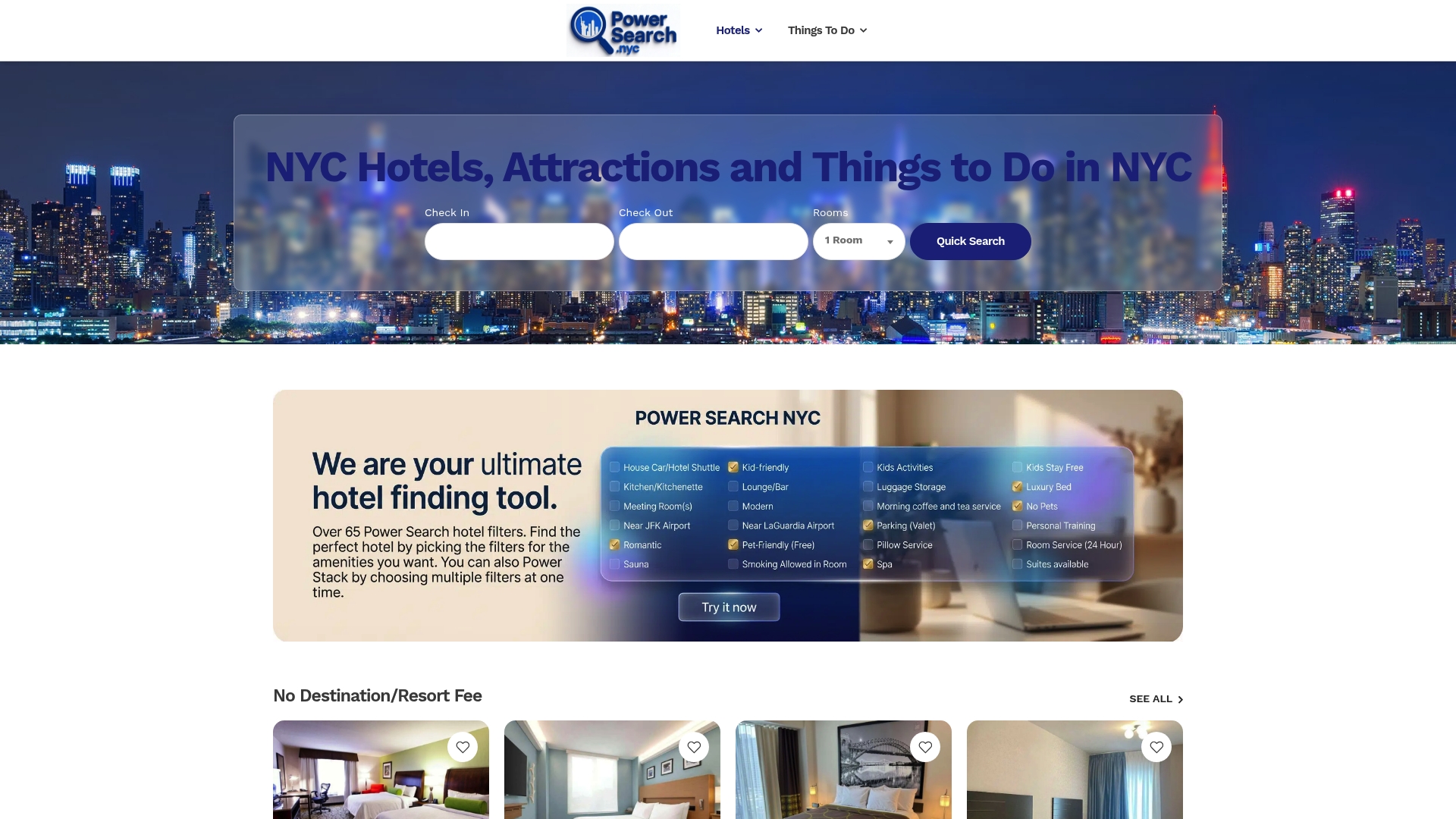
Browse NYC hotels and attractions across every neighborhood and price point, from budget-friendly Midtown options to boutique stays in Brooklyn. Powersearch also covers family-friendly NYC planning for travelers bringing kids along. Use the hotel search to compare locations, amenities, and rates alongside the activities you actually want to do. Less time planning means more time out on the streets of New York.
FAQ
What are NYC hotel price drop alerts?
NYC hotel price drop alerts are automated email notifications that tell you when a hotel room rate falls for your specific dates. Google Hotels offers a free version that tracks both direct hotel prices and OTA rates.
How do I set up a hotel price alert on Google Hotels?
Go to google.com/hotels, search for your NYC hotel, open the hotel detail page, and toggle on “Track prices.” You must be signed into a Google account to receive email alerts.
Can I track prices after I’ve already booked?
Yes. Services like StayHawk monitor your existing reservation by tracking prices daily and alerting you before your cancellation deadline expires.
When do NYC hotel prices drop most often?
The most reliable drop windows are 21–30 days before check-in, 72 hours before arrival, and the final 24 hours. Midweek arrivals also tend to be cheaper than weekend stays.
Do price drop alerts work for hotel loyalty points?
Yes. Dynamic award pricing means points costs often fall when cash prices drop, so alerts can save you points as well as money.
No Comments