

Why NYC Hotel Early Booking Saves Money in 2026
Disclosure: This post may contain affiliate links. We may earn a commission for purchases made through links in this post, at no cost to you.
You have probably heard the travel hack that waiting until the last minute scores you the best hotel deals. That logic works in some cities. In New York City, it can cost you. Understanding why NYC hotel early booking saves money requires a look at what actually drives rates here, from high labor costs and relentless demand to major events that fill every decent room months out. This article breaks down the real mechanics of NYC hotel pricing, tells you exactly when to book, and gives you practical strategies to pay less without gambling on availability.
Table of Contents
- Key takeaways
- How NYC hotel pricing actually works
- When to book: the timing that actually matters
- Manhattan vs. outer boroughs: where location meets cost
- Practical strategies to lock in savings
- My take on early booking in NYC
- Find your NYC hotel deal with Powersearch
- FAQ
Key takeaways
| Point | Details |
|---|---|
| Early booking beats last-minute in NYC | NYC’s high-demand market rarely produces last-minute discounts, unlike leisure destinations. |
| Labor costs are pushing rates up in 2026 | A new wage agreement means moderate price increases through summer and fall, so booking now locks in lower rates. |
| Outer boroughs offer 20 to 30 percent savings | Queens and Brooklyn hotels cost significantly less, and early booking secures the best options before they sell out. |
| Refundable bookings give you the best of both worlds | Book early, monitor prices, and rebook cheaper if rates drop closer to your trip. |
| Hidden fees change the total cost picture | Always audit taxes and destination fees beyond the base rate to compare real costs accurately. |
How NYC hotel pricing actually works
Most cities use dynamic pricing, but New York City takes it to another level. Demand here does not just fluctuate by season. It spikes around specific events, conferences, fashion weeks, marathon weekends, and major holidays, sometimes within days. That creates a market where a room priced at $180 on a Tuesday can jump to $400 by Friday of the same week.
Nearly 90 percent of hotels now use AI-driven pricing tools that adjust rates in real time based on demand signals. In a leisure destination like a beach town, that same AI might drop prices last-minute to fill empty rooms. In NYC, those rooms fill anyway. The AI raises prices instead.
Then there is the labor cost factor, which is especially relevant for 2026. NYC hotel housekeepers secured a $61 per hour wage in a landmark May 2026 labor agreement. Hotels do not absorb cost increases like that quietly. They pass them along through moderate rate increases anticipated in summer and fall 2026. If you book before those increases take effect, you lock in today’s rates.
| Pricing factor | Impact on NYC hotel rates |
|---|---|
| AI dynamic pricing | Rates change daily, often rising as availability drops |
| Labor cost increases (2026) | Moderate price hikes expected summer and fall 2026 |
| Event-driven demand | Major events cause rapid rate spikes citywide |
| High base occupancy | Rooms sell out before last-minute discounts become viable |
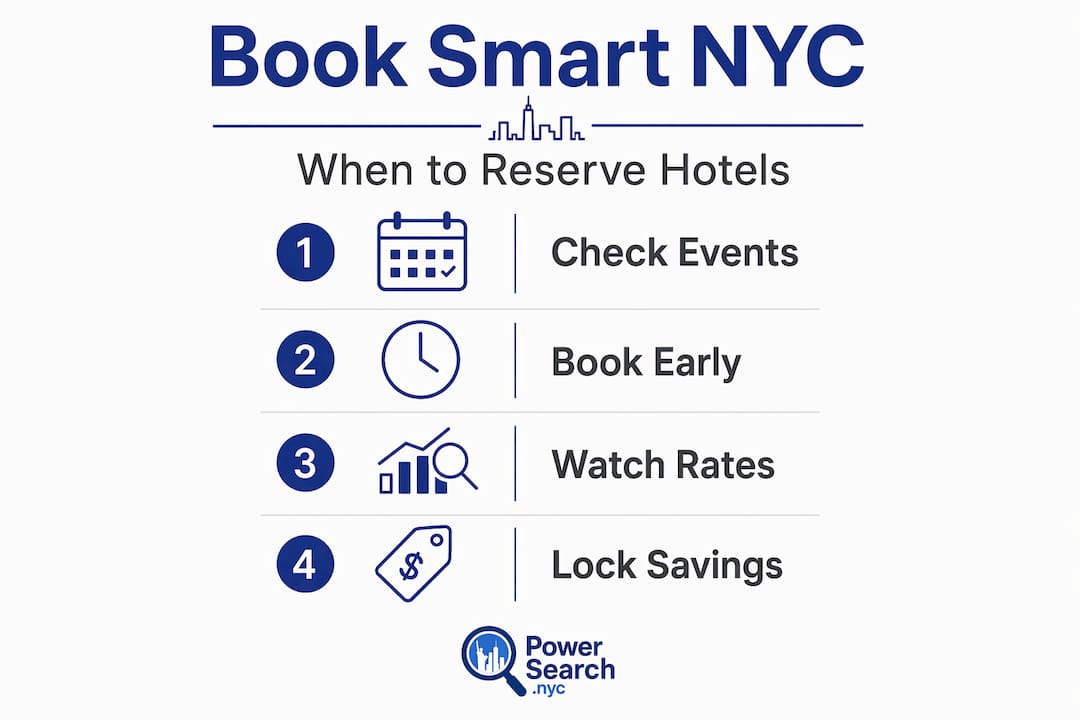
Pro Tip: Check the NYC event calendar before you book. If your travel dates overlap with the UN General Assembly, New York Fashion Week, or a major marathon, expect to pay a premium and book as early as possible.
When to book: the timing that actually matters
Timing your booking is not a one-size-fits-all situation in New York. It depends entirely on when you are going and why.
For peak periods, booking 6 to 12 months in advance is the standard recommendation. This applies to trips around the UN General Assembly in September, Thanksgiving and Christmas, New Year’s Eve, major sports events, and industry conferences that fill Midtown solid. During these windows, inventory at well-located hotels gets absorbed fast. What remains at the last minute is either overpriced or inconveniently located.
For off-peak travel, the equation shifts a little. You can use a 30 to 45 day price monitoring window and still find decent availability. Weekday stays are typically cheaper than weekends in NYC, with Sunday nights often coming in lower than Friday nights. Midweek travel gives you more flexibility and a better chance of finding a lower rate without booking months ahead. You can read more about this on the midweek booking guide.
Here is a practical framework based on your situation:
- Traveling during a peak event or holiday. Book 6 to 12 months out with a refundable rate. Do not wait, and do not assume prices will drop.
- Traveling during a standard busy season (June through August). Book 2 to 3 months ahead. Labor cost increases in 2026 make this window more urgent than in previous years.
- Traveling in the off-season (January, February, or early November). A 30 to 45 day monitoring window works, but still book refundable so you can adjust.
- Completely flexible on dates. Use a price comparison tool to spot the lowest-rate window, then book once you identify the dip.
- Fixed dates with no flexibility. Book early regardless of season. The risk of waiting in a fixed-date situation is losing access to well-located rooms entirely.
Booking early does not always guarantee the absolute lowest price, but it locks availability and gives you a foundation to monitor from. That is a far better position than scrambling two weeks before your trip.
Manhattan vs. outer boroughs: where location meets cost
Where you choose to stay in NYC has just as much impact on your total cost as when you book. And early booking matters differently depending on the borough you are targeting.
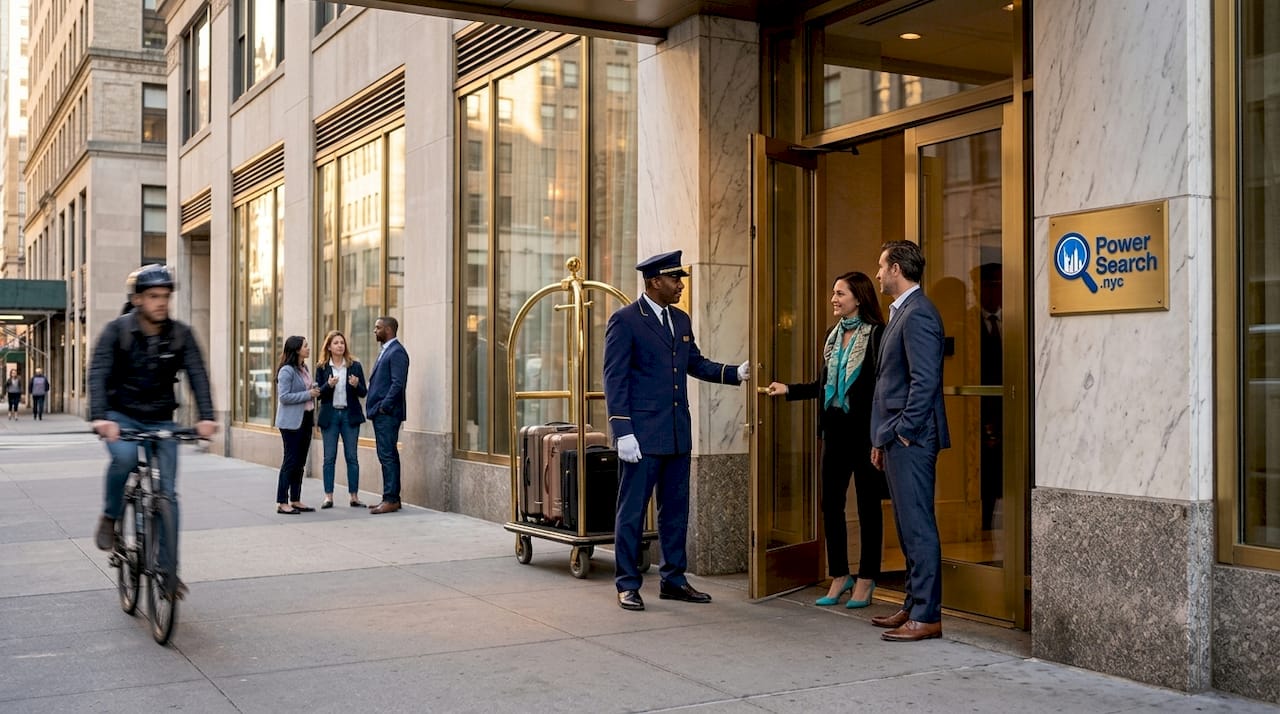
Staying in Manhattan puts you in the center of everything. Step outside and you are immediately in the movie version of New York City. But that convenience carries a price. Hotels in Midtown or Lower Manhattan consistently rank among the most expensive per night in the country.
Staying outside Manhattan in Queens or Brooklyn can reduce your hotel costs by 20 to 30 percent on a comparable stay. Queens puts you close to LaGuardia and JFK, and neighborhoods like Long Island City offer a short subway ride into Midtown. Brooklyn neighborhoods like Williamsburg and Downtown Brooklyn give you great access to Lower Manhattan and a neighborhood vibe that many travelers genuinely prefer.
Here is how the options compare:
| Location | Avg. cost vs. Manhattan | Transit access | Early booking urgency |
|---|---|---|---|
| Midtown Manhattan | Baseline | Excellent | Very high, especially for events |
| Lower Manhattan | Similar or slightly lower | Good | High during financial events |
| Long Island City, Queens | 20 to 30% less | Excellent (E, M, 7 trains) | Moderate, fills during peak periods |
| Downtown Brooklyn | 20 to 25% less | Excellent (multiple lines) | Moderate to high in summer |
| Williamsburg, Brooklyn | 15 to 20% less | Good (L train) | Moderate |
The catch with outer borough hotels is that the most affordable and well-connected options have limited inventory. Once those rooms are gone, what remains is either more expensive or less conveniently located.
- Book popular outer borough hotels at least 6 to 8 weeks in advance for standard travel.
- Use early booking to compare neighborhoods side by side before prices shift.
- Read the NYC neighborhood guide to find the right borough for your trip.
- Factor in subway access when calculating real “cost” since a cheaper room with a long commute has hidden costs in time and transit fees.
Practical strategies to lock in savings
Knowing why and when to book early is only half the equation. Here is how to actually do it in a way that protects you financially and keeps options open.
The single most effective strategy is the book and monitor method. You book a refundable rate as early as possible, then check prices every week or two as your trip approaches. If the rate drops, you rebook at the lower price and cancel the original. You capture the availability benefits of early booking and the price benefits of a rate drop if one happens.
Flexible refundable rates are the tool that makes this work. Never commit to a non-refundable rate early unless the discount is significant and your dates are 100 percent locked in.
Here are the core strategies worth using:
- Book refundable, always early. Lock space now. Keep the cancellation window open. Non-refundable rates are only worth it for large, certain discounts.
- Hold multiple refundable reservations. Booking multiple refundable rooms across different neighborhoods or price points lets you keep your options open until your plans finalize. Cancel before the deadline, usually 24 to 48 hours before check-in.
- Set price alerts. Use a hotel search platform that notifies you when rates change for your dates. That way you are not manually checking every week.
- Audit the full cost, not just the base rate. Mandatory destination fees and facility charges can add $30 to $50 per night to your bill. A hotel with a lower base rate and high fees can end up costing more than a hotel with a higher base rate and no fees. Always look at the total. Powersearch has a resource on the NYC junk fee ban worth reading before you finalize anything.
- Consider budget hotels for more flexibility. Exploring affordable NYC accommodations opens up more options at various price points and often comes with more flexible cancellation policies.
Pro Tip: When you find a lower rate and want to rebook, confirm the new reservation is confirmed before you cancel the original. Canceling first and then rebooking risks losing the room entirely if inventory is tight.
My take on early booking in NYC
I have been watching how travelers approach NYC hotel costs for years, and the pattern that surprises me most is how often people apply general travel logic to a market that does not follow general rules.
The “last-minute deal” mentality works in places where hotels are desperate to fill rooms. New York City is rarely desperate. When I have seen prices drop close to check-in in NYC, it tends to be during very specific low-demand windows, think a random Tuesday in February. Outside those narrow situations, prices hold or rise.
What I have learned is that early booking with a refundable rate is the smart baseline in this city. It is not about locking in the absolute lowest price on day one. It is about securing your space in a market where good rooms in good neighborhoods genuinely run out. The monitoring strategy gives you a second shot at a lower price without giving up your spot.
The 2026 labor agreement is something I think more travelers need to pay attention to. A wage increase to $61 per hour for housekeeping staff is significant, and those costs will show up in room rates through the summer and fall. Travelers who book before those increases are absorbed into published rates will notice a real difference in what they pay. That is not speculation. It is how hotel cost structures work.
My advice: book early, stay flexible with refundable rates, and treat early booking as your insurance policy on both availability and price.
— Mark
Find your NYC hotel deal with Powersearch
Planning a trip to New York City is exciting. Sorting through hundreds of hotel listings across every neighborhood and price point is a lot less fun. That is where Powersearch comes in.

Powersearch gives you a single place to search NYC hotels by neighborhood, price range, amenities, and booking flexibility. You can filter for refundable rates, compare base prices alongside fees, and spot early booking opportunities before inventory tightens. Whether you are eyeing a budget hotel in Queens or a well-located spot in Midtown, Powersearch helps you see the full picture before you commit. Start your search now and lock in a rate worth keeping.
FAQ
Why does early booking save money on NYC hotels?
Early booking secures availability before demand drives prices up, particularly around major events and the 2026 labor cost increases that are pushing NYC hotel rates higher through summer and fall.
How far in advance should I book a NYC hotel?
For peak events and holidays, book 6 to 12 months ahead. For standard travel in slower seasons, a 30 to 45 day price monitoring window is generally enough, but refundable bookings earlier give you more leverage.
Are last-minute hotel deals common in NYC?
Last-minute discounts are far less common in NYC than in leisure destinations. AI-driven pricing means hotels raise rates as occupancy fills, not lower them, making early booking the safer and usually cheaper strategy.
Can I save money by staying outside Manhattan?
Yes. Hotels in Queens and Brooklyn typically cost 20 to 30 percent less than comparable Manhattan options, with solid subway access to major attractions.
What is the best way to book early and still get a lower price if rates drop?
Book a refundable room as early as possible, then monitor prices as your trip approaches. If the rate drops, rebook at the lower price and cancel the original reservation before the deadline.
No Comments