

Why NYC Hotel Site Inspection Matters for Planners
Disclosure: This post may contain affiliate links. We may earn a commission for purchases made through links in this post, at no cost to you.
A hotel site inspection is a structured, in-person evaluation that travel planners conduct to verify a New York City hotel’s facilities, services, and surroundings before committing to a booking or contract. The industry term for this process is a “site visit” or “property site inspection,” and it goes far beyond scrolling through photos online. NYC’s hospitality market is one of the most complex in the world, with local regulations, neighborhood variables, and service culture differences that no listing page can capture. Understanding why NYC hotel site inspection matters is the difference between a smooth event and a costly disaster.
Why NYC hotel site inspection matters for your bottom line
A hotel site inspection is the single most reliable way to protect your budget and your reputation at the same time. Business travel in the U.S. generated $312 billion in spending in 2024, with group meetings and events contributing $126 billion. That scale means a single bad hotel decision can blow a significant portion of a client’s annual travel budget in one booking.
Site inspections give you negotiation leverage that no RFP response can match. When you walk a property and document specific gaps, you can push back on contract terms with evidence. You might negotiate complimentary room upgrades, reduced attrition clauses, or waived setup fees because you spotted that the ballroom ceiling is lower than advertised or that the loading dock is shared with a neighboring restaurant.
The benefits of NYC hotel inspections extend well beyond contract terms:
- Risk reduction: You catch deferred maintenance, outdated AV infrastructure, or inadequate breakout space before your client’s event depends on it.
- Budget accountability: You verify that the room block, catering minimums, and service ratios match what was promised in writing.
- Brand protection: A hotel that looks polished online but smells musty in person reflects on you, not just the property.
- Guest experience alignment: You confirm that the lobby flow, elevator capacity, and check-in staffing can handle your group’s arrival without chaos.
- Documentation: A structured site inspection checklist for hotels creates a paper trail that protects you if the property fails to deliver.
The checklist approach is not optional. Planners who treat inspections as casual walkthroughs miss the operational details that cause problems on event day.
How do NYC-specific factors change the inspection equation?
New York City adds layers of complexity that planners in other markets simply do not face. LL97 compliance is a prime example. Local Law 97 caps carbon emissions for large buildings, and hotels that are not on track for compliance face escalating fines. A hotel under financial pressure from regulatory penalties may defer maintenance, reduce staffing, or cut service quality in ways that directly affect your event.

NYC sanitation standards and building codes also vary by borough and property age. A Midtown high-rise operates under different inspection realities than a boutique hotel in the Meatpacking District. You need to know which category your target property falls into before you sign anything.
Pro Tip: Walk the two-block radius around the hotel before you even enter the lobby. Construction noise, limited cab access, or a chaotic street scene can derail your attendees’ first impression before they check in.
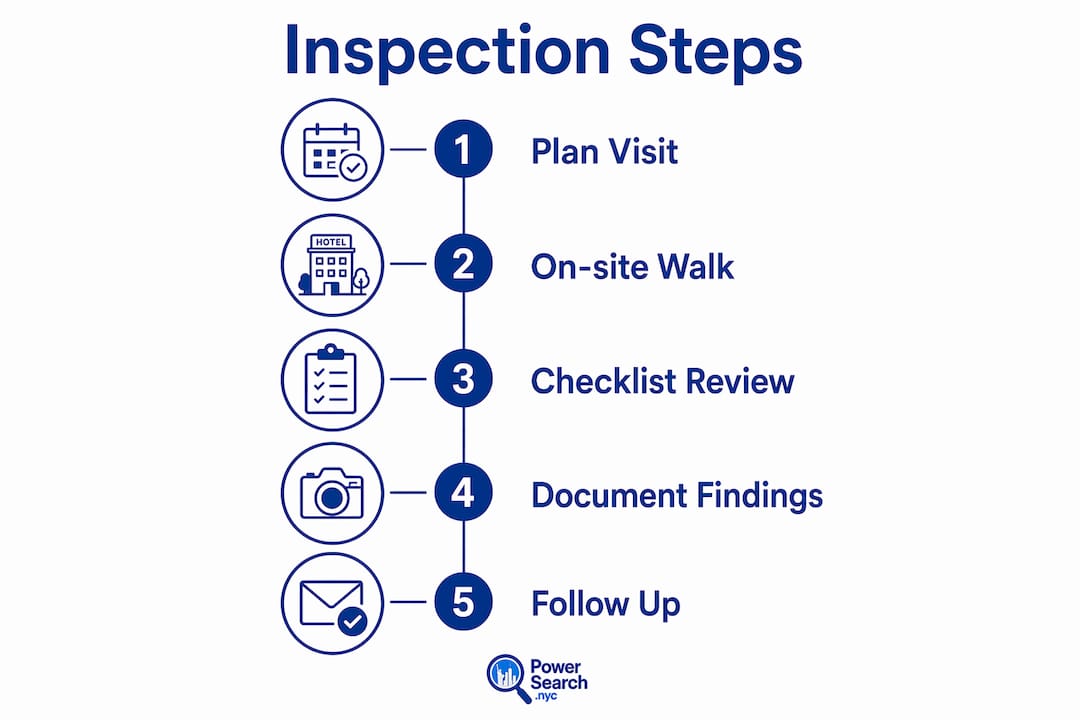
Neighborhood evaluation is a core part of any NYC hotel evaluation. Planners must assess the surrounding area to evaluate safety, noise levels, transit access, and nearby amenities. A hotel in Hudson Yards feels completely different from one in Times Square, even if both are technically “Midtown.” Your attendees will feel that difference the moment they step outside.
Key NYC-specific factors to evaluate on every inspection:
- Proximity to subway entrances and accessibility for guests with mobility needs
- Street-level noise from construction, nightlife, or traffic at peak hours
- Nearby dining options that can absorb overflow when hotel restaurants are at capacity
- Building age and visible infrastructure condition, including elevator banks and HVAC systems
- Compliance signage and visible evidence of recent inspections posted in public areas
What are the practical steps for an effective site inspection?
Preparation separates a productive inspection from a wasted afternoon. Start by building a structured checklist that covers room configurations, meeting space dimensions, AV capabilities, catering facilities, service ratios, and accessibility features. Share the checklist with your hotel contact in advance so they prepare the right staff and spaces for your visit.
The actual inspection follows a clear sequence:
- Arrive unannounced first. Book a night as a regular guest before your hosted inspection. Incognito inspections reveal the real check-in experience, housekeeping standards, and lobby service levels that a polished hosted tour will not show you.
- Walk every space your group will use. Do not accept a verbal description of the ballroom or a photo of the breakout rooms. Measure, photograph, and test the AV yourself.
- Evaluate the service culture. Watch how staff interact with guests in the lobby, at the front desk, and in the restaurant. That behavior during a random Tuesday afternoon is what your attendees will experience.
- Test the logistics. Time the walk from the parking garage to the main meeting room. Check elevator wait times during peak check-in hours. Confirm that the loading dock can handle your production team’s equipment.
- Meet the people, not just the spaces. Building rapport with hotel sales and convention services teams during your inspection creates a relationship that pays off when something goes wrong on event day.
Pro Tip: Ask to see the hotel’s most recent health inspection report and any open maintenance tickets. A property that shares this information openly is one that manages problems proactively.
After the visit, document everything in a written report. Include photos, measurements, staff observations, and any discrepancies between the hotel’s marketing materials and what you actually saw. This report becomes your negotiation tool and your protection if disputes arise later. For context on how corporate rate negotiations connect to inspection findings, the two processes work best when treated as a single workflow.
What hidden issues do site inspections catch that online research misses?
Online hotel listings are marketing documents. They show the best version of every space, often with wide-angle lenses and flattering lighting. A site inspection is where reality shows up.
Deferred maintenance is the most common hidden issue. Peeling grout in bathrooms, sticky elevator buttons, flickering lobby lights, and worn carpet edges are all signs that a property is not investing in upkeep. Hotels with continuous inspection programs score an average of 11 percentage points higher on unannounced quality assurance audits than those relying on one-off preparations. That gap reflects the difference between a property that manages its asset and one that reacts to problems only when guests complain.
Pest issues are another risk that photos never reveal. Bed bug populations can escalate from manageable to widespread infestation within weeks. A single complaint from an attendee can generate social media coverage that follows your event for years.
| What you see online | What inspections reveal |
|---|---|
| Polished ballroom photos | Actual ceiling height, column placement, and lighting quality |
| “Recently renovated” claims | Scope of renovation and which areas were actually updated |
| High review scores | Whether scores reflect your group’s specific needs and service expectations |
| Amenity lists | Whether amenities are operational, staffed, and accessible during your event dates |
Service gaps are equally hard to detect digitally. A hotel may have a five-star spa listed as an amenity but operate it with minimal staff on weekdays. If your attendees expect that spa to be a selling point of the event, discovering the reality on arrival is a serious problem.
How do thorough inspections improve event outcomes and client trust?
A well-executed site inspection aligns the hotel’s actual capabilities with your client’s expectations before any money changes hands. Site inspections train planners to read a property’s personality, not just its specs. That skill is what separates planners who deliver smooth events from those who spend event day managing crises.
When you know a hotel’s strengths and limitations in advance, you can design your event around reality. You route attendees through the lobby entrance that actually flows well. You schedule the general session in the room with the best acoustics, not the one the hotel originally proposed. You build buffer time into the catering schedule because you observed that the kitchen is undersized for your group.
Pro Tip: After your inspection, send a brief thank-you note to the hotel contact and include two or three specific observations you appreciated. This signals that you are a detail-oriented planner and sets the tone for a professional working relationship.
Long-term client trust is built on consistent delivery. When your clients see that you inspect properties personally before recommending them, they understand that your recommendations carry real weight. That credibility is worth more than any commission structure. For planners managing NYC hotel commission rates, the inspection process also creates documented value that justifies your fee.
Key Takeaways
A thorough NYC hotel site inspection is the most reliable way to protect client budgets, reduce event-day risk, and build long-term planner credibility in one of the world’s most regulated hospitality markets.
| Point | Details |
|---|---|
| Inspect before you commit | Walk every space your group will use before signing any contract or room block agreement. |
| Go incognito first | Book a night as a regular guest to experience real service levels before your hosted tour. |
| Evaluate the neighborhood | Assess the two-block radius for noise, transit access, and safety before recommending any NYC property. |
| Document everything | Photograph, measure, and record all findings to support contract negotiations and protect against disputes. |
| Check compliance signals | Look for visible evidence of LL97 progress and recent health inspections to avoid regulatory surprises. |
What I’ve learned from inspecting NYC hotels the hard way
The first time I skipped an incognito inspection and went straight to the hosted tour, I missed a critical detail. The hotel’s “flexible meeting space” turned out to be a single room with a movable partition that required 45 minutes of setup time between sessions. Nobody mentioned that on the tour because nobody asked. My client’s back-to-back breakout schedule fell apart before lunch on day one.
That experience changed how I approach every inspection. I now spend at least one night in the hotel as a regular guest before I ever meet with the sales team. I eat in the restaurant, call the front desk with a minor request, and walk the neighborhood at 7:00 AM and again at 9:00 PM. NYC hotels feel completely different at different hours, and your attendees will experience all of those hours.
The other thing I’ve learned is that understanding a hotel’s personality matters as much as its specs. A property with a cool, minimalist vibe might be perfect for a tech company’s offsite but completely wrong for a traditional financial services firm. That fit is something you can only feel in person. No star rating captures it.
NYC’s hospitality market rewards planners who do the work. The hotels that look great on paper and deliver in person are out there. You just have to go find them yourself.
— Mark
Planning your next NYC hotel search with Powersearch
Powersearch makes the research phase of your site inspection process faster and more focused. The platform aggregates hotel listings across NYC’s neighborhoods, filters by amenity, price point, and accommodation type, and surfaces the kind of property-level detail that helps you build a smart shortlist before you ever book a site visit.
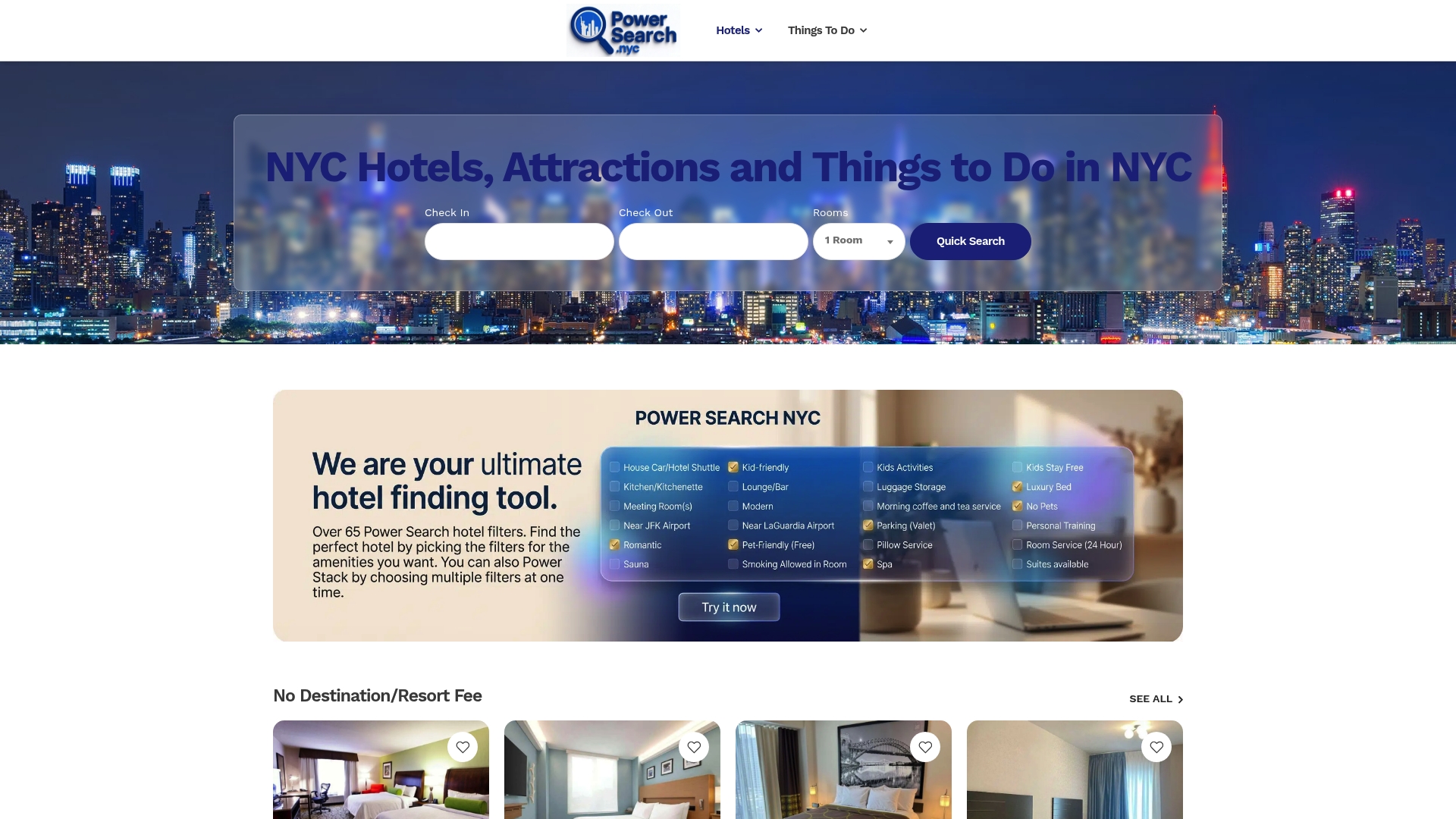
Whether you are placing a corporate group in Midtown or sourcing a family-friendly suite for a multi-generational trip, Powersearch gives you the neighborhood context and property comparisons that narrow your options quickly. The platform also covers NYC hotels, attractions, and things to do across every borough, so you can evaluate a hotel’s surroundings alongside its specs. Use Powersearch to build your inspection shortlist, then go see the properties in person.
FAQ
What is a hotel site inspection?
A hotel site inspection is an in-person evaluation where a travel planner or event professional visits a property to verify its facilities, service quality, and surroundings before booking. It goes beyond online research to confirm that a hotel meets the specific needs of a group or event.
Why is a site inspection especially important for NYC hotels?
NYC hotels operate under complex local regulations like LL97, vary significantly by neighborhood, and often present differently in person than in marketing materials. An in-person inspection catches compliance risks, service gaps, and neighborhood issues that no listing page reveals.
What should a site inspection checklist for hotels include?
A solid checklist covers room configurations, meeting space dimensions, AV capabilities, catering facilities, elevator capacity, accessibility features, and neighborhood conditions. It should also include staff interaction observations and a review of recent health inspection records.
How do incognito inspections differ from hosted site visits?
An incognito inspection means booking as a regular guest without identifying yourself as a planner, which reveals authentic service levels and operational realities. A hosted visit is useful for accessing restricted spaces but shows the hotel’s best-case presentation rather than its everyday performance.
How often should travel planners conduct site inspections?
Planners should inspect a property before every new booking and revisit properties annually if they place repeat business there. Hotels change ownership, management, and physical condition regularly, and a property that delivered well two years ago may not meet the same standard today.
No Comments