

Why Visit Lower Manhattan: A Clear Guide for Visitors
Disclosure: This post may contain affiliate links. We may earn a commission for purchases made through links in this post, at no cost to you.
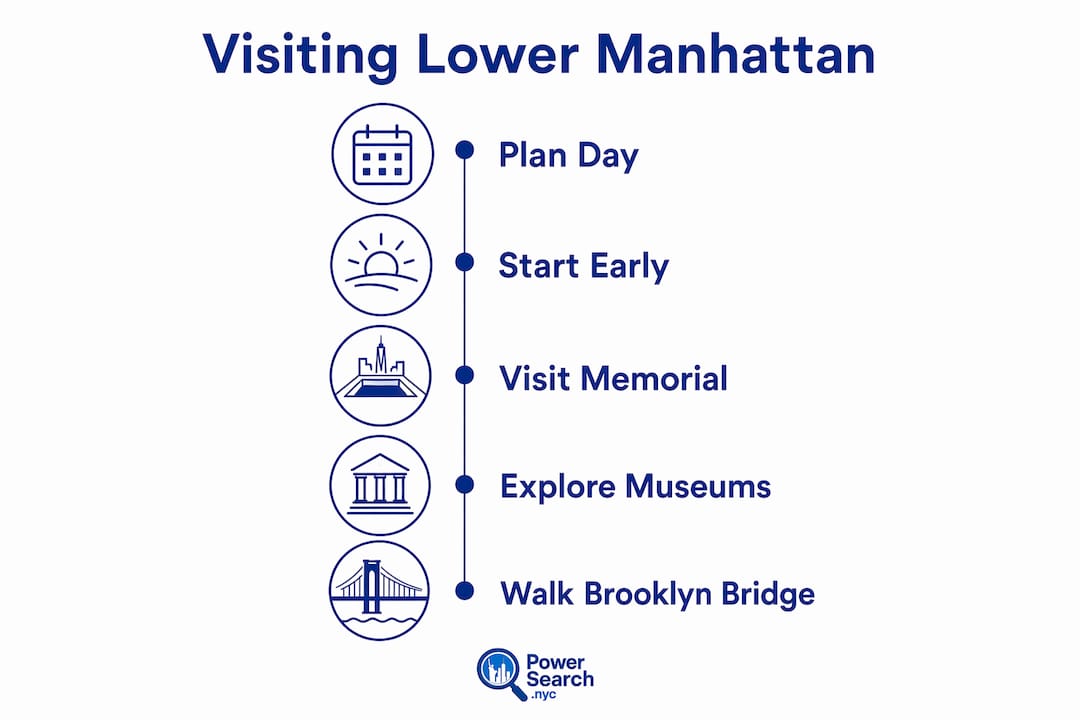
Lower Manhattan is worth visiting because it packs more than 400 years of American history, global financial power, and genuine waterfront beauty into a compact, walkable area anchored by some of the most emotionally powerful sites in the country. The 9/11 Memorial, One World Trade Center, the Statue of Liberty ferry at Battery Park, and the Brooklyn Bridge are all within a short walk of each other. Powersearch recommends allocating at least one full day to do it justice; a half-day forces a rushed, tick-box experience.
The top three reasons to visit:
- History and monuments. From Dutch colonial street patterns to Federal Hall where George Washington took his first oath of office, the neighborhood is a living timeline.
- Skyline and harbor views. One World Observatory, the Brooklyn Bridge walkway, and the harbor from Battery Park deliver views you simply cannot get anywhere else in the city.
- Cultural neighborhoods and food. Chinatown, the Lower East Side, Tribeca, and South Street Seaport each have a distinct personality, and you can walk between all of them in an afternoon.
Table of Contents
- What makes Lower Manhattan’s landmarks worth your time?
- Which museums are worth adding to your itinerary?
- Why the waterfront and bridges are highlights you shouldn’t skip
- What neighborhoods will you walk through, and what’s the vibe?
- Where to eat, drink, and shop without falling into tourist traps
- How much time do you need, and when should you go?
- Where to stay and how to find the right hotel with Powersearch
- A closer look at the three key cultural museums
- Key Takeaways
- The part of Lower Manhattan most visitors rush past
- Plan your Lower Manhattan visit with Powersearch
- Useful sources for planning your visit
What makes Lower Manhattan’s landmarks worth your time?
Lower Manhattan’s major historic sites are not just photo stops. Each one carries a story that changes how you see the city around it.
| Landmark | Why It Matters | Visit Time | Ticketing Tip |
|---|---|---|---|
| 9/11 Memorial & Museum | Emotionally powerful tribute to the attacks; outdoor plaza is free | 90–180 minutes (museum); unlimited (plaza) | Book timed museum entry online in advance |
| One World Observatory | Views via SkyPod elevator; typical visit about an hour | about an hour | Morning visits are clearer and less crowded |
| Statue of Liberty & Ellis Island | Iconic harbor crossing; Ellis Island traces immigrant arrivals | 3–4 hours with ferry | Crown/pedestal access sells out months ahead |
| Brooklyn Bridge | 1883 Gothic towers; walkway gives unbeatable skyline shots | 30–60 minutes (walk) | Free; go at sunrise or sunset for photos |
| Wall Street / NYSE / Federal Hall | Heart of U.S. finance; Federal Hall marks Washington’s inauguration | 30–45 minutes | Exterior free; Federal Hall interior free |
| Battery Park | Departure point for Statue ferries; harbor lawn with fort views | 30–60 minutes | Free; Castle Clinton entry is low-cost |
| South Street Seaport / Pier 17 | Historic ships, Pier 17 rooftop events, Brooklyn Bridge sightlines | 1–2 hours | Mostly free to walk; events ticketed separately |
| Oculus / WTC Transportation Hub | Santiago Calatrava’s striking white-rib structure; free to enter | 15–30 minutes | Free; best light mid-morning |
| African Burial Ground | National monument honoring enslaved and free Black New Yorkers | 30–45 minutes | Free |
Pro Tip: The outdoor 9/11 Memorial plaza is free and open without a timed ticket. Visit early on a weekday morning before tour groups arrive, and you’ll have the reflecting pools nearly to yourself.
Which museums are worth adding to your itinerary?
Lower Manhattan has a cluster of museums that go well beyond the typical tourist circuit. Here’s what each one offers and how long to allow.
- 9/11 Museum. The most visited museum in the area, and rightly so. Artifacts, audio recordings, and first-person accounts make the experience feel immediate rather than archival. Allow 90 minutes at minimum; many visitors stay closer to three hours. Book timed tickets online.
- Lower East Side Tenement Museum. Located on Orchard Street, this museum takes you inside actual preserved tenement apartments where immigrant families lived in the late 19th and early 20th centuries. Tours are guided and ticketed; reserve a spot in advance since group sizes are small.
- Museum of Jewish Heritage. Situated at the edge of Battery Park City with harbor views, this museum documents Jewish life before, during, and after the Holocaust. Allow 90 minutes to two hours. Some exhibits are included with general admission; check for free community days.
- National Museum of the American Indian. Housed inside the stunning Beaux-Arts U.S. Custom House on Bowling Green, this Smithsonian museum is free to enter and often overlooked. The building alone is worth the stop.
A smart pairing: visit the African Burial Ground National Monument first (it’s a short walk from City Hall), then head south to the National Museum of the American Indian. Both are free, and together they give you a grounded sense of the city’s pre-colonial and colonial history before you hit the bigger ticketed sites.
Why the waterfront and bridges are highlights you shouldn’t skip
The water is what shaped Lower Manhattan, and it still defines the experience. Battery Park is where you catch the official Statue City Cruises ferries to the Statue of Liberty and Ellis Island. Standard round-trip ferry tickets with island entry for adults are typically in the mid-$20s; crown and pedestal access costs more and sells out months in advance, so book early if that’s your goal.
The Brooklyn Bridge walk is one of the best free things you can do in New York City. Start from the Manhattan side at Park Row and walk across to Brooklyn Heights. Sunrise and late afternoon give you the best light for photos, and the view back toward Lower Manhattan’s skyline from the bridge is genuinely hard to beat. The walk takes about 30 minutes at a relaxed pace.

South Street Seaport sits just east of the Financial District and is an easy 10–20 minute walk from the World Trade Center site. Pier 17’s rooftop hosts events and gives you clear Brooklyn Bridge sightlines without paying for an observatory. The surrounding Seaport streets have historic ships docked alongside modern restaurants, which makes for a good late-afternoon stop after the heavier memorial sites.
Pro Tip: If your budget is tight, skip the paid observatory and walk the Brooklyn Bridge instead. The view from the bridge is arguably better than the one from above, and it costs nothing.
What neighborhoods will you walk through, and what’s the vibe?
Lower Manhattan is not one neighborhood. It’s several distinct pockets stitched together, and the character shifts noticeably as you move between them.
- Financial District (FiDi). On weekday mornings, this feels like the engine room of American capitalism. Suits, fast walkers, coffee cups. On weekends, it’s quieter and almost eerie in the best way. The architecture is spectacular.
- Tribeca. Just north of FiDi, Tribeca has wide cobblestone streets, converted warehouses, and a noticeably calmer pace. It’s a good place to grab coffee before heading south.
- South Street Seaport / Seaport District. A mix of old and new. Historic ships, Pier 17, and a growing restaurant scene. It has a neighborhood feel on weekend afternoons.
- Chinatown. Loud, colorful, and genuinely local. The food is cheap and good. Canal Street is chaotic; the side streets are where you find the better spots.
- Lower East Side. Once the heart of immigrant New York, now a mix of old-school delis, vintage shops, and bars. The Tenement Museum is here. It has more of a neighborhood energy than a tourist one.
A compact walking route that works well: start at the African Burial Ground, walk south through FiDi to Wall Street and Federal Hall, continue to Battery Park for harbor views, then head east along the waterfront to South Street Seaport. From there, cut north through Chinatown and into the Lower East Side. The whole loop is roughly three to four miles and takes about half a day at a comfortable pace.
Stone Street, a narrow cobblestone lane near Broad Street, is one of the best photo spots in the area. The buildings lean in close, and the street-level restaurants spill out onto the pavement in warmer months.

Where to eat, drink, and shop without falling into tourist traps
The Financial District is primarily a weekday lunch zone. Many of the better spots close early on weekends or keep limited hours, so plan accordingly.
Budget: Chinatown is your best option for cheap, genuinely good food. Dim sum on Mott Street or a bowl of noodles on Doyers Street will cost you a fraction of what you’d pay near the World Trade Center.
Mid-range: Stone Street has a cluster of restaurants with outdoor seating and a lively after-work crowd on weekdays. It’s a solid choice for lunch or an early dinner. The Seaport District has a broader mix, including spots at Pier 17 with waterfront views.
Splurge: Tribeca has some of the city’s best restaurants if you’re willing to book ahead and spend accordingly. The neighborhood’s dining scene is quieter and more local-feeling than Midtown.
For shopping, the Seaport area has a mix of boutiques and national retailers. Chinatown’s markets are worth a browse if you’re after something more eclectic. Avoid the souvenir shops clustered directly around the NYSE facade; they’re overpriced and generic. For a broader look at NYC dining culture beyond the immediate area, Georgian fine dining in Brooklyn is worth the short trip.
How much time do you need, and when should you go?
Experts recommend at least one full day for a meaningful visit. A half-day is possible for a tight highlights loop, but you’ll feel rushed.
Half-day (4–5 hours): 9/11 Memorial plaza (free), Oculus, Wall Street and Federal Hall exteriors, Battery Park. Skip the museum and ferry.
Full day (8–10 hours): Add the 9/11 Museum (book ahead), One World Observatory or Brooklyn Bridge walk, South Street Seaport, and lunch in FiDi or Chinatown.
Two days: Day one covers the World Trade Center site, museum, observatory, and Battery Park ferry to the Statue of Liberty. Day two focuses on Brooklyn Bridge, Seaport, Tenement Museum, Museum of Jewish Heritage, and a Chinatown or Lower East Side afternoon.
Best times to visit:
- Weekday mornings for authentic Financial District energy and lighter crowds at the memorial.
- Mid-morning on weekends for a calmer FiDi with tourist sites still accessible.
- Spring (April–May) and fall (September–October) for comfortable walking weather.
- Avoid peak summer midday heat if you’re doing a long walking loop.
Rough ticket costs:
- 9/11 Museum: adults around $30; children under 7 free.
- One World Observatory: adults around $44.
- Statue of Liberty ferry (standard, round-trip with island entry): typically mid-$20s for adults.
- Crown/pedestal access: additional cost; reserve months ahead.
Check NYC discount passes if you’re hitting multiple paid attractions; they can cut costs significantly.
Packing checklist for a full-day walking visit:
- Comfortable, broken-in walking shoes. Expect significant walking between the Seaport, FiDi, and the World Trade Center area.
- Water bottle. Refill stations are available in most parks.
- Sunscreen and a hat for Battery Park and the Brooklyn Bridge.
- A portable charger for your phone.
- Pre-downloaded offline maps (Google Maps or Apple Maps work well).
- Pre-booked tickets for the 9/11 Museum, observatory, and Statue ferry printed or saved offline.
Where to stay and how to find the right hotel with Powersearch
Where you base yourself affects how much energy you have left for exploring. Here’s a quick breakdown by traveler type.
| Traveler Type | Best Neighborhood | Why It Works |
|---|---|---|
| First-time visitors | Financial District | Walking distance to nearly every major site; great transit access |
| Families | Battery Park City | Quieter streets, waterfront parks, easy ferry access |
| Budget travelers | Lower East Side | More affordable hotels; good food and transit nearby |
| Business travelers | Tribeca / FiDi | Close to offices; quieter evenings; quality dining options |
Powersearch’s hotel search tool lets you filter by neighborhood, price, and amenities so you can find something that actually fits your trip rather than just your budget. If you’re arriving early and want to drop your bags before check-in, check the early check-in tips to avoid wasting your first morning waiting around. The things-to-do search is also worth bookmarking for building out your itinerary beyond the major landmarks.
A closer look at the three key cultural museums
The 9/11 Museum, the Lower East Side Tenement Museum, and the Museum of Jewish Heritage each tell a different chapter of New York’s story, and together they make a compelling case for why Lower Manhattan is more than just a skyline.
The 9/11 Museum sits below ground, beneath the footprints of the Twin Towers. The descent into the space is itself part of the experience. Artifacts include a fire truck crushed by falling debris, personal items recovered from the site, and recorded testimonies from survivors and first responders. It’s heavy, and it should be. Allow at least 90 minutes; many visitors need more.
The Tenement Museum on Orchard Street is a different kind of emotional experience. You walk through apartments that were actually lived in by immigrant families from Eastern Europe, Ireland, and later Puerto Rico and China. The guided tours are excellent and the stories are specific, which makes them stick. It’s one of the best museums in New York City, full stop.
The Museum of Jewish Heritage sits at the southern tip of Battery Park City with views of the harbor and the Statue of Liberty. Its permanent collection covers Jewish life across three generations, with the Holocaust as the central chapter. The location feels intentional: the Statue of Liberty visible through the windows is a quiet, powerful counterpoint to what’s inside.
Key Takeaways
Lower Manhattan earns a full day of your time because it clusters 400+ years of American history, iconic harbor access, and emotionally resonant memorial sites within a walkable area that no other neighborhood in New York can match.
| Point | Details |
|---|---|
| Allocate a full day | A half-day forces a rushed visit; one full day covers the major sites comfortably. |
| Book tickets early | 9/11 Museum, One World Observatory, and Statue of Liberty crown/pedestal access all benefit from advance booking. |
| Free experiences are excellent | The 9/11 Memorial plaza, Oculus interior, African Burial Ground, and National Museum of the American Indian are all free. |
| Walk the neighborhoods | The Financial District, Seaport, Chinatown, and Lower East Side each have a distinct character worth experiencing on foot. |
| Use Powersearch to plan your stay | Filter hotels by neighborhood and price at Powersearch to find the right base for your Lower Manhattan visit. |
The part of Lower Manhattan most visitors rush past
Most people treat Lower Manhattan like a checklist. They hit the 9/11 Memorial, snap a photo at the Charging Bull, and call it done. What they miss is what happens when you slow down. The narrow colonial-era streets between Broadway and the waterfront still follow the same patterns Dutch settlers laid out in the 1600s. The African Burial Ground sits quietly a few blocks from City Hall, and most visitors walk past it without knowing it’s there.
The honest tip: visit the African Burial Ground in the morning, then walk south through FiDi to the Brooklyn Bridge at sunset. That route, done slowly, gives you the full emotional and historical range of the neighborhood in a single afternoon. You’ll feel the weight of history and then, standing on the bridge with the skyline behind you, something closer to awe.
Plan your Lower Manhattan visit with Powersearch
Figuring out where to stay near Lower Manhattan is genuinely easier when you can filter by neighborhood, price, and proximity to the sites you actually care about. Powersearch pulls together hotel options across Manhattan so you can compare what’s close to Battery Park, the Financial District, or the Lower East Side without bouncing between a dozen booking sites.
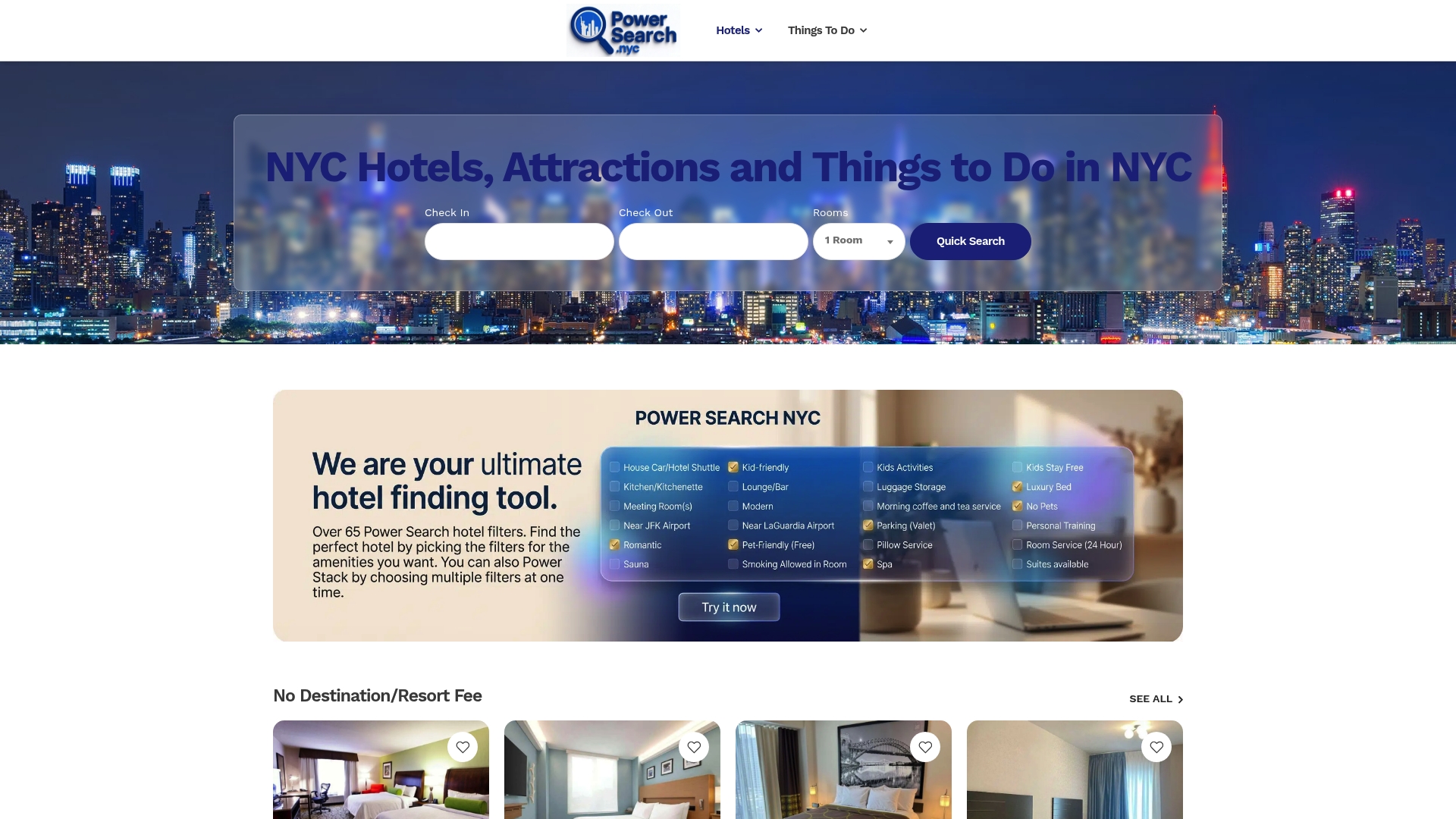
The hotel search lets you set your budget and see what’s available near the neighborhoods covered in this guide. If you’re still building your itinerary, the things-to-do finder helps you slot in attractions, tours, and local experiences alongside your accommodation. Start there, and you’ll have a solid plan before you even pack your bag.
Useful sources for planning your visit
- Is Lower Manhattan Worth Visiting? What Travelers Should Know — Practical overview of what to expect, visit-length guidance, and safety notes.
- What Most Visitors Miss in Lower Manhattan — Covers under-visited sites, free experiences, and the case for slowing down.
- Lower Manhattan Neighborhood Guide (Story Hunt) — Detailed itinerary and timing advice for Wall Street, the 9/11 Memorial, and more.
- African Burial Ground National Monument (NPS) — Official National Park Service page for visiting hours, history, and directions.
- Lower East Side Tenement Museum — Book guided tours and check tour themes and availability before you go.
- Downtown Alliance: Two Days in Lower Manhattan — Official neighborhood organization’s two-day itinerary with ferry and ticketing tips.
- Nomado Travel: Lower Manhattan Neighborhood Guide — Walking and transit tips with practical packing and footwear advice.
- Powersearch NYC Hotel Search — Filter hotels near Lower Manhattan by price, neighborhood, and amenities.
- Powersearch NYC Things-to-Do Search — Find tours, attractions, and local experiences to build out your itinerary.
No Comments