

NYC Travel Discount Cards: What Tourists Need to Know
Disclosure: This post may contain affiliate links. We may earn a commission for purchases made through links in this post, at no cost to you.
A NYC travel discount card is not one single card. It refers to two separate saving tools: the OMNY contactless transit fare system for subway and bus travel, and bundled attraction passes like CityPASS that cut admission costs at major sites. Tourists often arrive expecting one magic card that covers everything, and that confusion costs them time and money. Understanding the difference between transit fare savings and attraction pass discounts is the single most useful thing you can do before your trip. This guide breaks both down clearly so you can plan with confidence.
What is a NYC travel discount card for tourists?
No single NYC travel discount card covers both transit and attractions. Transit and attraction passes work as completely separate systems, and treating them that way is the key to saving real money.
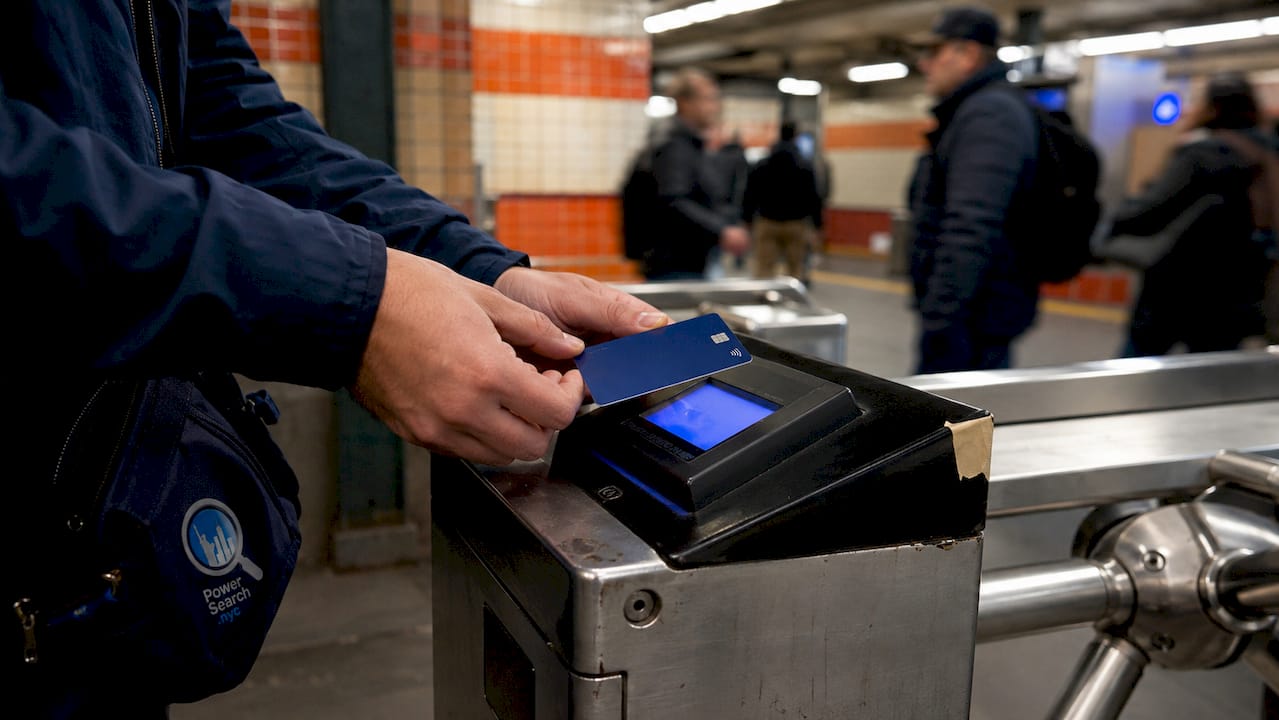
On the transit side, the OMNY system is what tourists use in 2026. The MetroCard is retired, meaning no new cards are sold and old ones cannot be refilled. Every subway and bus in New York City now runs on OMNY tap-to-pay, which accepts contactless credit and debit cards plus mobile wallets like Apple Pay and Google Pay.
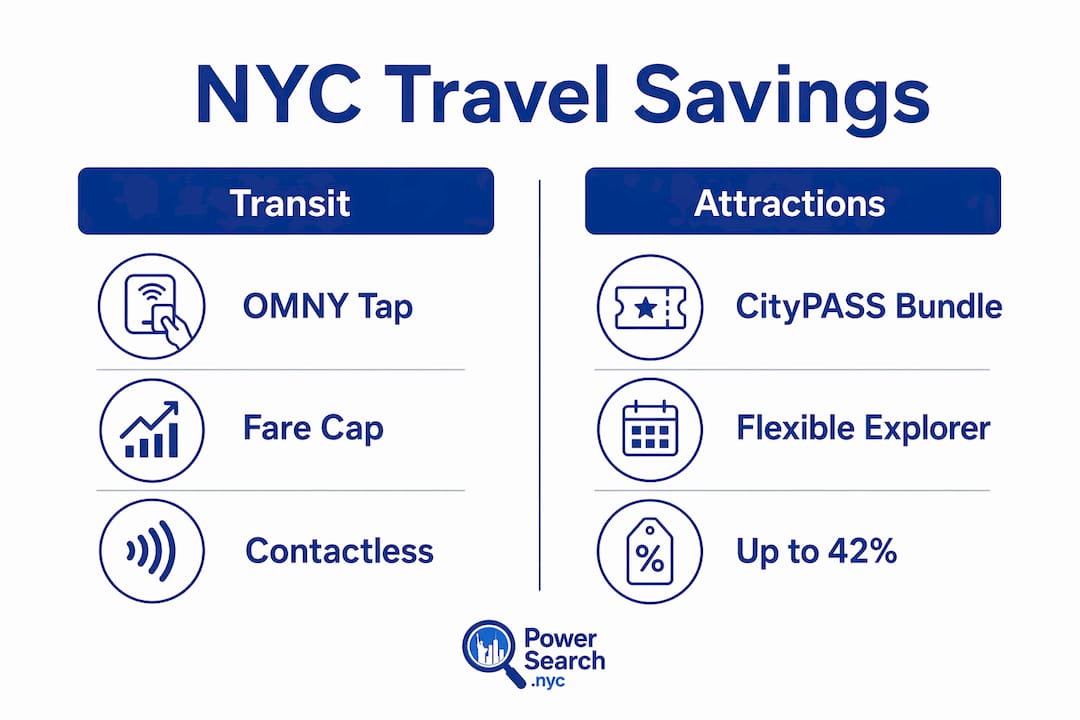
On the attractions side, passes like CityPASS bundle admission to multiple top sites into one purchase, offering savings of up to 42% compared to buying tickets individually. CityPASS pricing ranges from $114 to $254 plus a $2 processing fee, depending on how many sites you choose.
The smart move is to plan both strategies before you arrive. Pick your transit payment method and decide whether your itinerary justifies an attraction pass. Those two decisions together form what most travelers mean when they search for a NYC travel discount card.
How does the OMNY transit fare system save tourists money?
OMNY is the MTA’s tap-to-pay system, and it works automatically with any contactless payment method you already carry. There is no sign-up, no app required, and no special card to buy. You simply tap your card or phone at the turnstile or bus reader and pay the standard $3 fare.
The real saving comes from the rolling 7-day fare cap. After 12 paid rides within any 7-day period using the same payment method, every additional ride is free. That cap maxes out at $35 per week. For a tourist taking 3 or 4 subway trips a day over a 5-day stay, the fare cap kicks in quickly and the savings add up without any extra effort.
Key things to know about using OMNY:
- Each rider needs their own payment method. Groups cannot share one card by tapping multiple times. Every person in your group needs a separate contactless card or device.
- Physical OMNY cards exist but cost $2 to purchase. Most tourists do not need them. Your bank card or phone works just as well and tracks your fare cap automatically.
- All NYC buses and subways accept OMNY. You can tap to pay on buses without exact change, which removes one of the most common tourist headaches.
- The 7-day cap resets on a rolling basis, not on a fixed Monday-to-Sunday schedule. Your cap window starts from your first tap.
- Digital wallets track your cap automatically. You never need to count rides or check a balance.
Pro Tip: If you are staying 4 to 7 days and plan to use the subway regularly, stick to one contactless card for all your transit taps. Switching between cards resets your ride count and delays when the free rides kick in.
What attraction passes offer savings for NYC tourists?
Attraction passes are pre-purchased bundles that cover admission to multiple NYC sites at a reduced total price. They work best for travelers who plan to visit several paid attractions in a short window. If your itinerary includes the Empire State Building, the Metropolitan Museum of Art, the Statue of Liberty, and a few other major sites, a bundled pass almost always costs less than buying tickets at the door.
CityPASS is the most recognized option. It bundles 3 to 10 attractions and saves visitors up to 42% on combined admission. Beyond the price cut, CityPASS also reduces planning stress. The pass app includes maps, reservation information, and partner discounts, which matters a lot when you are trying to manage a packed itinerary in a city this chaotic.
Other pass formats exist in the market, ranging from fixed-site bundles to flexible “explorer” style passes where you choose from a menu of attractions. Fixed bundles work best when you know exactly which sites you want. Flexible passes suit travelers who prefer to decide day by day.
| Pass type | How it works | Best for | Typical savings |
|---|---|---|---|
| Fixed bundle (e.g., CityPASS) | Pre-selected set of top attractions | Travelers with a firm itinerary | Up to 42% |
| Flexible explorer pass | Choose X attractions from a larger list | Travelers who prefer flexibility | Varies by selection |
| Single-site advance tickets | Buy one attraction ticket early online | Travelers visiting 1–2 paid sites | 10–20% vs. door price |
Pro Tip: Before buying any attraction pass, list every paid site you genuinely plan to visit and add up the individual ticket prices. If the pass price is lower, buy it. If you are only visiting one or two paid attractions, individual tickets will cost you less.
Why tourists cannot get certain NYC transit discount cards
Reduced-fare transit programs exist in New York City, but none of them are available to tourists. These programs are designed for qualifying residents only, and the eligibility rules are strict.
The two main programs are the Fair Fares OMNY card and the MTA Reduced-Fare program. Fair Fares provides a 50% discount on subway and bus fares for low-income New York City residents. The MTA Reduced-Fare program offers half-price rides for seniors aged 65 and older and for riders with qualifying disabilities. Both programs require documentation proving New York City residency, income level, age, or disability status.
Tourists do not qualify under any of these programs. There is no workaround, no temporary visitor version, and no way to apply from outside the city. If you see a website or vendor claiming to sell a “discounted NYC transit card” for tourists, treat that claim with skepticism.
What tourists do have access to is the OMNY fare cap, which functions as a de facto discount after 12 rides. That is the legitimate transit saving available to visitors, and it requires nothing more than the contactless card already in your wallet.
Eligibility requirements for resident discount programs, for reference:
- Fair Fares: NYC resident, income at or below the federal poverty level, documented proof required
- MTA Reduced-Fare: Age 65 or older, or a qualifying disability, NYC resident documentation required
- Neither program: Available to tourists, short-term visitors, or non-residents under any circumstances
Practical tips to maximize your NYC travel savings
The best approach to saving on NYC travel combines smart transit habits with a well-chosen attraction pass. Neither tool alone covers everything, but together they can meaningfully cut your total trip cost.
For transit, the single most important habit is consistency. Use the same contactless card or device for every subway and bus tap throughout your trip. Switching payment methods splits your ride count and delays the fare cap. If you are traveling with family or a group, make sure every person has their own card or device ready before you hit the turnstile. Physical OMNY cards cost $2 each and are worth buying only if someone in your group does not have a contactless payment option.
For attractions, timing matters. Many popular NYC sites sell out on busy days, especially in summer and around holidays. Attraction passes often include reservation support, which means you can lock in your entry times in advance rather than showing up and hoping for the best.
Do’s and don’ts for tourists using NYC travel discount cards:
- Do use one contactless card per person for all transit taps
- Do calculate your attraction itinerary before buying a pass
- Do download the CityPASS app if you purchase that pass, since it manages reservations and entry details
- Don’t buy a physical OMNY card unless you have no contactless payment option
- Don’t assume a single card covers both transit and attractions
- Don’t pay for transit discount cards from third-party vendors claiming special tourist rates
- Don’t share one payment card between multiple riders at the turnstile
Pro Tip: Combine both strategies for the best budget control. Let the OMNY fare cap handle your transit costs, and use a bundled attraction pass for your paid sites. Together, they cover the two biggest variable costs of any NYC trip.
Key takeaways
A NYC travel discount card means two separate tools: the OMNY fare cap for transit and a bundled attraction pass for sites, and using both together delivers the best savings.
| Point | Details |
|---|---|
| Two separate systems | Transit savings come from OMNY; attraction savings come from passes like CityPASS. |
| OMNY fare cap | After 12 rides in 7 days with the same payment method, all additional rides are free up to $35. |
| Attraction pass value | CityPASS saves up to 42% on bundled admissions and simplifies reservation management. |
| Resident programs excluded | Fair Fares and Reduced-Fare OMNY cards are for qualifying NYC residents only, not tourists. |
| One card per rider | Each traveler needs their own contactless payment method to benefit from fare capping. |
What I have learned from watching tourists navigate NYC transit
Most travelers arrive in New York City expecting a single card that solves everything. That expectation sets them up for confusion at the turnstile and overspending at attraction ticket windows. The OMNY system has genuinely made transit easier for visitors. You no longer need to find a MetroCard machine, figure out how much to load, or worry about leftover balance. Your bank card does the job, and the fare cap rewards you automatically for using the subway the way locals do.
Where I see travelers go wrong most often is with attraction passes. They buy a pass because it sounds like a deal, then only visit two or three sites and end up paying more than they would have with individual tickets. The pass only saves you money if you actually use it. Sit down before your trip, write out every paid attraction you genuinely want to see, and do the math. If the numbers work, buy the pass. If they do not, skip it.
For families especially, the contactless payment approach is a game changer for transit. Every person needs their own card or device, which sounds like a hassle but actually speeds up boarding considerably. No fumbling with one shared card at the turnstile while a line builds up behind you. Get everyone set up before you leave the hotel, and the subway becomes one of the easiest parts of your day.
The best NYC trip is not the one with the most discounts. It is the one where you spend your time and energy on the city itself, not on logistics. Get your transit and attractions sorted in advance, and you can drop your bags and go explore.
— Mark
Plan your NYC trip with Powersearch
Sorting out transit and attraction savings is just one piece of planning a great New York City trip. Finding the right hotel in the right neighborhood makes everything else easier, from cutting your daily commute to staying close to the attractions on your list.

Powersearch is built for exactly this kind of planning. You can search NYC hotels and attractions by neighborhood, budget, and amenities, all in one place. Whether you are looking for a budget-friendly spot near Midtown or a family-friendly hotel close to Central Park, Powersearch gives you the filters to find it fast. You can also browse things to do across the city to build out your itinerary before you arrive. Less guessing, more exploring.
FAQ
What is a NYC travel discount card?
A NYC travel discount card refers to two separate tools: the OMNY contactless fare system for transit savings and bundled attraction passes like CityPASS for admission discounts. No single card covers both transit and attractions.
How does the OMNY fare cap work for tourists?
After 12 paid rides within a 7-day period using the same contactless payment method, all additional rides are free, capping weekly transit spending at $35. The cap applies automatically with no sign-up required.
Can tourists get a reduced-fare transit card in NYC?
No. The Fair Fares OMNY card and MTA Reduced-Fare program are available only to qualifying NYC residents with documented proof of income, age, or disability. Tourists are not eligible for either program.
Is CityPASS worth buying for a NYC trip?
CityPASS is worth buying if you plan to visit multiple paid attractions. It saves up to 42% on bundled admissions and includes reservation support through its app, which helps on busy days at popular sites.
Do I need to buy a physical OMNY card as a tourist?
Most tourists do not need a physical OMNY card. Any contactless credit or debit card, or a mobile wallet like Apple Pay, works at every subway turnstile and bus reader in the city. Physical OMNY cards cost $2 and are only useful if you have no contactless payment option.
No Comments