

How NYC Room Rate Fluctuation Works for Smarter Budgeting
Disclosure: This post may contain affiliate links. We may earn a commission for purchases made through links in this post, at no cost to you.
You check a Manhattan hotel on Monday, and the rate is $289. You check again Thursday, and it’s $340. Check Friday morning and it drops to $265. Sound familiar? Understanding how NYC room rate fluctuation works, or more precisely, how dynamic pricing operates in one of the world’s most competitive hotel markets, is the difference between overpaying by hundreds of dollars and booking confidently. NYC lodging price fluctuations aren’t random. They follow patterns driven by algorithms, demand cycles, regulations, and geography. This guide breaks all of it down so you can plan and budget like someone who actually knows what’s going on.
Table of Contents
- Key Takeaways
- How NYC room rate fluctuation works at the algorithm level
- Weekday vs. weekend demand patterns
- NYC-specific factors reshaping hotel prices in 2026
- Practical strategies for booking around rate swings
- How neighborhood and hotel type change the volatility picture
- My honest take on NYC hotel pricing complexity
- Plan smarter with Powersearch
- FAQ
Key Takeaways
| Point | Details |
|---|---|
| Prices change multiple times daily | Revenue management systems reprice rooms 1-3 times per day, sometimes continuously. |
| Midweek often costs more | Business travel demand pushes Monday through Wednesday rates higher in NYC. |
| 2026 transparency rules help you | NYC now requires upfront total pricing, so the rate you see is the rate you pay. |
| New hotel supply creates opportunity | Over 4,800 new rooms entering NYC in 2026 can soften pricing in some segments. |
| Neighborhood choice changes everything | Manhattan rates are far more volatile than outer borough options for the same dates. |
How NYC room rate fluctuation works at the algorithm level
Most travelers assume hotel prices change weekly or seasonally. The reality is far more granular. NYC hotels frequently update room rates multiple times per day using Revenue Management Systems, or RMS for short. These are sophisticated software platforms that process real-time data and reprice rooms automatically, without any human touching a keyboard.
Here’s what an RMS is actually monitoring and reacting to:
- Booking velocity: If 10 rooms sell in two hours, the system reads that as high demand and raises the price on remaining inventory.
- Cancellations: A sudden spike in cancellations signals weakening demand, and prices may drop to attract new bookings fast.
- Competitor rates: Hotels use rate-shopping tools that scan competitor pricing constantly. When one hotel drops its price, that signal can trigger cascading price changes across neighboring properties within hours.
- Upcoming events: A major conference at Javits Center, a sold-out concert at Madison Square Garden, or a fashion week date can cause the RMS to spike rates days in advance.
- Days to arrival: As the check-in date gets closer, pricing behavior shifts depending on how much unsold inventory remains.
A room priced at $200 at 9 AM might be $225 by noon and back to $210 by 6 PM. That’s not a glitch. That’s the system working exactly as designed. Rate volatility throughout a single day is a direct consequence of booking velocity and real-time cancellation data feeding the algorithm continuously.
Pro Tip: If you find a rate you like, book it as a refundable reservation immediately. You can always cancel later if the price drops further. Waiting to “see if it gets cheaper” often backfires.
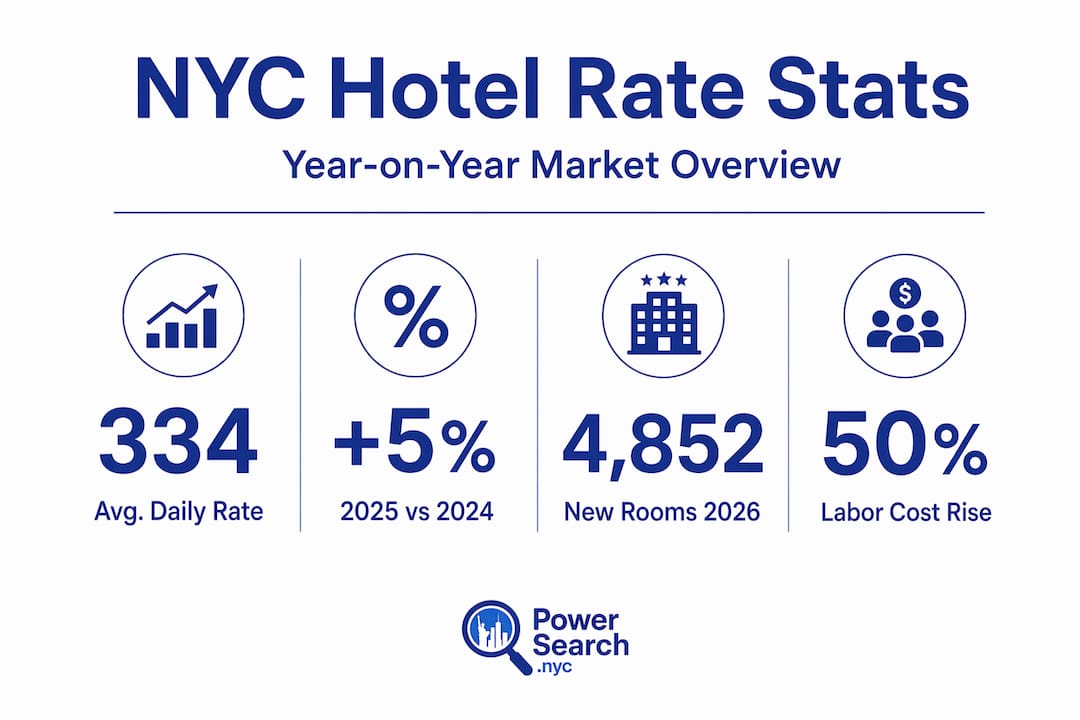
The broader market backdrop matters too. NYC hotels posted an average daily rate of $334 in 2025, up 5% from the year before, with average occupancy sitting at 84.2%. High baseline occupancy means there are fewer unsold rooms available to discount, which keeps the floor on rates elevated.
Weekday vs. weekend demand patterns
This is where NYC genuinely surprises most travelers. In most American cities, weekend rates are higher because leisure travelers fill hotels on Fridays and Saturdays. NYC flips that script regularly.
Business travelers flood Manhattan from Sunday night through Wednesday, keeping corporate demand strong early in the week. Leisure travelers, who tend to book shorter urban getaways, often arrive Thursday through Saturday. The result? Peak demand runs Monday through Wednesday, and prices frequently soften heading into the weekend as unsold rooms pile up.
Here’s a practical way to think about day-of-week pricing in NYC:
- Sunday night rates are often elevated because business travelers check in for the workweek ahead.
- Monday and Tuesday are typically the most expensive nights in Midtown Manhattan hotels due to peak corporate demand.
- Wednesday stays elevated but may begin softening slightly as some business trips wrap up.
- Thursday and Friday are the sweet spot for many travelers. Hotels start discounting to fill weekend inventory.
- Saturday night is wildly variable. Major events can spike it; quiet weekends can make it the cheapest night of the stay.
“Peak demand in NYC hotels tends to fall early in the week, and prices can drop noticeably before the weekend if rooms are still available.” — Travel expert Samantha Brown, via HerMoney
If your schedule has any flexibility, a Wednesday check-in and Saturday checkout often beats a Friday to Sunday stay by a meaningful margin. Powersearch has a detailed breakdown of why booking midweek consistently outperforms weekend bookings for NYC travelers watching their budgets.
NYC-specific factors reshaping hotel prices in 2026
Understanding NYC accommodation costs in 2026 requires knowing about three forces that don’t apply in most other U.S. cities right now.
The new hidden fees ban
Starting February 21, 2026, NYC bans hidden hotel fees and requires total prices, including all mandatory charges, to be displayed upfront before you book. Resort fees, amenity fees, destination fees — the charges that used to inflate your bill at checkout. They all have to be included in the advertised rate now. This is genuinely good news for budgeting because price comparisons become far more accurate. The rate you see is the rate you pay.
New hotel supply entering the market
NYC is expecting 4,852 new hotel rooms in 2026, the highest new supply volume among major U.S. markets. More rooms competing for the same travelers creates downward pricing pressure in segments where new supply concentrates. This doesn’t mean rates are falling across the board, but it does mean more options and more competition.
| Factor | Effect on NYC hotel rates |
|---|---|
| 2026 hidden fees ban | Displayed rates now reflect true total cost |
| 4,852 new rooms entering market | Increased supply softens prices in affected segments |
| Historic union labor contracts | Labor costs rising ~50% over 8 years, pushing base rates up |
| High baseline occupancy (84.2%) | Fewer available rooms means less discounting overall |
Rising labor costs
NYC’s hotel workers secured historic labor contracts that increase wages roughly 50% over eight years. Higher operating expenses push hotels to protect their revenue per room, which translates to upward pricing pressure across the board. This is why you may notice rate floors staying higher even in slower demand periods.
Pro Tip: When comparing hotels post-2026, use the all-in total shown at checkout as your comparison figure. The new regulations make this number much more reliable than advertised nightly rates were in prior years.
Practical strategies for booking around rate swings
Now that you understand what’s driving the changes, here’s how to work with them rather than against them.
- Book refundable rates as a placeholder. Lock in a rate you’re comfortable with, then monitor prices as your stay approaches. If rates drop, rebook at the lower price and cancel the original.
- Check NYC’s event calendar before you search. The impact of events on NYC hotel prices is real and dramatic. Fashion Week, Comic Con, major concerts, and conferences can spike rates 40 to 70 percent above baseline in affected neighborhoods.
- Monitor rates 30 to 14 days before check-in. Hotels often discount closer to arrival to fill unsold rooms. But this is a calculated risk. If occupancy runs high citywide, that discount window may never open.
- Use the new all-in pricing to your advantage. Now that mandatory fees are rolled into displayed rates, direct hotel booking comparisons are more straightforward than they have been in years.
- Consider shoulder season dates. January through early March and late August through September tend to offer lower NYC seasonal room rates. The city is still fully alive. Prices just reflect lighter tourism pressure.
Pro Tip: Set a price alert if the tool you’re using supports it. Rates can drop overnight, particularly when a large group cancellation hits the system and inventory suddenly opens up.
How neighborhood and hotel type change the volatility picture
Here’s something that Manhattan-focused hotel searches often hide. NYC’s hotel market has a serious borough pricing disparity, and relying solely on Midtown or Midtown South averages gives you a skewed picture of what NYC accommodation actually costs.

Luxury hotels in Midtown Manhattan experience the most dramatic rate swings. They have high average daily rates and the most yield-management sophistication. A luxury property might swing $150 in either direction across a single week. Budget and midscale hotels in outer boroughs like Long Island City, Astoria, or Downtown Brooklyn experience far smaller absolute swings. Their rates are lower to begin with and less reactive to local corporate demand.
| Hotel segment | Typical rate volatility | Best for |
|---|---|---|
| Manhattan luxury | High. Wide daily swings | Flexible dates, points travelers |
| Midtown midscale | Moderate. Event-sensitive | Value-focused business travelers |
| Outer borough budget | Low. Narrow swing range | Budget-conscious leisure travelers |
| Boutique Manhattan | Variable. Niche demand-driven | Short stays, experience seekers |
Market segmentation in NYC creates a K-shaped pricing picture. Luxury properties maintain strong rate floors while economy options face different competitive pressures. If your goal is predictable, manageable accommodation costs, the outer boroughs deliver far less sticker shock. Powersearch lists a solid range of budget hotel options across NYC’s neighborhoods with real pricing context.
My honest take on NYC hotel pricing complexity
I’ve spent a lot of time tracking NYC hotel rates, and the biggest mindset shift that actually helped me was accepting that the price is never really fixed until the room is sold or the date passes.
What I’ve found is that the conventional wisdom about weekend pricing in NYC is almost backward compared to other cities. I used to assume Friday and Saturday nights were the expensive ones. Once I started actually tracking prices for the same properties across different days, I realized Monday and Tuesday nights in Midtown were routinely 20 to 35 percent higher than Thursday nights for the same room. That one insight alone has saved me hundreds of dollars.
What I’ve also learned is that neighborhood selection is underrated as a budget tool. Most travelers fixate on getting as close to Midtown as possible and end up paying peak Manhattan rates for the whole trip. I’ve stayed in Long Island City properties that were a nine-minute subway ride from Midtown, at rates 40 percent lower, with far less rate volatility throughout the booking window. The city experience was identical once I was outside.
My advice is to stop fighting the algorithm and start using it. Book refundable. Monitor. Rebook if the price falls. Check the event calendar before you even start searching. These aren’t insider secrets. They’re just the logical response to understanding how the pricing system actually works.
— Mark
Plan smarter with Powersearch

Once you understand why NYC hotel rates move the way they do, the next step is finding the right property at the right price. Powersearch makes that search a lot less chaotic. The platform aggregates hotel listings across all NYC neighborhoods with real price context, so you can filter by budget, location, amenity, and accommodation type without getting lost in Manhattan-only averages.
Families planning a longer stay will find the NYC hotel suite guide particularly useful for matching suite options to real budgets. And if you’re still figuring out the full shape of your trip, the NYC hotels and attractions search lets you plan accommodations and activities together, so you’re not booking a hotel in one place and discovering your must-see list is in a completely different part of the city.
FAQ
What causes NYC hotel prices to change so often?
NYC hotels use Revenue Management Systems that reprice rooms based on real-time booking velocity, cancellations, competitor rates, and demand signals. Prices can shift one to three times per day or more continuously.
Is it cheaper to stay in NYC on weekdays or weekends?
Midweek rates are often higher in Midtown due to business travel demand, while Thursday and Friday nights can be more affordable. Peak demand runs Monday through Wednesday for many Manhattan properties.
What are NYC’s new hotel pricing rules for 2026?
Starting February 21, 2026, NYC requires hotels to display total prices upfront, including all mandatory fees. Hidden resort or destination fees are no longer allowed.
How do NYC events affect hotel room rates?
Large events like Fashion Week, major conferences, or sold-out concerts can push nearby hotel rates up 40 to 70 percent above baseline. Checking NYC’s event calendar before you search helps you anticipate and avoid peak pricing windows.
Are outer borough hotels significantly cheaper than Manhattan options?
Yes. Outer borough properties in areas like Long Island City and Downtown Brooklyn typically show narrower rate swings and lower base prices. Borough-level pricing disparities are significant enough to merit serious consideration for budget-focused travelers.
No Comments