

NYC Family Vacation Planning Overview: 2026 Guide
Disclosure: This post may contain affiliate links. We may earn a commission for purchases made through links in this post, at no cost to you.
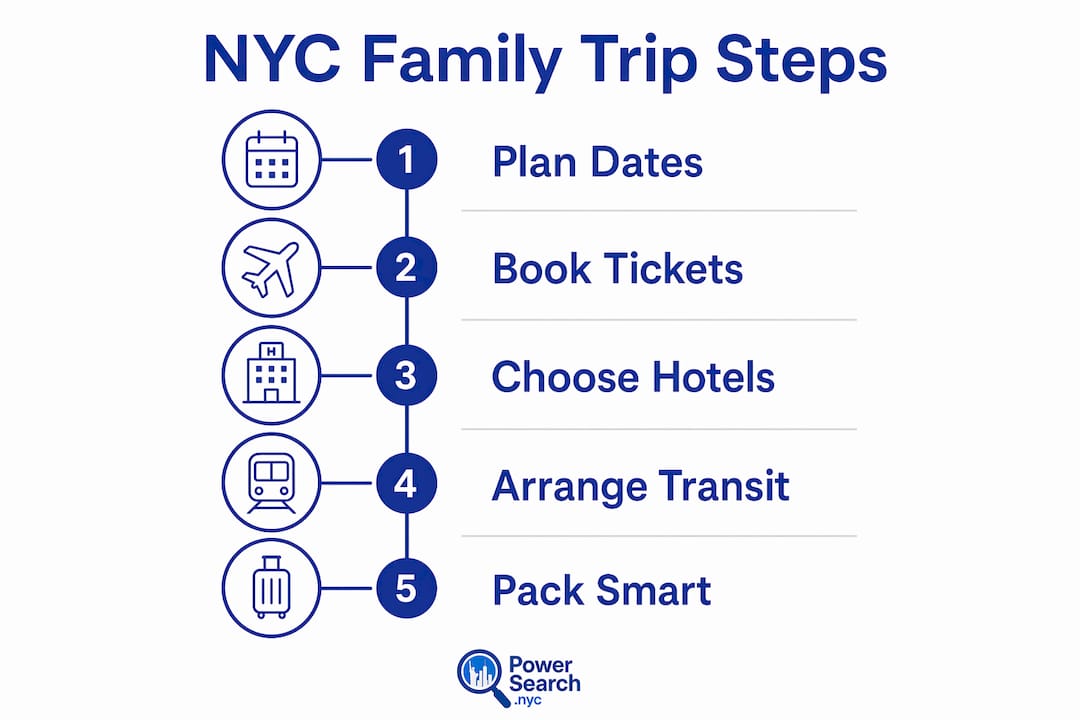
NYC family vacation planning is the process of organizing itineraries, managing budgets, and selecting family-friendly accommodations and activities to create a trip that works for every age in your group. Done right, it turns what could be a chaotic, expensive week into something your kids will talk about for years. This guide covers the core components: structuring your days, understanding 2026 transit fare changes, choosing the right hotel location, and stretching your budget with family discounts. Whether you are planning a long weekend or a full week, the framework here gives you a clear starting point.
How to structure a family-friendly NYC itinerary
A well-paced family itinerary blends iconic landmarks with museums and parks, giving kids varied experiences while building in rest. The biggest mistake families make is cramming too many major sights into a single day. Kids hit a wall fast, and when that happens, nobody is having fun.
Here is a proven 4-day framework that balances energy and variety:
- Day 1: Brooklyn Bridge and DUMBO. Start early, before 9am, to beat the crowds on the bridge. Walk across, explore DUMBO’s waterfront, and grab the East River Ferry back to Manhattan. The ferry ride itself is a hit with kids and gives you skyline views without the ticket price.
- Day 2: Central Park and Summit One Vanderbilt. Spend the morning in Central Park. Let the kids run at the Heckscher Playground or rent bikes. In the afternoon, head to Summit One Vanderbilt for the glass-floor experience. Book timed-entry tickets in advance.
- Day 3: Museum day. The American Museum of Natural History on the Upper West Side is a full-day destination for families. The dinosaur halls alone keep kids occupied for hours. Pair it with a stroll through Riverside Park afterward.
- Day 4: Bryant Park and the Hudson River. Keep the last day relaxed. Bryant Park has open green space, free activities, and food vendors. Finish at Hudson River Park for a low-key waterfront afternoon.
Pro Tip: Book timed-entry tickets for Summit One Vanderbilt, Top of the Rock, and the American Museum of Natural History at least two weeks out. Advance timed-entry booking prevents the long-line meltdowns that derail family days faster than anything else.
Alternating big-ticket landmark days with slower museum or park days keeps the energy balanced. Kids need that rhythm. Parents do too, honestly.

What families need to know about NYC transit in 2026
The MTA made significant changes at the start of 2026 that directly affect how you budget for getting around. The NYC subway base fare is now $3, and single-ride tickets cost $3.50. MetroCards are no longer sold, though existing cards are still accepted. The OMNY contactless system is now the standard way to pay, using your phone or a contactless credit card.
The good news for families: the Family Fare program lets children ages 5 to 17 ride for $1 when accompanied by a paying adult. That is a real saving if you have two or three kids in tow.
Here is what to keep in mind for transit planning:
- Calculate your rides before you finalize your itinerary. A family of four with two kids pays $8 per subway trip ($3 + $3 + $1 + $1). Price expected transit rides before you commit to a route-heavy itinerary.
- Minimize cross-town trips. East-west travel in Manhattan is slower and sometimes requires transfers. Plan your days geographically so you are moving up and down the island rather than across it.
- Stroller logistics on the subway are real. Not every station has elevator access. Check the MTA’s accessibility map before you plan a route with a stroller. Alternatively, many families find that walking between Manhattan blocks is faster and easier than navigating stairs with a buggy.
- Taxis and rideshares for short hops. For late nights or when kids are exhausted, a rideshare is worth the extra cost. Build a small buffer into your family NYC trip budget for these moments.
Pro Tip: Set up OMNY on your phone before you leave home. Tap-to-pay is faster than fumbling with a card at the turnstile, especially with kids in tow.
How to choose family accommodations and dining in NYC
Hotel location is the single biggest factor in how smoothly your trip runs. A hotel near Times Square or the Upper West Side puts you within walking distance of Broadway theaters, Central Park, and major transit hubs. The Hyatt Centric Times Square, for example, is frequently cited for its location near theaters, which cuts transit time and stress for families managing multiple kids and schedules. You can check hotels near Times Square to compare options by proximity and amenities.
When evaluating hotels for a family stay, prioritize these features:
- Suite or connecting room options. Kids and parents sharing a single room for five nights gets old fast. Suites with a separate sleeping area make a real difference. Powersearch’s NYC hotel suite guide for families walks you through what to look for and how to book.
- Kitchenette access. Even a mini-fridge and microwave lets you store snacks and breakfast items, which cuts meal costs significantly.
- Proximity to a subway line. Being one block from a subway entrance versus four blocks matters when you are carrying a tired toddler at 9pm.
For dining, the good news is that NYC has kid-friendly options at every price point. Ellen’s Stardust Diner near Times Square is a classic for families, with singing servers that kids love. Shake Shack locations throughout Manhattan offer fast, quality burgers without the fast-food feel. For a sit-down meal near the Upper West Side, Sarabeth’s is a reliable, relaxed choice. If you want to keep meal costs down, knowing how NYC budget meal planning works is worth a read before you go. Grocery runs to Trader Joe’s or Whole Foods for breakfast and snack supplies can save a family of four $30 to $50 a day.
How to maximize savings with family discounts and activity planning
Smart family NYC trip budget planning means knowing which attractions offer genuine family discounts and booking them before you arrive. One World Observatory offers a 20% discount on family packs of four or more tickets, and a 50% discount on late-night visits after 8pm. That late-night option is actually a great experience. The city looks different at night, and kids who have napped in the afternoon are often more engaged than they would be mid-afternoon.
Here is a quick comparison of activity types to help you balance your days:
| Activity type | Cost level | Best for |
|---|---|---|
| One World Observatory (family pack) | Moderate (20% off 4+ tickets) | Ages 6 and up, clear-day views |
| American Museum of Natural History | Moderate (pay-what-you-wish option) | All ages, especially 5 to 12 |
| Central Park | Free | All ages, flexible timing |
| Brooklyn Bridge walk | Free | Ages 4 and up, active families |
| Summit One Vanderbilt | Higher cost | Ages 8 and up, thrill-seekers |
Mixing free activities with one or two paid attractions per day keeps the budget manageable without making the trip feel cheap. Central Park, the Brooklyn Bridge, and the High Line are all free and genuinely exciting for kids. Alternating structured tours with free exploration also keeps children more engaged than a back-to-back schedule of ticketed attractions.
Pro Tip: Check the NYC skyline views guide on Powersearch before booking observatory tickets. It compares One World Observatory, Top of the Rock, and Summit One Vanderbilt side by side so you can pick the one that fits your family’s budget and age range.
Key takeaways
A successful NYC family trip depends on pacing your days, booking key tickets in advance, and choosing a hotel location that minimizes transit friction.
| Point | Details |
|---|---|
| Structure days by geography | Plan each day around one neighborhood to cut transit time and keep kids from burning out. |
| Use Family Fare on the subway | Children 5 to 17 ride for $1 with a paying adult under the 2026 MTA Family Fare program. |
| Book timed-entry tickets early | Advance booking for Top of the Rock, Summit One Vanderbilt, and AMNH prevents long waits. |
| Prioritize hotel location | Staying near Times Square or the Upper West Side reduces daily transit stress for families. |
| Mix free and paid activities | Central Park, the Brooklyn Bridge, and the High Line are free and genuinely engaging for kids. |
What I’ve learned from watching families tackle NYC
I have seen a lot of families arrive in New York with a packed itinerary and leave exhausted, having technically seen everything but enjoyed very little. The ones who have the best trips are the ones who build in slack. They let the kids pick one activity. They sit in Central Park for an extra hour because everyone is happy. They skip the third museum because someone is melting down.
NYC rewards flexibility in a way that few cities do. You can step outside almost any hotel in Midtown and immediately feel like you are in a movie. The energy is real. But that same energy is overwhelming for a seven-year-old who has been walking since 8am. Pacing is not a compromise. It is the strategy.
The stroller logistics on the subway are genuinely tricky, and I would not sugarcoat that. Elevator access is inconsistent, and some stations are just not stroller-friendly. Walking is often the better call for short distances, and NYC’s sidewalks are wide enough to make it manageable. Locals are more helpful than the city’s reputation suggests. Someone will almost always offer to help carry a stroller up a flight of stairs.
The families who enjoy NYC the most treat it like a series of neighborhoods rather than a checklist of landmarks. Each area has its own vibe. DUMBO feels different from the Upper West Side, which feels different from the West Village. Let your kids experience that variety. It is one of the things that makes New York genuinely unlike anywhere else.
— Mark
Plan your NYC family trip with Powersearch
Planning a family trip to New York City involves a lot of moving parts, and Powersearch is built to make that easier. From finding the right hotel suite to searching for family-friendly activities across the city, the platform puts everything in one place.

Start with the NYC hotel suite guide for families to find accommodations with the space and amenities your family actually needs. Then use the things to do search to browse family-appropriate attractions by neighborhood, age range, and budget. Powersearch also lets you filter hotels by proximity to transit and major landmarks, so you can lock in a location that makes every day easier. Your NYC trip planning starts here.
FAQ
What is the best NYC itinerary length for families?
Four to five days gives families enough time to cover major landmarks, include a museum day, and build in rest without feeling rushed. A 4-day itinerary covering Brooklyn Bridge, Central Park, AMNH, and Bryant Park is a proven starting point.
How does the 2026 NYC subway Family Fare work?
Children ages 5 to 17 ride the subway or local bus for $1 when accompanied by a fare-paying adult. The standard adult fare is $3 as of 2026, and MetroCards are no longer sold, so you pay with OMNY contactless.
What NYC attractions offer the best family discounts?
One World Observatory offers a 20% discount on family packs of four or more tickets and 50% off late-night visits after 8pm. The American Museum of Natural History also offers a pay-what-you-wish admission option for New York State residents.
Which NYC neighborhood is best for families to stay in?
Times Square and the Upper West Side are the top choices for families. Both offer proximity to major attractions and strong transit access, which reduces daily logistics stress when you are managing kids and schedules.
Do I need to book NYC attraction tickets in advance?
Yes. Timed-entry tickets for Top of the Rock, Summit One Vanderbilt, and AMNH should be booked at least two weeks ahead, especially during summer and school holidays when lines are longest.
No Comments