

Why Times Square Hotels Cost More: 2026 Guide
Disclosure: This post may contain affiliate links. We may earn a commission for purchases made through links in this post, at no cost to you.
Times Square hotels carry a location premium of roughly $50–$80 more per night than comparable hotels just six blocks away, and that gap only tells part of the story. The real cost of staying in Times Square climbs higher once you factor in mandatory facility fees, NYC taxes, and a supply crunch that gives hotels serious pricing power. If you’ve looked at Times Square hotel prices and wondered why they feel so steep, you’re not imagining it. This guide breaks down every driver behind those rates so you can budget accurately and decide whether the premium is worth it for your trip.
Why Times Square hotels cost more: the location premium explained
The location premium is the industry term for the extra cost you pay to stay in a high-demand, high-convenience area rather than a comparable property a few subway stops away. In Times Square, that premium is real and measurable. Rate Ranger data confirms the $50–$80 nightly gap versus similar-quality hotels in adjacent Midtown blocks. That means on a five-night stay, you could be paying $250–$400 purely for the address.
What you’re actually buying with that premium is immediate access. Step outside a Times Square hotel and you’re within walking distance of Broadway theaters, Rockefeller Center, Central Park’s southern entrance, and some of the most-used subway stations in the city. For travelers who plan to spend most of their time in Midtown Manhattan, that convenience has genuine dollar value in saved MetroCard swipes and taxi fares.
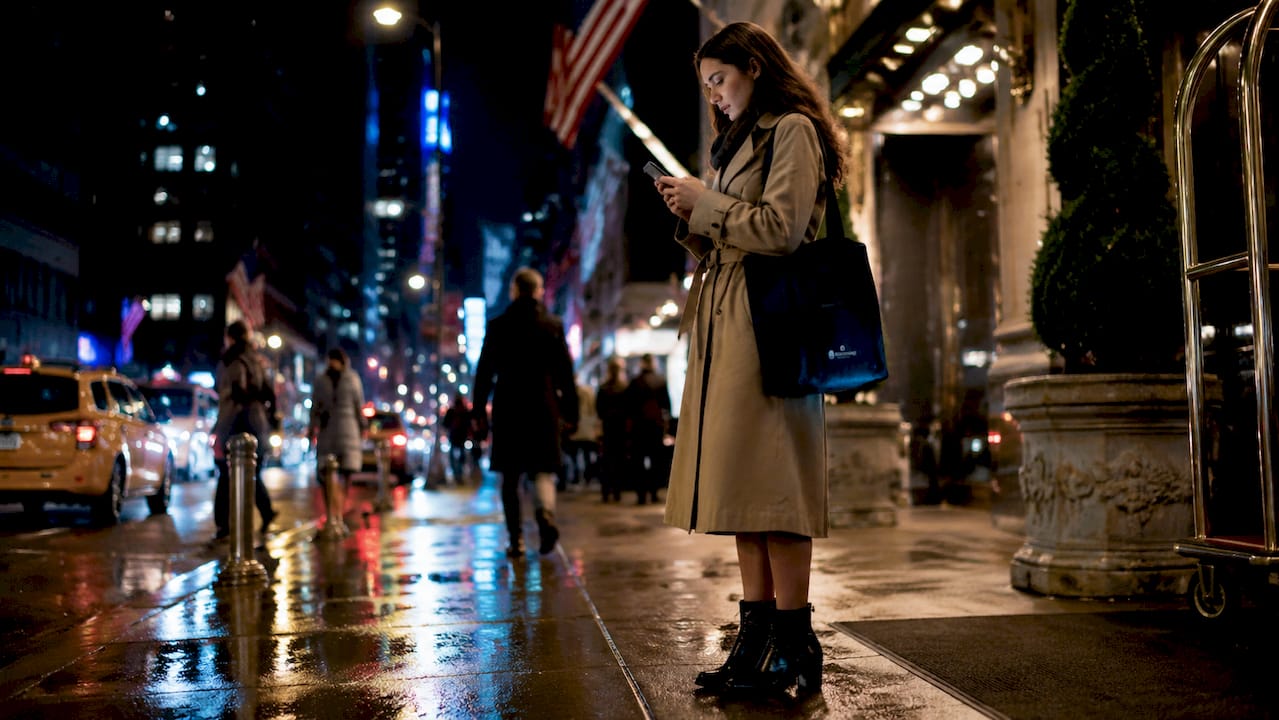
There’s a trade-off, though. Times Square pricing strategies often offset the location premium by offering smaller rooms or fewer in-room amenities than you’d get for the same price in neighborhoods like the Upper West Side or Chelsea. You’re paying for what’s outside the window, not what’s inside the room. That’s a fair deal for some travelers and a frustrating one for others.
| Comparison point | Times Square hotels | Six blocks away |
|---|---|---|
| Avg. nightly premium | $50–$80 higher | Baseline rate |
| Room size | Often smaller | Typically larger |
| Transit access | Immediate, walkable | Short subway ride |
| Attraction proximity | Steps away | 10–20 min travel |
Pro Tip: If your NYC itinerary is heavily Midtown-focused, the Times Square location premium can actually save you money on daily transit. Calculate your expected subway or taxi costs before assuming a cheaper hotel farther out is the better deal.
How supply and demand shape Times Square hotel pricing
The cost of staying in Times Square isn’t just about location. It’s about a market where demand consistently outpaces supply, and that imbalance gives hotels the power to charge more.
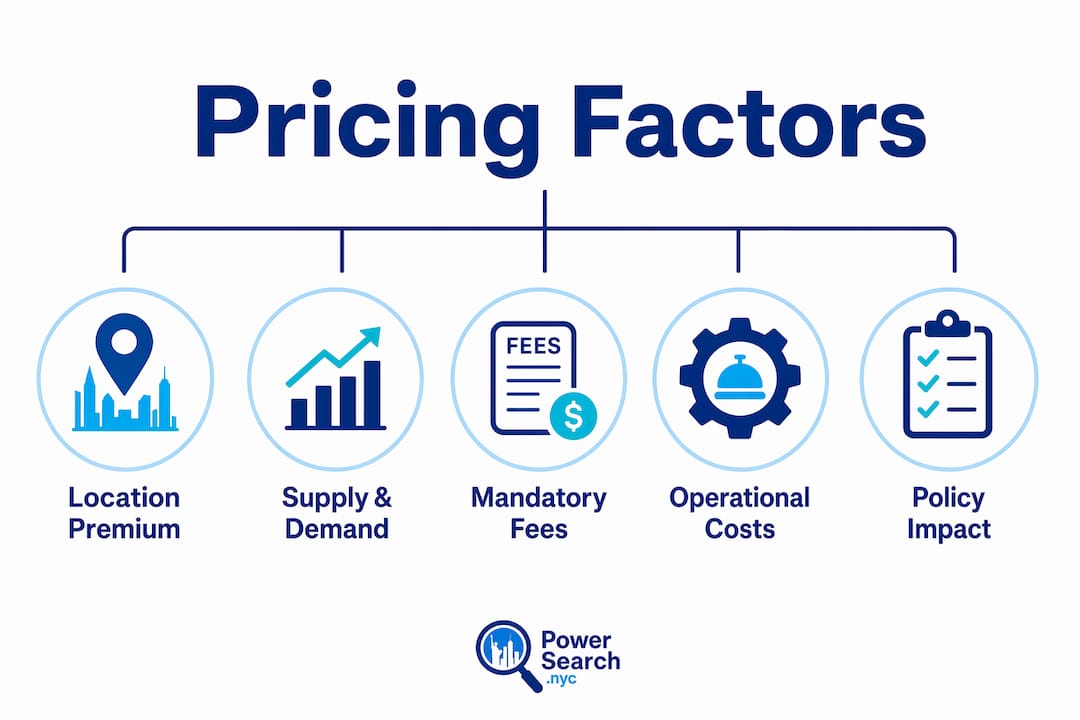
Times Square is one of the most visited tourist destinations on the planet. Millions of leisure travelers, Broadway fans, and business visitors compete for a finite number of hotel rooms in a district where land is scarce and new development is slow. High demand combined with limited room availability drives up average daily rates (ADR) across the board, and Times Square captures the strongest demand of any Manhattan neighborhood.
The supply side got even tighter after New York City cracked down on short-term rentals. Airbnb listings dropped by about 80% following enforcement of Local Law 18, which requires hosts to register with the city and be present during guest stays. That regulation effectively removed tens of thousands of alternative lodging options from the market near Times Square, pushing travelers who might have booked an apartment back into hotel rooms. Fewer alternatives means hotels face less competitive pressure to lower prices.
This supply-demand imbalance creates what market analysts call a “stack effect.” Supply restrictions combined with sustained high demand keep prices elevated even when availability looks decent on booking platforms. Here’s what that means in practice:
- Peak periods like New Year’s Eve, Thanksgiving week, and summer school breaks push Times Square rates to their highest points of the year.
- Event-driven spikes from Broadway openings, major conventions at the Javits Center, and sporting events at Madison Square Garden create short-term surges.
- Off-peak windows (late January through early March, for example) offer the best chance at lower rates, but even then, prices rarely drop to the level you’d find in other Manhattan neighborhoods.
- Last-minute booking in Times Square almost always costs more, not less, because the district’s demand rarely softens enough to create desperation pricing.
What mandatory fees and taxes add to your actual bill
Here’s where the cost of staying in Times Square gets genuinely surprising for first-time visitors. The nightly rate you see on a booking site is not what you’ll pay at checkout.
Facility fees commonly add $25–$40 per night at Times Square hotels, on top of the base room rate. These fees are sometimes labeled “resort fees” and sometimes called “facility fees,” but the effect is the same: your real nightly cost is higher than advertised. The Wyndham Garden Chinatown, for example, charges a $26.14 daily facility fee plus applicable taxes, and that property isn’t even in Times Square. Hotels in the heart of the district often charge more.
“Two hotels advertised at the same base rate can differ widely in final out-the-door price due to mandatory per-day fees and taxes.” — NYC Mayor’s Office, 2026
On top of facility fees, New York City applies occupancy tax and sales tax to hotel stays. Combined, these taxes can add 14–15% to your nightly rate. So if a room is listed at $250 per night with a $35 facility fee, your actual nightly cost before any incidentals is closer to $330.
The good news is that 2026 brought real regulatory change. NYC’s new rules ban hidden hotel junk fees and require hotels to display the total price, including all mandatory fees, upfront. The NYC Department of Consumer and Worker Protection received over 300 complaints about hidden fees in 2025 before enforcement kicked in on February 21, 2026. That means you should now see the all-in price earlier in the booking process, though it’s still worth double-checking before you confirm.
Here’s a simple checklist for calculating your true nightly rate before booking:
- Start with the advertised base room rate.
- Add any mandatory facility or resort fee (check the hotel’s FAQ page directly).
- Apply NYC hotel taxes, roughly 14–15% of the combined room rate and fees.
- Add any parking fees, Wi-Fi charges, or other mandatory daily charges.
- Compare that all-in number across at least two or three properties before deciding.
You can also check out Powersearch’s guide on the NYC hotel junk fee ban for a full breakdown of what the 2026 rules mean for your booking.
How operational costs drive up hotel rates in Times Square
Even if demand were lower, Times Square hotels would still be expensive. The cost of running a hotel in this part of Manhattan is among the highest anywhere in the country.
NYC’s minimum wage, property taxes, and maintenance costs are all at the top end nationally, and they hit Times Square hotels especially hard because prime Midtown real estate commands some of the highest property valuations in the world. Those costs don’t disappear. They get passed directly to guests through nightly rates.
Here’s what’s built into every Times Square hotel rate:
- Labor costs: NYC’s minimum wage and the strong presence of hotel worker unions mean staffing a full-service Times Square property is significantly more expensive than in most U.S. cities.
- Property taxes and real estate: Owning or leasing space in Midtown Manhattan carries enormous carrying costs that hotels must recover through room revenue.
- Utilities and maintenance: High-rise hotels in a dense urban environment face elevated utility bills, elevator maintenance, HVAC costs, and building upkeep that smaller or suburban properties don’t.
- Insurance: Operating in a high-traffic, high-profile location like Times Square comes with insurance premiums that reflect the risk and liability exposure.
Operational cost increases have a magnified effect on Times Square hotel prices specifically because the district already captures maximum demand. When costs rise even modestly, hotels can pass them on without losing occupancy, because travelers have few alternatives at that location.
Pro Tip: Boutique hotels and smaller independent properties in Times Square sometimes have lower operational overhead than large branded chains. They can occasionally offer better rates for comparable locations, so don’t filter exclusively by brand name when searching.
Are Times Square hotels worth it? How to evaluate the premium
Whether the Times Square premium makes sense for you depends on how you plan to use your time in New York City.
If your itinerary is packed with Midtown activities, Broadway shows, and visits to landmarks like the Museum of Modern Art, the Top of the Rock, or the 9/11 Memorial, staying in Times Square genuinely saves time and money. Converting the location premium into transit value is straightforward: if you’d otherwise spend $15–$25 per day on subway rides and taxis to reach Midtown from a cheaper neighborhood, a five-night stay could offset $75–$125 of the premium.
If your plans are more spread out across Brooklyn, the Lower East Side, or uptown neighborhoods, the Times Square premium is harder to justify. A hotel in Chelsea, Hell’s Kitchen, or the Upper West Side can put you within easy reach of the subway without the full Midtown price tag.
Here are a few practical ways to find better value without sacrificing too much convenience:
- Book early for peak dates. Times Square hotel prices for New Year’s Eve and Thanksgiving week can be set months in advance. Waiting rarely helps.
- Check rates for Tuesday and Wednesday nights. Midweek rates in Times Square are often noticeably lower than weekend rates, especially outside of major events.
- Look at hotels labeled “near Times Square.” Properties on the edges of the district, on 8th Avenue or north of 50th Street, often carry lower rates with only a five-minute walk to the heart of the action.
- Use Powersearch’s affordable Manhattan hotel deals page to compare properties by neighborhood and total price, not just the base rate.
Understanding NYC room rate fluctuation patterns can also help you time your booking for the best possible price.
Key takeaways
Times Square hotels cost more because of a stacked combination of location premium, supply constraints, mandatory fees, and high operational costs that together push the real nightly price well above the advertised base rate.
| Point | Details |
|---|---|
| Location premium is real | Expect to pay $50–$80 more per night than comparable hotels six blocks away. |
| Supply is genuinely tight | The 80% drop in Airbnb listings removed alternatives and strengthened hotel pricing power. |
| Fees add up fast | Facility fees of $25–$40 per night plus 14–15% in taxes can add $60–$80 to your nightly cost. |
| Operational costs are baked in | Labor, property taxes, and real estate costs in Midtown are among the highest in the U.S. |
| Value depends on your itinerary | Midtown-heavy trips can offset the premium through saved transit costs and time. |
The honest truth about Times Square hotel pricing
I’ve helped a lot of travelers work through NYC hotel decisions, and the Times Square pricing question comes up constantly. My honest take is this: the premium is real, but it’s not irrational.
What frustrates me is when travelers get blindsided by the fees. The base rate is almost never the full story, and even with the 2026 junk fee rules in place, you still need to do the math yourself before booking. I’ve seen travelers choose a Times Square hotel at $220 per night over a Chelsea option at $195, only to discover the Times Square property had a $38 facility fee that flipped the comparison entirely. Always look at the all-in total price before you commit.
The other thing I’d say is that the “worth it” question is deeply personal. For a family doing a classic NYC trip with kids who want to see the lights and feel the energy of the city, staying right in Times Square is part of the experience. For a solo traveler or a couple who wants quieter streets and more local character, spending that premium doesn’t make much sense. Know what you’re optimizing for before you open a booking site.
— Mark
Plan your Times Square stay with Powersearch
Figuring out whether a Times Square hotel fits your budget is a lot easier when you can compare real prices, read honest neighborhood breakdowns, and see the full cost upfront.
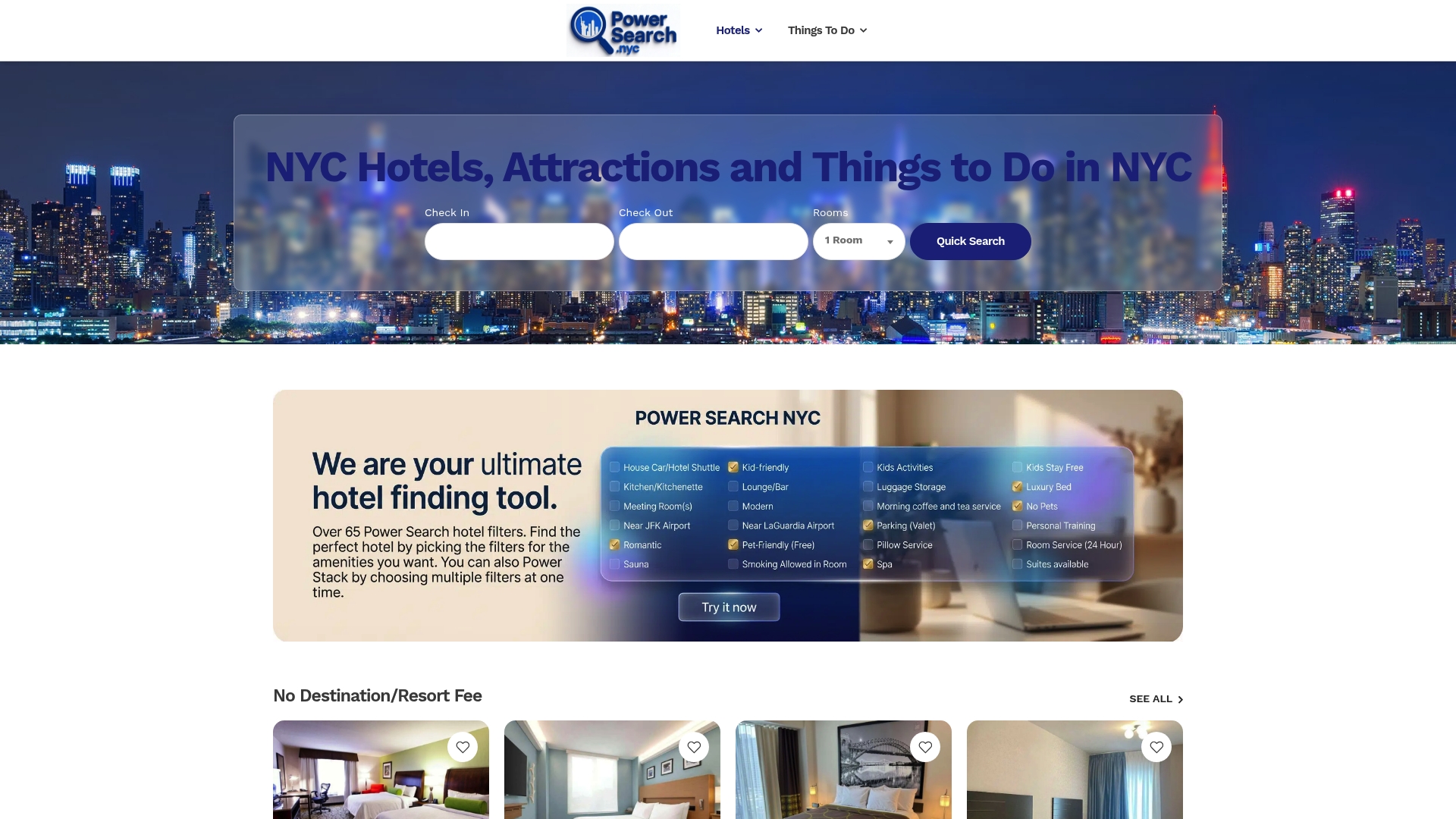
Powersearch has curated guides for every type of traveler, from budget-conscious solo visitors to families looking for space and convenience. Check out the best hotels near Times Square for a neighborhood-by-neighborhood breakdown of rates and trade-offs. If you’re traveling with family and need more room to spread out, the NYC hotel suite guide for families covers suite options near Times Square with honest pricing context. You can also explore the full NYC hotels and attractions platform to search by neighborhood, price range, and amenities all in one place.
FAQ
Why are Times Square hotels so much more expensive than other NYC areas?
Times Square hotels carry a location premium of $50–$80 per night over comparable properties in nearby Midtown blocks, driven by high tourist demand, limited room supply, and the convenience of walking distance to major attractions and transit hubs.
What fees should I expect on top of the base room rate?
Most Times Square hotels charge mandatory facility fees of $25–$40 per night, plus NYC occupancy and sales taxes that add roughly 14–15% to your total. Always calculate the all-in nightly cost before comparing properties.
Did NYC ban hidden hotel fees in 2026?
Yes. New York City’s rules banning hidden hotel junk fees took effect on February 21, 2026, requiring hotels to display the total price including all mandatory fees upfront. The NYC Department of Consumer and Worker Protection received over 300 complaints about hidden fees in 2025 before the ban was enforced.
How did the Airbnb crackdown affect Times Square hotel prices?
NYC’s enforcement of short-term rental regulations reduced Airbnb listings by about 80%, removing a significant source of alternative lodging near Times Square. With fewer options available, hotels face less competitive pressure and can maintain higher rates.
Is it cheaper to stay near Times Square rather than in it?
Hotels on the edges of the Times Square district, particularly along 8th Avenue or north of 50th Street, often list at lower rates with only a short walk to the main area. Neighborhoods like Hell’s Kitchen and Chelsea offer even lower rates with easy subway access to Midtown.
No Comments