

Where Should I Stay in NYC? A No-Nonsense Guide to Picking the Right Neighborhood
Disclosure: This post may contain affiliate links. We may earn a commission for purchases made through links in this post, at no cost to you.
If you're planning a trip to New York City, one of the first questions you'll face is: where should I actually stay?
The truth is, there's no single "best" neighborhood for everyone. New York is massive, and each area has its own vibe, benefits, and trade-offs. What works for a family wanting easy park access won't be the same for someone who wants to be in the middle of the action 24/7.
This guide isn't about listing every neighborhood in Manhattan. It's about helping you match your needs with the right area so you're not second-guessing your choice once you arrive.
Let's break down four of the most popular neighborhoods for first-time visitors and what makes each one worth considering.
Times Square: Maximum Energy, Maximum Tourists
Let's get this one out of the way first. Times Square is the neighborhood people either love or avoid entirely.
If you're a first-time visitor and want the full sensory overload experience, this is it. Bright lights, massive digital billboards, street performers, chain restaurants, and crowds at all hours. It's chaotic, loud, and completely overwhelming in the best and worst ways possible.
Who should stay here:
- First-time visitors who want to be in the thick of it
- People who prioritize convenience to Broadway shows
- Travelers who don't mind tourist-heavy areas
- Anyone who wants to step outside and immediately feel like they're in a movie
What you'll be close to:
- Broadway theaters (obviously)
- Rockefeller Center
- Central Park (walkable)
- Multiple subway lines going everywhere
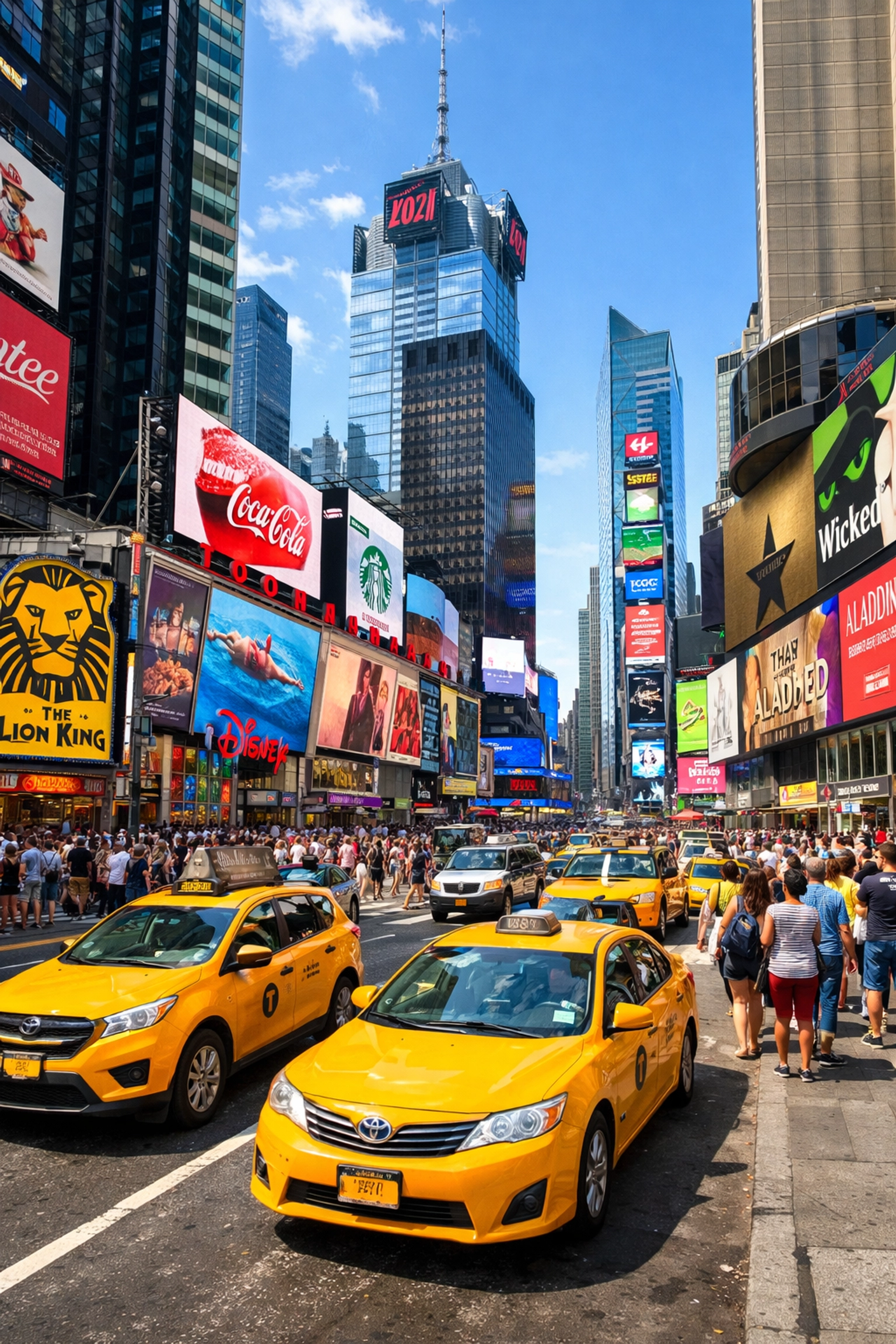
The hotels in Times Square range from budget chains to high-end options, and you'll find plenty of availability. The downside? It's not quiet, it's not local, and you'll be surrounded by other tourists most of the time.
If you want convenience and don't mind the chaos, it's a solid choice. If you're looking for a more authentic New York experience, keep reading.
Midtown: The Practical Choice
Midtown gets a bad reputation for being too corporate and businesslike, but if you care about logistics and easy access to everything, it's hard to beat.
This is where you'll find hotels near Central Park, Grand Central Terminal, and some of the city's most famous landmarks. It's not as flashy as Times Square, but it's more functional and slightly less crowded.
Who should stay here:
- Travelers who want central access without the Times Square intensity
- Business travelers (obviously)
- People planning to visit multiple neighborhoods and wanting a central hub
- Anyone prioritizing subway access and walkability
What you'll be close to:
- Central Park (southern end)
- Grand Central Terminal
- Bryant Park
- The New York Public Library
- Fifth Avenue shopping
Midtown is efficient. You're not going to get the boutique charm of smaller neighborhoods, but you're also not wasting time commuting to attractions. Hotels in New York City in this area tend to be straightforward, clean, and designed for people who want to drop their bags and go explore.
If you're someone who values convenience over vibe, Midtown is your move.
Upper West Side: Quiet, Family-Friendly, and Close to Central Park
If you want a slower pace and easier access to green space, the Upper West Side is one of the best neighborhoods to stay in.
This is where you'll find tree-lined streets, local cafes, the American Museum of Natural History, and Central Park's western edge. It's quieter than Midtown, more residential, and much less touristy.
Who should stay here:
- Families with kids
- Couples looking for a more relaxed vibe
- Anyone planning to spend significant time in Central Park
- Travelers who prefer local neighborhoods over tourist hubs
What you'll be close to:
- Central Park (the entire western side)
- American Museum of Natural History
- Lincoln Center
- Zabar's and other local food spots
- Riverside Park
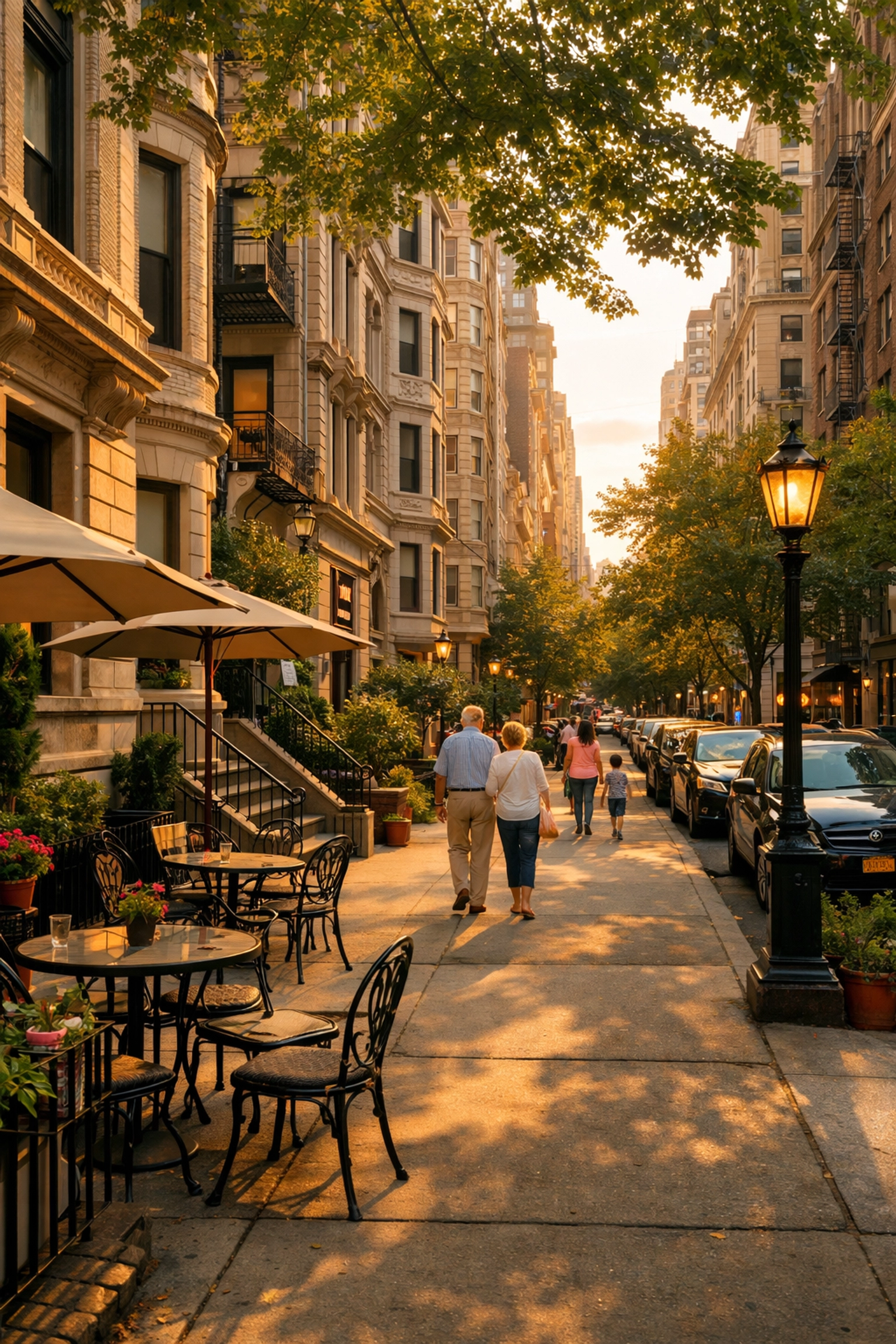
The Upper West Side feels like a neighborhood, not a tourist zone. You'll see locals walking their dogs, families at playgrounds, and people grabbing coffee at the same spots every morning. It's a different energy than Midtown or Times Square, and for a lot of travelers, that's exactly what they want.
Hotels near Central Park in this area tend to be a bit pricier, but you're paying for the quieter setting and proximity to one of the city's best features.
Lower Manhattan: History, Hip Neighborhoods, and Local Energy
If you want a mix of history, trendy spots, and fewer tourists, Lower Manhattan is where you should focus.
This area includes neighborhoods like the Financial District, Tribeca, SoHo, and the Lower East Side. You'll find cobblestone streets, historic landmarks like the 9/11 Memorial, the Brooklyn Bridge, and some of the city's best food and nightlife scenes.
Who should stay here:
- Travelers who want a more local, less touristy experience
- History buffs interested in New York's origins
- People who want easy access to Brooklyn
- Anyone planning to explore downtown neighborhoods like SoHo, Chinatown, or the West Village
What you'll be close to:
- The 9/11 Memorial and Museum
- Wall Street and the Financial District
- Brooklyn Bridge
- Chinatown and Little Italy
- Trendy neighborhoods like SoHo and Tribeca
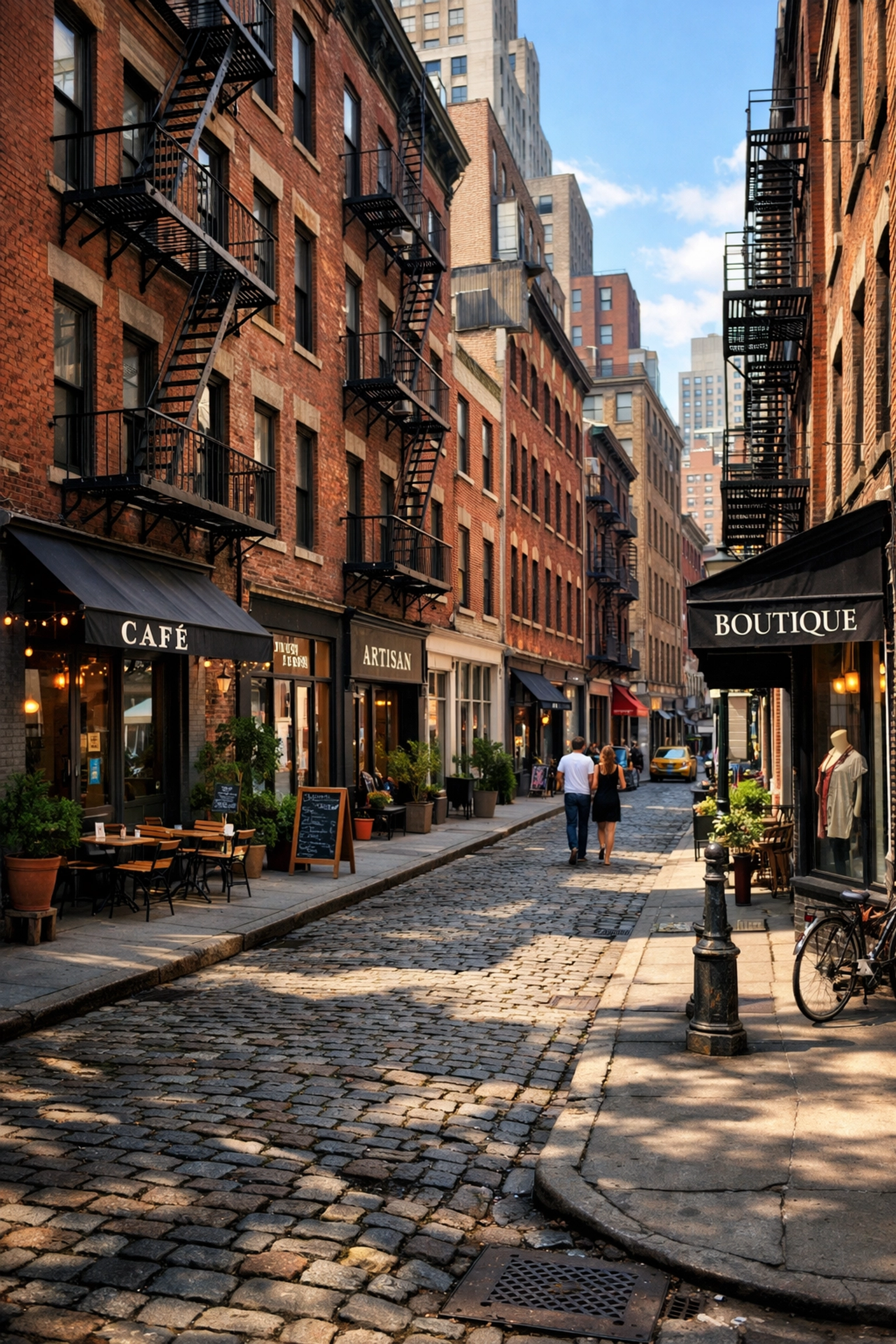
Lower Manhattan feels less polished and more authentic than Midtown. The streets are narrower, the buildings are older, and the vibe is more laid-back. It's also a great base if you're planning to explore Brooklyn, since you're already on the southern end of Manhattan.
Hotels in this area vary widely. You'll find everything from boutique spots in Tribeca to more budget-friendly options near the Financial District. The trade-off is that you're a bit farther from Central Park and Midtown attractions, but the subway makes it easy to get anywhere.
How to Actually Choose
Here's the simplest way to narrow it down:
Choose Times Square if: You want maximum energy, Broadway access, and don't mind crowds.
Choose Midtown if: You want central access, convenience, and easy subway connections.
Choose Upper West Side if: You're traveling with family, want proximity to Central Park, and prefer a quieter vibe.
Choose Lower Manhattan if: You want local energy, historic sites, and easy access to Brooklyn.
If you're still unsure, think about what you're actually planning to do. Are you spending most of your time sightseeing uptown or downtown? Do you care more about nightlife or morning coffee spots? Are you bringing kids who need park access?
The good news is that New York's subway system connects everything, so even if you pick a neighborhood that's not perfectly central, you're rarely more than 20–30 minutes from wherever you want to be.
Filter by What Actually Matters (and Skip Fees Altogether)
One of the easiest ways to narrow down your options is to use a tool that lets you filter hotels in New York City by neighborhood and features—especially now that NYC’s hidden/junk hotel fees are banned as of February 21, 2026, which means pricing is required to be transparent.
That said, “transparent” doesn’t always mean “cheapest.” PowerSearch NYC still helps you find the absolute best rates by letting you compare options fast, focus on the neighborhoods you actually want to stay in, and use filters to surface hotels that don’t charge these fees at all.
If you know you want to be near Central Park or within walking distance of Times Square, you can filter specifically for that and see exactly what’s available—without scrolling through hundreds of random listings or playing detective with the price.
Final Thoughts
There's no wrong neighborhood to stay in as long as it matches what you're looking for. Times Square is chaotic but convenient. Midtown is practical and central. The Upper West Side is quiet and family-friendly. Lower Manhattan is historic and hip.
Figure out what matters most to you, pick a neighborhood that aligns with it, and trust that the subway will get you everywhere else. You'll spend most of your time exploring anyway, so don't overthink it.
Just pick a spot, book it, and start planning what you're actually going to do once you get there.
No Comments