

Midtown Manhattan Location Advantage: Visitor’s Guide
Disclosure: This post may contain affiliate links. We may earn a commission for purchases made through links in this post, at no cost to you.
Midtown Manhattan’s location advantage is defined by its central position on the island, placing visitors within walking distance of the city’s most iconic landmarks while cutting daily transit times by 20–30 minutes compared to staying in neighborhoods like the Upper West Side or Brooklyn. That time savings adds up fast on a short trip. Staying here means you can drop your bags and immediately feel like you’re in a movie. Times Square, the Empire State Building, Grand Central Terminal, and Rockefeller Center are all within a few blocks of most Midtown hotels. For first-time visitors especially, Midtown eliminates complex route planning and puts the best of New York City right at your doorstep.
What is Midtown Manhattan’s location advantage for visitors?
Midtown Manhattan occupies the geographic center of the island, running roughly from 30th Street to 59th Street, between 3rd and 9th Avenues. That central position is not just symbolic. It means you are equidistant from Lower Manhattan’s financial district and the residential calm of the Upper East Side, without being stuck in either extreme.
The practical payoff is real. Major landmarks cluster so tightly here that you can walk from the Empire State Building to Bryant Park in under ten minutes. Central Park’s southern entrance sits at 59th Street, putting it within easy reach of most Midtown hotels. The proximity to top NYC attractions like Rockefeller Center, Broadway theaters, and 5th Avenue shopping means you spend your time seeing the city, not commuting across it.
Here is what you are within walking distance of when you stay in Midtown:
- Times Square and the Broadway theater district
- Rockefeller Center and Top of the Rock observation deck
- The Empire State Building
- Bryant Park and the New York Public Library
- Grand Central Terminal
- 5th Avenue shopping from Saks to flagship retail stores
- The southern entrance to Central Park
Pro Tip: Book a hotel between 42nd and 57th Streets to sit at the sweet spot of Midtown. You get fast access to transit hubs and major sights without being right on top of the Times Square crowds.
How does Midtown’s subway network enhance its location advantage?
Midtown Manhattan is the single greatest convergence point for New York City’s subway system. The A/C/E, 1/2/3, B/D/F/M, 4/5/6, 7, and N/Q/R/W lines all run through this neighborhood. That density of service is unmatched anywhere else in the five boroughs.
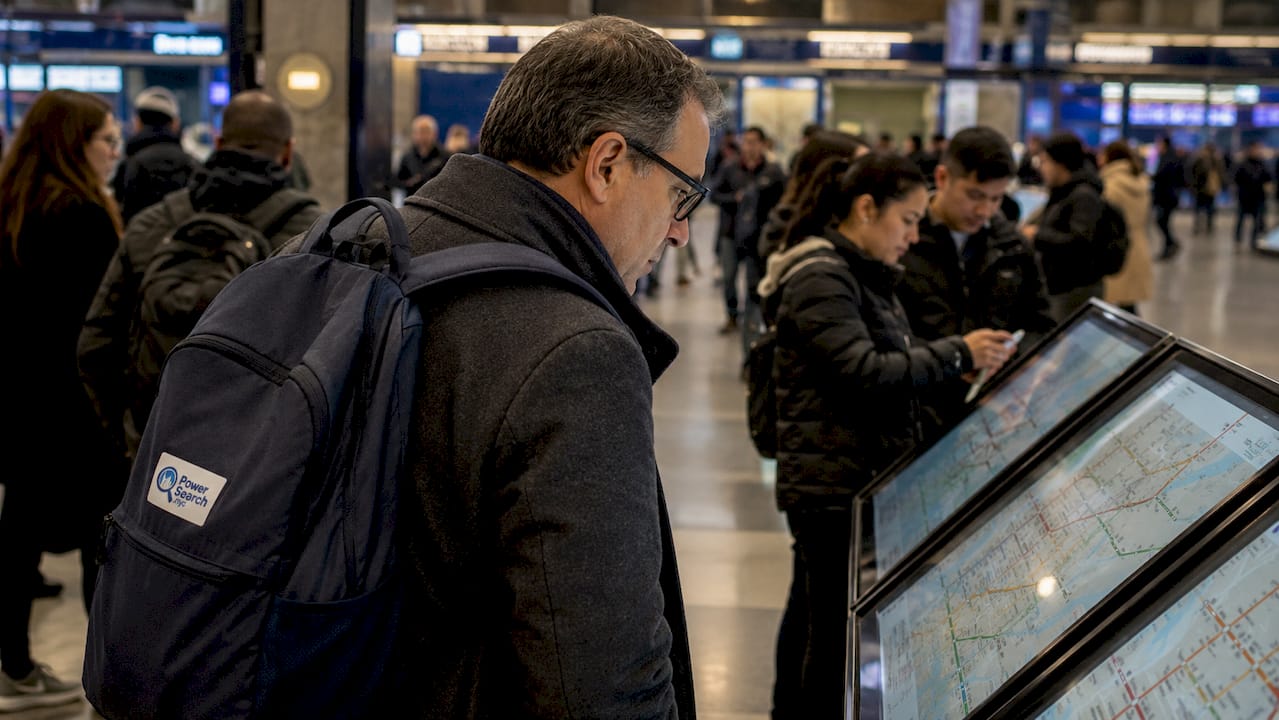
Most Midtown hotels sit within a 5-minute walk of a subway station. That matters because it removes the friction of getting to a train in the first place. You are not hunting for a station or walking six blocks in the rain. You step outside, turn a corner, and you are underground.
The transit hubs anchoring Midtown are genuinely impressive. Grand Central Terminal and Penn Station connect multiple subway lines and regional rail networks, giving you access to New Jersey, Long Island, and the three major airports. Times Square at 42nd Street is the single busiest subway interchange in the system, connecting seven lines in one station.
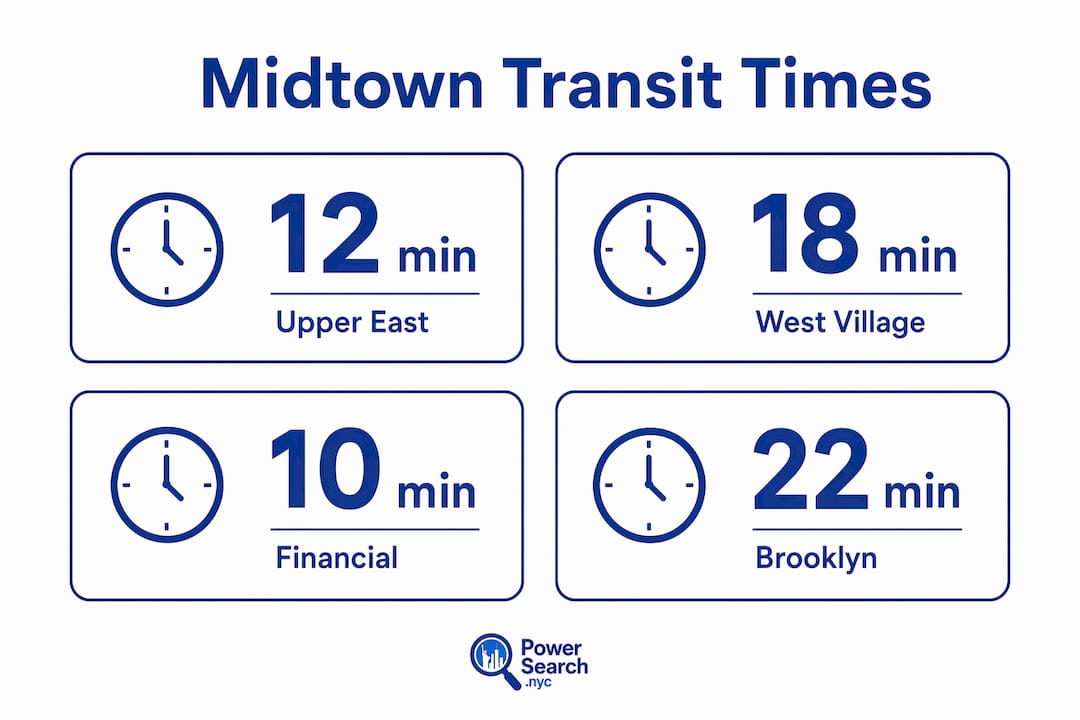
| Destination from Midtown | Approximate transit time |
|---|---|
| Upper East Side | 12 minutes |
| West Village | Under 15 minutes |
| Lower Manhattan / Wall Street | 20 minutes |
| Brooklyn (Downtown) | 25–30 minutes |
| JFK Airport (via AirTrain) | 55–65 minutes |
Pro Tip: Skip the taxi for any trip under 40 blocks. Public transit beats road travel in Midtown during the day because the subway bypasses gridlock entirely. You will arrive faster and spend less.
What attractions and amenities are easily accessible from Midtown?
Midtown is not just a transit hub. It is also where New York City concentrates its most famous experiences. The cluster of theaters, landmarks, and shopping corridors within Midtown means you can pack more into a single day than almost any other base in the city.
Broadway runs straight through the neighborhood. You can catch a matinee, walk to dinner on Restaurant Row in Hell’s Kitchen, and be back at your hotel in under 20 minutes. That kind of tight loop is only possible because of Midtown’s geography. The advantages of Midtown Manhattan for leisure travelers come down to this: less time moving, more time experiencing.
What you can reach easily from a Midtown base:
- Entertainment: Broadway shows, Radio City Music Hall, Madison Square Garden
- Culture: Museum of Modern Art (MoMA), the Intrepid Sea, Air and Space Museum
- Parks: Bryant Park, Central Park (south end), the High Line (short subway ride)
- Shopping: 5th Avenue flagship stores, Rockefeller Center shops, Macy’s Herald Square
- Dining: Hell’s Kitchen restaurant corridor, Koreatown on 32nd Street, Midtown East dining
- Business: Rockefeller Center offices, Grand Central area corporate towers
Times Square alone draws 380,000 pedestrians per day, which tells you just how much activity concentrates in this part of the city. That energy is part of the experience, especially for first-time visitors.
What are the trade-offs of staying in Midtown Manhattan?
Midtown’s convenience comes with real costs. Average hotel rates hit $342.50 per night during the 2025 holiday season, reflecting the premium you pay for central access. Budget travelers will find better nightly rates in neighborhoods like Long Island City or the Lower East Side, though they trade away the transit convenience.
The other honest trade-off is atmosphere. Midtown, particularly around Times Square, is loud, crowded, and heavily commercialized. The restaurants near tourist hotspots often prioritize volume over quality. The sidewalks can feel chaotic at peak hours. If you came to New York City for an authentic local vibe, the heart of Midtown is not where you will find it.
Here are the main limitations to weigh before booking:
- Higher hotel prices. Midtown commands a significant premium over outer neighborhoods and even parts of Lower Manhattan.
- Tourist-heavy dining. Chain restaurants and overpriced tourist traps cluster near Times Square and major sights.
- Pedestrian congestion. Sidewalks around Times Square and Rockefeller Center get genuinely difficult to navigate during peak hours.
- Noise levels. Traffic, construction, and street activity run around the clock in the core of Midtown.
- Less local character. The neighborhood caters to visitors, which means fewer of the neighborhood spots and local markets that define New York City life.
Midtown East and NoMad offer a practical middle ground. You get the same transit access and central geography with noticeably less tourist congestion and better dining options.
How can visitors make the most of Midtown’s location advantage?
The biggest mistake visitors make in Midtown is not using the subway enough. Public transit is faster than taxis during daytime hours because Midtown’s street grid locks up with traffic. Every dollar you save on cabs is money for a better dinner or a Broadway ticket.
Choosing the right hotel location within Midtown also matters more than most travelers realize. New Yorkers know that proximity to a multi-line subway station within three blocks is worth more than a nicer room or a rooftop bar. A hotel near Grand Central or Times Square gives you access to seven or more subway lines, which means you can reach almost any part of the city in under 30 minutes.
Practical tips for getting the most out of your Midtown stay:
- Choose your hotel by subway access first. Look for properties within two blocks of a multi-line station.
- Sightsee on weekday mornings. Crowds at Times Square and Rockefeller Center thin out before 10:00 AM on weekdays.
- Venture out to other neighborhoods. Hell’s Kitchen and Koreatown sit right on Midtown’s edges and offer far more authentic dining and local character.
- Use the subway for cross-town trips. The 7 train and the S shuttle at 42nd Street make east-west travel fast and cheap.
- Plan one day trip outside Midtown. Brooklyn, Harlem, or the West Village give you a completely different side of New York City.
Pro Tip: Get a NYC travel discount card before your trip. These cards bundle subway access with attraction entry fees and can save you a meaningful amount over a three-day stay.
Key Takeaways
Midtown Manhattan’s location advantage makes it the most practical base for first-time visitors, combining central geography, dense subway access, and walkable proximity to New York City’s top attractions.
| Point | Details |
|---|---|
| Central geography saves time | Staying in Midtown cuts daily transit times by 20–30 minutes versus outer neighborhoods. |
| Subway density is unmatched | Ten subway lines converge in Midtown, with most hotels within a 5-minute walk of a station. |
| Landmarks are walkable | Times Square, Rockefeller Center, and Central Park’s south entrance are all within easy walking distance. |
| Costs run higher | Average nightly hotel rates in Midtown reached $342.50 during the 2025 holiday season. |
| Midtown East and NoMad offer balance | These sub-areas deliver the same transit access with less noise and fewer tourist crowds. |
Why Midtown is still the right call for most first-time visitors
I have talked to a lot of travelers who second-guess Midtown because they read that it is “too touristy.” That concern is valid, but it misses the point for someone on their first trip to New York City.
Midtown’s logistical strengths are genuinely hard to replicate. When you have four days in the city and a list of things you want to see, the last thing you want is to spend 45 minutes figuring out how to get from your hotel to the subway. Midtown removes that problem entirely. You step outside and the city is already happening around you.
My honest advice: stay in Midtown East or NoMad rather than right on Times Square. You get the same Midtown location benefits without the sensory overload. Then use the subway to spend a full afternoon in Brooklyn or the West Village. That combination gives you the efficiency of Midtown and the authenticity of neighborhoods that actually feel like New York City.
After two or three visits, you might want to base yourself somewhere with more local character. But for a first trip? Midtown is the right call. The city is built to be experienced from here.
— Mark
Plan your Midtown stay with Powersearch
Knowing the Midtown Manhattan location advantage is one thing. Finding the right hotel to make it work for your trip is another.
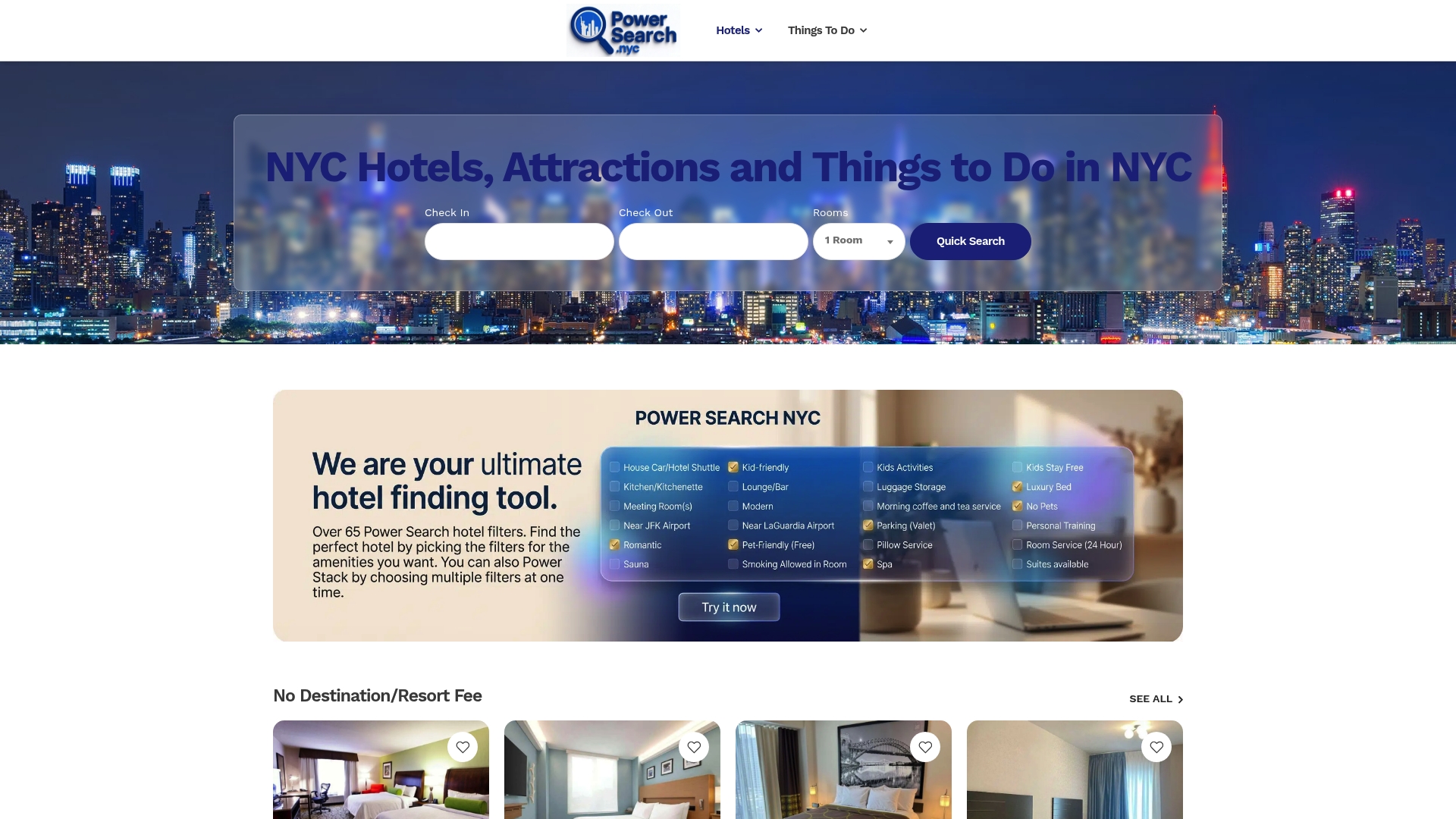
Powersearch makes it easy to filter Midtown hotels by neighborhood, price point, and proximity to subway stations. Whether you are looking for a family-friendly suite near Grand Central or a quieter Midtown East property away from the Times Square crowds, the platform gives you the tools to compare options without wading through endless listings. You can also search things to do in NYC by neighborhood to build a realistic itinerary around your hotel location. Start your search at Powersearch NYC and find a Midtown base that fits your budget and travel style.
FAQ
What is the Midtown Manhattan location advantage?
Midtown Manhattan’s location advantage is its central position on the island, which puts visitors within walking distance of major landmarks and reduces daily transit times by 20–30 minutes compared to outer neighborhoods.
Which subway lines run through Midtown Manhattan?
The A/C/E, 1/2/3, B/D/F/M, 4/5/6, 7, and N/Q/R/W lines all serve Midtown, making it the most connected transit zone in New York City.
How expensive are Midtown Manhattan hotels?
Average nightly rates in Midtown reached $342.50 during the 2025 holiday season, reflecting the premium for central access. Rates vary widely by property type and time of year.
Is Midtown Manhattan good for first-time visitors?
Midtown is the top choice for first-time visitors because it eliminates complex route planning and places iconic attractions like Times Square and Rockefeller Center within easy reach.
What are the quieter alternatives within Midtown?
Midtown East and NoMad offer the same central location and subway access as Times Square but with less tourist congestion, lower noise levels, and better dining options.
No Comments