

How NYC Hotel Invoice Billing Works for Travelers
Disclosure: This post may contain affiliate links. We may earn a commission for purchases made through links in this post, at no cost to you.
NYC hotel invoice billing is defined as the complete process by which a hotel records, itemizes, and collects all charges from a guest, including room rates, government taxes, mandatory fees, and incidental holds. Understanding this process before you check in saves you from sticker shock at checkout and makes expense reporting far easier. New York City hotels operate under some of the most complex billing rules in the country, and 2026 regulatory changes have made fee transparency a legal requirement. Whether you are visiting for a weekend or expensing a week of client meetings, knowing exactly what lands on your bill puts you in control.
How NYC hotel invoice billing works: the core breakdown
NYC hotel billing follows a layered structure. Your nightly room rate is just the starting point. On top of that, the hotel adds government taxes, flat city fees, and any optional or mandatory service charges before you ever swipe your card.
The most significant layer is the 14.75% hospitality tax that applies to all hotel stays in New York City. That rate alone pushes a $200 room to $229.50 per night before any other fees. On top of that, NYC adds flat levies like the $1.50 per night Javits Center fee, which funds the Jacob K. Javits Convention Center. The effective total tax rate lands between 15.9% and 17% depending on your room price. A $300 room sits closer to 15.9%, while a $150 room hits closer to 17% because the flat fees represent a larger share of a smaller base rate.

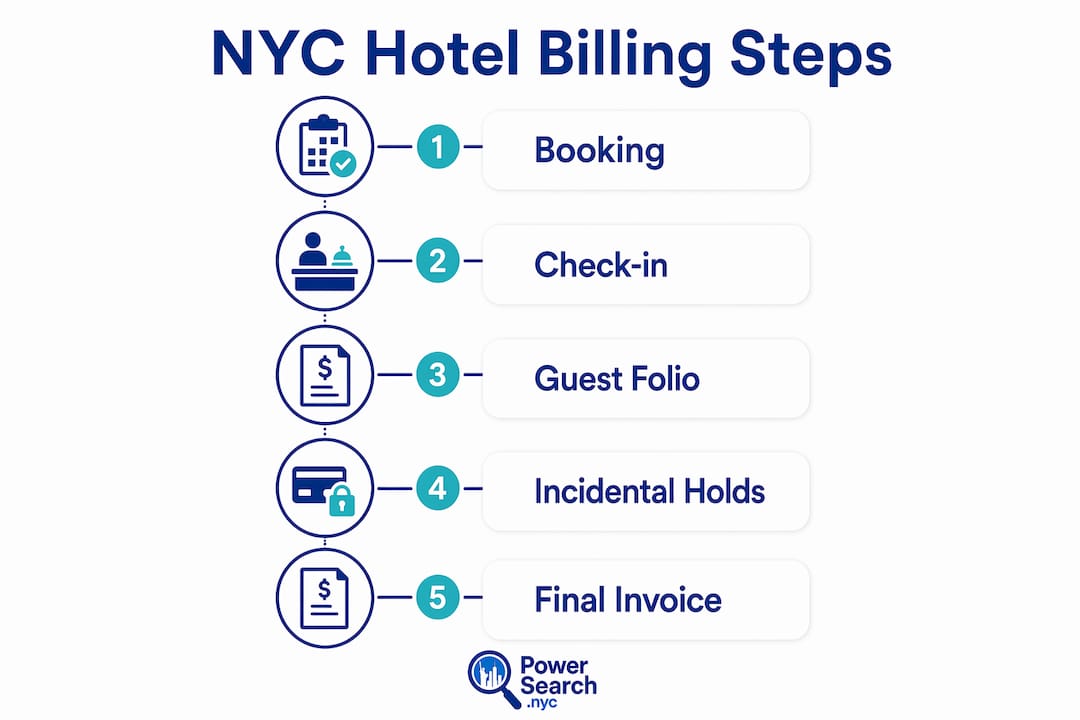
The industry term for the complete record of all these charges is the guest folio. The folio tracks every charge in real time during your stay. The final invoice is the official document you receive at checkout. Both documents matter, and knowing the difference between them is the first step to understanding your bill.
Pro Tip: Ask the front desk for a printed folio review the morning before you check out. Catching errors before you leave is far simpler than disputing charges after the fact.
What taxes and mandatory fees appear on NYC hotel invoices?
NYC hotel taxes and fees stack in ways that genuinely surprise first-time visitors. The base hospitality tax of 14.75% is set by New York State and New York City combined. The Javits Center fee adds $1.50 per night on top of that. Some hotels also charge a New York City hotel unit fee of $1.50 per unit per day, which is separate from the Javits fee.
| Fee or Tax | Amount | Who Charges It |
|---|---|---|
| NYC/NY State hospitality tax | 14.75% of room rate | State and City |
| Javits Center fee | $1.50 per night | City of New York |
| NYC hotel unit fee | $1.50 per unit per day | City of New York |
| Resort or destination fee | Varies by property | Individual hotel |
| Occupancy tax | Included in 14.75% | State and City |
Resort fees and destination fees are a separate category entirely. These are hotel-imposed charges, not government taxes. They often cover amenities like Wi-Fi, gym access, or a daily coffee credit, whether you use them or not. A midtown Manhattan hotel might charge $30 to $50 per night as a destination fee on top of all government taxes.
As of february 21, 2026, NYC regulations require hotels to disclose all mandatory fees and credit card hold details before you finalize a booking. This rule means the total price you see at checkout must include every mandatory charge. Hotels that bury fees in fine print now face regulatory consequences. You can read more about how these rules affect your booking on Powersearch’s NYC junk fee guide.
Pro Tip: Always look for a “total price including taxes and fees” toggle when booking online. If the booking platform does not show this, call the hotel directly to confirm the all-in nightly rate.
How do credit card holds and incidentals work during an NYC hotel stay?
Credit card holds are one of the most misunderstood parts of the NYC hotel billing process. A hold is not a charge. The hotel places a temporary authorization on your card at check-in to cover potential incidental expenses like room service, minibar items, or spa treatments.
Typical holds run $100 per day up to $300 per stay, though luxury properties often set higher amounts. The hold reduces your available credit immediately. If you are using a debit card, the hotel freezes actual cash in your bank account, which can create real problems if you are budgeting tightly during your trip. Debit card holds freeze funds in a way that credit card holds do not, since credit card holds only reduce your available credit limit rather than your actual cash balance.
Here is what you need to know about incidentals and holds:
- Hold placement: The hotel places the authorization at check-in, before you have spent anything.
- Real-time posting: Incidental charges like minibar items or room service post to your folio as they occur, not as a lump sum at checkout.
- Hold release: After checkout, refunds process in 14–30 business days depending on your bank and card type.
- Debit card risk: Using a debit card for the hold can freeze funds you need for meals, transportation, or other expenses during your stay.
- Dispute window: Challenging a charge is far easier while you are still at the hotel. Once you check out, errors become formal chargeback disputes.
Pro Tip: Use a credit card, not a debit card, for hotel incidental holds in NYC. This protects your cash flow and gives you more flexibility during your stay.
What is the difference between a folio and an invoice in NYC hotels?
The folio and the invoice serve different purposes, and confusing the two leads to billing disputes that are hard to resolve. The folio is a dynamic running ledger updated throughout your stay. The invoice is the finalized document issued at checkout that reflects the total amount due.
Think of the folio like a live receipt that grows every time you order room service or charge a drink to your room. The invoice is the final bill you sign and pay. Both documents carry the same unique internal ID number, which is the key reference for any audit or dispute.
Here is how to use both documents effectively:
- Request folio access early. Most NYC hotels let you view your folio through an in-room TV system or a mobile app. Check it daily to catch errors before they compound.
- Note the folio ID. The folio’s unique ID is the fastest way for hotel accounting to locate your transactions. Write it down or photograph it.
- Review line by line before checkout. Look for duplicate charges, unfamiliar room service entries, or fees you did not agree to.
- Watch for late charges. Hotels may post charges after checkout for items processed with a delay, like a minibar audit. These “late charges” appear on your credit card statement days after you leave.
- Keep both documents. Business travelers need the final invoice for expense reporting. The folio provides the line-by-line detail that corporate accounting departments often require.
Distinguishing folio from invoice reduces confusion about when and how you can challenge a charge. Disputes raised against the folio while you are still on property get resolved at the front desk in minutes. Disputes raised against the final invoice after checkout require a formal process that can take weeks.
What practical steps help you navigate NYC hotel billing smoothly?
Proactive communication with your hotel prevents most billing surprises. Calling the reservations department before you book to confirm the all-in total, including taxes and mandatory fees, is the single most effective step you can take. This is especially true for business travelers who need accurate figures for pre-trip budget approvals.
For corporate travelers, split billing is a practical tool. You can ask the hotel to separate your room and tax charges from personal incidentals at check-in. The hotel bills your company card for the room and your personal card for everything else. This makes expense reporting cleaner and avoids the awkward process of itemizing a combined invoice later.
Here is a practical checklist for managing your NYC hotel bill from start to finish:
- Before booking: Confirm the total nightly rate including all taxes, mandatory fees, and resort or destination fees. Check that the hotel complies with the 2026 fee disclosure rules.
- At check-in: Ask about the hold amount and whether it differs for credit versus debit cards. Request split billing if you are on a corporate account.
- During your stay: Review your folio every day. Note the folio ID number and save it.
- Before checkout: Request a printed folio review. Dispute any errors at the front desk before you leave.
- After checkout: Keep the final invoice for expense reporting. Monitor your credit card statement for late charges over the next 30 days.
Business travelers should also know that the NYC hotel expense reporting process has specific documentation requirements in 2026. Your final invoice, not just a credit card receipt, is the accepted proof of stay for most corporate reimbursement systems. Clear fee disclosures and folio transparency are now the standard for guest trust in NYC hotel billing, and hotels that meet this standard make your documentation process significantly easier.
Key Takeaways
NYC hotel invoice billing involves layered taxes, mandatory fees, credit card holds, and a two-document system that every traveler should understand before arrival.
| Point | Details |
|---|---|
| Taxes stack fast | NYC’s 14.75% hospitality tax plus flat fees pushes effective rates to 15.9%–17% per night. |
| 2026 rules protect you | Hotels must disclose all mandatory fees and hold amounts before you finalize a booking. |
| Folio vs. invoice | The folio tracks charges in real time; the invoice is the final document you pay at checkout. |
| Holds affect debit cards more | Credit card holds reduce available credit; debit holds freeze actual cash in your account. |
| Proactive review prevents disputes | Reviewing your folio before checkout is faster and easier than disputing charges after you leave. |
What I have learned from watching travelers get blindsided by NYC hotel bills
After spending years helping travelers plan NYC trips, the billing complaints I hear most often are not about the room rate. They are about the $47 destination fee nobody mentioned, the $300 hold that froze a debit account, and the minibar charge that appeared three days after checkout. These are not random bad luck. They are predictable, and they are avoidable.
The single biggest mistake I see is travelers using a debit card for hotel incidentals in New York City. A $300 hold on a debit card is $300 you cannot spend on dinner, a Broadway show, or a cab to JFK. Credit cards exist for exactly this situation. If you do not have a credit card, tell the hotel at check-in and ask about alternative deposit options. Most properties have a policy for this.
The second mistake is skipping the folio review. I have watched guests sign their checkout invoice without reading it, then spend two weeks on the phone with their bank disputing a $60 room service charge they never ordered. That conversation takes 30 seconds at the front desk and 30 days through a bank dispute process. The math is obvious.
The 2026 fee disclosure rules are genuinely good news for travelers. Hotels can no longer hide resort fees in the fine print or spring a $25 per night “urban amenity fee” on you at check-in. If a hotel is not showing you the full price upfront, that is a red flag worth acting on before you book. Powersearch’s resort fee guide breaks down exactly what to look for.
— Mark
Planning your NYC stay with Powersearch
Understanding the NYC hotel billing process is the foundation of a trip that stays on budget and on schedule. Powersearch makes it easier to find hotels that are upfront about their fees, so you know exactly what you are paying before you confirm a reservation.

Whether you are booking a family suite or planning a corporate stay, Powersearch’s NYC hotel suite guide walks you through fee structures, billing practices, and what to expect at checkout. The platform filters hotels by neighborhood, price point, and amenities, giving you a clear picture of total costs rather than just the advertised nightly rate. Start your search at Powersearch and book with confidence.
FAQ
What taxes are included on an NYC hotel invoice?
NYC hotel invoices include a 14.75% hospitality tax plus flat fees like the $1.50 per night Javits Center fee, pushing the effective tax rate to between 15.9% and 17% depending on room price.
How long does it take for a hotel hold to be released in NYC?
Most NYC hotels release incidental holds within 14–30 business days after checkout, though the exact timeline depends on your bank and card type.
What is the difference between a hotel folio and a hotel invoice?
The folio is a live record of charges updated throughout your stay. The invoice is the finalized bill you receive and pay at checkout.
Can NYC hotels charge fees they did not disclose at booking?
As of february 21, 2026, NYC regulations require hotels to disclose all mandatory fees and hold details before a booking is finalized. Undisclosed mandatory fees now violate city rules.
Should business travelers request a folio or an invoice for expense reporting?
Business travelers need the final invoice for expense reimbursement, but the folio provides the line-by-line detail that most corporate accounting systems require. Request both documents at checkout.
No Comments