

NYC Hotel Price Comparison Tips That Actually Save Money
Disclosure: This post may contain affiliate links. We may earn a commission for purchases made through links in this post, at no cost to you.
New York City hotels can be genuinely disorienting to book. Prices shift daily, the same room can cost $40 more on one site than another, and fees you never agreed to show up at checkout. If you’ve ever stared at a confirmation page wondering how a “$189/night” room turned into a $290 charge, you’re not alone. Mastering NYC hotel price comparison tips isn’t just about finding the lowest number on screen. It’s about understanding what that number actually means before you hand over your credit card.
Table of Contents
- Key Takeaways
- NYC hotel price comparison tips: what you’re actually comparing
- Which tools to use when comparing NYC hotels
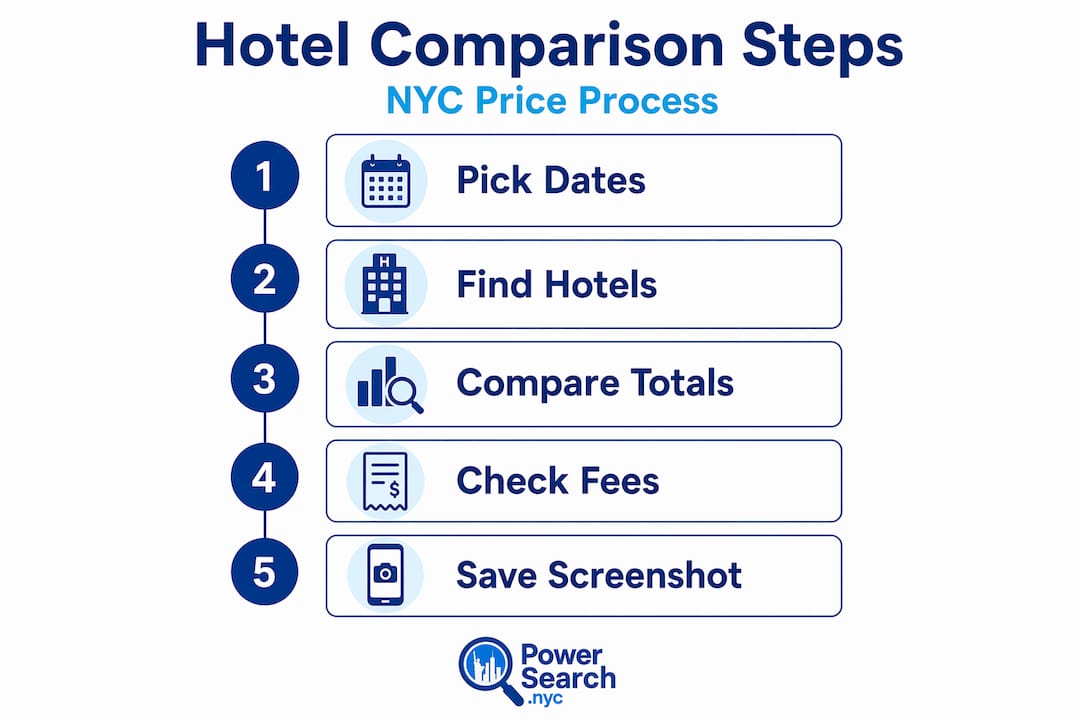
- A step-by-step workflow for comparing NYC hotel prices
- Timing strategies that lower NYC hotel prices
- My honest take on how most travelers get this wrong
- Plan your NYC trip smarter with Powersearch
- FAQ
Key Takeaways
| Point | Details |
|---|---|
| Total price beats nightly rate | Always compare what you’ll pay in full, including mandatory fees, not just the advertised nightly rate. |
| Multi-channel comparison wins | Check at least two OTAs plus the hotel’s direct site to find the real best price. |
| Sunday check-ins save money | Booking a Sunday arrival can cut costs by up to 24% compared to Friday or Saturday stays. |
| Two-pass method works best | Start with metasearch for a price range, then verify directly with the hotel for fees and perks. |
| Cancellation terms are part of the price | A cheaper nonrefundable rate can cost more than a flexible one if your plans change. |
NYC hotel price comparison tips: what you’re actually comparing
Before you can compare NYC hotel rates accurately, you need to know what the price on your screen actually includes. This sounds obvious. It isn’t.
NYC hotels charge several layers of costs, and until recently, many platforms showed only the base nightly rate until the final payment screen. That changed in 2026 when NYC banned hidden hotel fees, requiring hotels and booking platforms to display the total mandatory price upfront. This is a genuine win for travelers.
Here’s what the total price should include when you’re comparing:
- Base nightly rate: The room cost before anything else is added.
- Mandatory fees: Destination fees, resort fees, and service fees that the hotel charges regardless of what you use. These can add $30 to $60 per night at mid-range and upscale Manhattan properties.
- Taxes: These are shown separately and are not part of the mandatory fee total. NYC hotel taxes typically run around 14.75% plus a flat per-room nightly charge.
- Optional add-ons: Parking, breakfast, and early check-in are usually not included unless specified.
The key rule is this: compare the total before taxes across properties. That’s your apples-to-apples number. NYC junk fee rules now make it easier to identify true costs upfront, so use that transparency to your advantage.
Pro Tip: Screenshot or write down the total displayed price at the listing stage on each platform. By the time you reach the checkout page, you may have lost track of what you saw first, and prices can change.
Which tools to use when comparing NYC hotels
No single platform is always the cheapest. Price advantage depends on the date, the specific hotel, loyalty program status, and cancellation terms. That means your comparison workflow matters more than picking a favorite site and sticking with it.
Here’s how the major tools stack up:
| Tool/Channel | Best for | Watch out for |
|---|---|---|
| Google Hotels | Quick price range overview across many sources | Prices may not reflect mandatory fees at a glance |
| Kayak | Multi-date and flexible date searches | Redirects to third-party sites for actual booking |
| Booking.com | Wide inventory, member discounts | Genius loyalty rates require login to see |
| Expedia | Bundle deals with flights | Cancellation policies vary by listing |
| Hotel direct website | Loyalty perks, best price guarantees, flexible rates | May not offer the absolute lowest base rate |
Metasearch platforms like Google Hotels and Kayak are ideal starting points. They let you scan price ranges across sources at once without clicking into ten separate sites. Think of them as your reconnaissance pass. You’re not booking there. You’re getting your bearings.
Once you’ve identified your target hotels and a rough price range, move to individual OTAs and the hotel’s own site. This is where the real comparison happens. Rate parity is no longer guaranteed, meaning the same room can legitimately be priced differently depending on the channel. Hotels often offer direct-booking perks like free breakfast, room upgrades, or waived fees that OTAs can’t match even at slightly higher nightly rates.
- Check Booking.com and one other OTA while logged out for the public rate.
- Then check logged in (if you have a loyalty account) to compare member pricing separately.
- Finally, go directly to the hotel’s site and look for a “best rate guarantee” or exclusive offers.
Pro Tip: Use a private or incognito browser window for at least one of your searches. Some platforms track your visits and adjust prices based on demand signals from your browsing history.
A step-by-step workflow for comparing NYC hotel prices
Having the right tools means nothing without a repeatable process. This is the workflow that actually captures the best deal without missing hidden costs or unfavorable policies.
-
Build your date ladder first. Before locking into specific dates, test the same hotel across a few check-in scenarios. A Thursday to Sunday stay may price out very differently from a Friday to Monday. Moving your check-in by one day can drop the nightly average significantly.
-
Run the metasearch pass. Open Google Hotels or Kayak and search your preferred dates and neighborhood. Note the price range for your shortlisted hotels. This gives you a benchmark to measure everything else against.
-
Go to each OTA logged out. Visit at least two OTAs in a private browser window to get the public rate. Write down the total displayed price, including any mandatory fees now required to be disclosed upfront in NYC.
-
Log back in for member rates. Checking logged-in member prices separately from public rates neutralizes bias and shows you whether your loyalty status actually saves you money on this specific booking.
-
Check the hotel direct. Go to the hotel’s own website and compare both the nightly rate and any advertised perks. A rate that’s $15 higher than an OTA but includes daily breakfast for two can be the better deal overall.
-
Compare cancellation terms, not just price. Cancellation policy profoundly impacts the true cost of a booking. A nonrefundable rate 20% cheaper than the flexible rate is a bad deal if there’s any chance your plans shift. Factor in the risk.
-
Verify the final total at checkout before paying. Even with NYC’s fee disclosure rules, always confirm the final number at the payment screen matches what you saw on the listing page. If it doesn’t, that’s a red flag worth investigating before you confirm.
Pro Tip: The same NYC hotel room can vary $30 to $50 or more per night across booking sites. Spending ten extra minutes on this workflow regularly saves more than a Broadway ticket.
Timing strategies that lower NYC hotel prices
When you book matters almost as much as where you book. NYC hotel pricing is dynamic, meaning it responds to demand in real time. Understanding the patterns gives you an edge.
-
Sunday check-ins are consistently cheaper. Sunday check-ins in NYC can cost up to 24% less than Friday or Saturday arrivals. If your schedule has any flexibility, pushing your arrival to Sunday morning and checking out midweek instead of on the weekend is one of the most reliable savings moves available.
-
Last-minute bookings can work in your favor. Same-day bookings can yield savings of 20 to 27% for urban hotels when rooms go unsold. The trade-off is obvious: you give up room selection, price certainty, and peace of mind. This strategy suits flexible solo travelers far better than families or groups with tight logistics.
-
Midweek stays are reliably lower priced. NYC sees heavy leisure travel pressure on weekends. Hotels adjust rates to reflect that demand. A Tuesday to Thursday stay will almost always price out below the equivalent Friday to Sunday block. Our midweek booking guide breaks down the exact savings patterns by neighborhood.
-
Book refundable rates early, then watch for drops. Book a flexible rate 3 to 4 weeks out, then check the price again a week before your stay. If it has dropped, rebook at the lower rate and cancel the original. This works particularly well for properties with free cancellation up to 24 hours before arrival.
Cheaper doesn’t always mean better value. A nonrefundable rate with strict terms that costs $30 less per night can end up costing you hundreds if something changes. Always read what you’re actually agreeing to.
Pro Tip: Avoid searching for hotels on Friday afternoons. Demand spikes as weekend travelers finalize plans, and some platforms adjust displayed prices in response to search volume.
My honest take on how most travelers get this wrong

I’ve watched a lot of people book NYC hotels, and the most common mistake isn’t picking the wrong neighborhood or overlooking a great boutique option. It’s fixating on the nightly rate number without reading what it actually includes.
In my experience, travelers see “$179” and mentally anchor to that. Then the mandatory destination fee adds $45, taxes stack another $35, and they’re paying $259 a night for a room they mentally budgeted at $179. That gap is where frustration lives. The fee transparency rules now in effect in NYC genuinely help, but only if you take the time to read what’s being disclosed.
What I’ve found actually works is treating the comparison process like a short errand, not a research project. You don’t need to spend hours on this. You need a reliable 15-minute workflow you run every time. Metasearch first, two OTAs logged out, hotel direct, check the terms. That’s it. Do that consistently and you will save real money over time, not theoretical money.
The other thing I’d push back on: don’t automatically dismiss the hotel’s direct website as the “expensive option.” Hotels increasingly offer perks and booking protections through direct channels that OTAs simply won’t match. If you’re looking for luxury at better prices, the direct rate plus included amenities often beats the OTA rate with nothing included.
My final thought: the savings you capture through smart comparison fund more of the actual trip. Every $50 you don’t overpay on accommodation is a great dinner in the West Village or a show you almost talked yourself out of.
— Mark
Plan your NYC trip smarter with Powersearch
Powersearch is built specifically for travelers who want to cut through the noise and find real, accurate NYC hotel prices without getting buried in hidden fees or confusing platform quirks. You can search NYC hotels with filters for neighborhood, price range, amenities, and accommodation type, and the results reflect what you’ll actually pay.

Beyond hotels, Powersearch helps you plan your whole trip in one place. Whether you’re trying to figure out which neighborhood to stay in or you want to build out a list of things to do while you’re there, the platform connects all of it. Explore the main NYC travel hub to search hotels, attractions, tours, and more. You’ve done the work of comparing prices. Now spend that saved money on the city itself.
FAQ
What fees should I expect on top of the listed NYC hotel rate?
Mandatory fees like destination charges and service fees are now required to be disclosed upfront in NYC, but taxes (typically around 14.75% plus a flat nightly charge) are shown separately and added at checkout.
Is it cheaper to book an NYC hotel directly or through an OTA?
Neither is always cheaper. Checking at least two OTAs plus the hotel’s direct website is the most reliable way to find the best total price, including perks like free cancellation or included breakfast.
What’s the cheapest day to check into an NYC hotel?
Sunday check-ins tend to be the most affordable, with prices running up to 24% lower than Friday or Saturday arrivals according to 2026 booking data.
Should I book a nonrefundable NYC hotel rate to save money?
Only if your plans are firmly locked in. Nonrefundable rates often cost less upfront, but you lose that money entirely if you cancel, making flexible rates the smarter choice for uncertain itineraries.
How do I know if I’m seeing the real total price on a booking site?
In NYC, mandatory fees must be displayed before checkout. Always look for a line that shows the total including all mandatory charges, and confirm that number matches what appears on the final payment screen before you confirm.
No Comments