

Manhattan Landmarks by District: Your Complete Visit Guide
Disclosure: This post may contain affiliate links. We may earn a commission for purchases made through links in this post, at no cost to you.
The best Manhattan landmarks by district, at a glance
Manhattan is one of those cities where knowing where to go matters just as much as knowing what to see. The good news: the island’s most iconic sites cluster naturally by neighborhood, which makes it surprisingly easy to plan a full day around a single district without burning half your trip on the subway.
Here’s a quick snapshot of how the landmarks break down:
Lower Manhattan
- Statue of Liberty and Ellis Island (ferry from Battery Park)
- 9/11 Memorial and Museum
- One World Trade Center and the Oculus
- Wall Street, Charging Bull, and Federal Hall
- Brooklyn Bridge and South Street Seaport
- Trinity Church and St. Paul’s Chapel
Midtown Manhattan
- Empire State Building (a very tall landmark)
- Chrysler Building (1,046 feet)
- Rockefeller Center and Top of the Rock
- Times Square
- Grand Central Terminal
- St. Patrick’s Cathedral and the New York Public Library
Upper Manhattan and Central Park area
- Central Park (843 acres)
- Metropolitan Museum of Art
- Guggenheim Museum
- American Museum of Natural History
- Museum Mile along Fifth Avenue
The table below shows which district fits which type of traveler:
| District | Best for | Key transport hub |
|---|---|---|
| Lower Manhattan | History, memorials, harbor views | Fulton Street subway, Battery Park ferry |
| Midtown | Skyline, shopping, theater | Penn Station, Grand Central Terminal |
| Upper Manhattan | Culture, parks, museums | 86th Street subway (4/5/6) |
Grouping your days by district cuts backtracking and keeps the vibe consistent. Lower Manhattan feels historic and weighty. Midtown is full sensory overload. The Upper Manhattan and Central Park area is where you finally breathe.
Landmark highlights by district: history, culture, and practical tips
Lower Manhattan: where New York’s story begins
Lower Manhattan’s historic landmarks cluster around the Financial District and Battery Park, and they’re all walkable from one another. Start at Battery Park, the waterfront green space at the island’s southern tip, where ferries depart for the Statue of Liberty and Ellis Island. The Statue of Liberty, dedicated in 1886 as a gift from France, remains the most recognized symbol of American freedom in the world. Security screenings for the ferry and monument are thorough, so build in 60–90 minutes of buffer time, especially in summer.
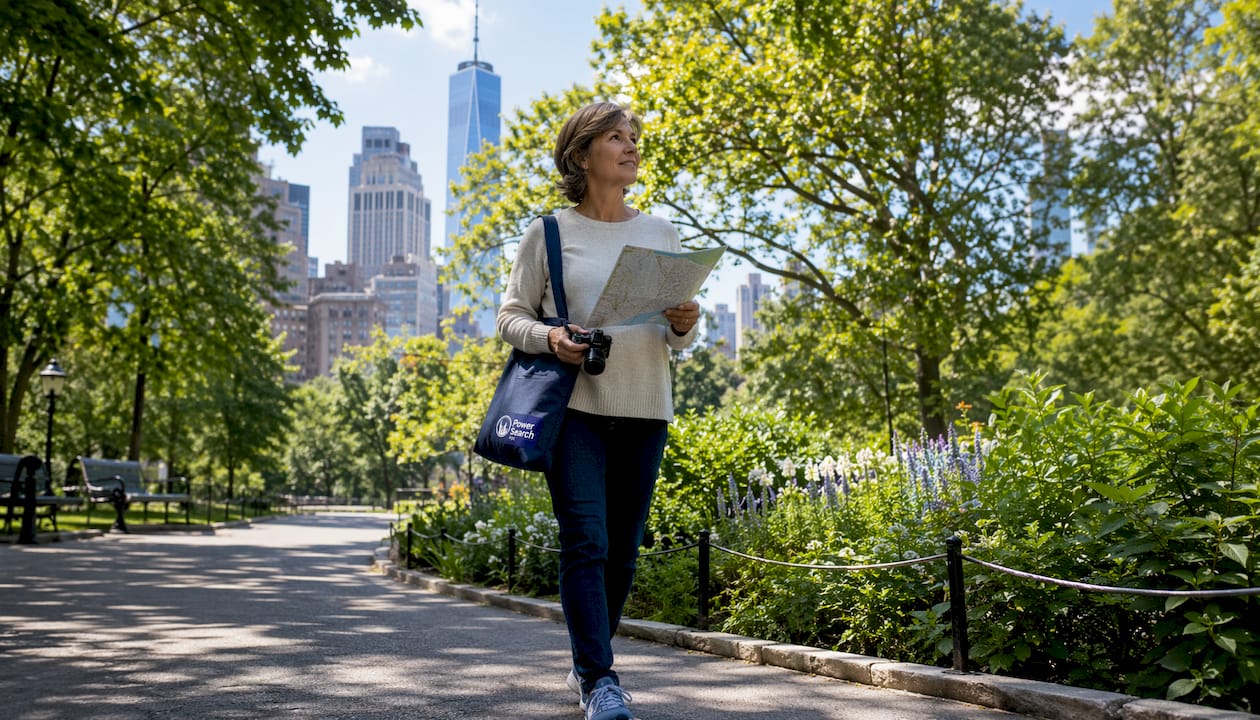
A short walk north brings you to Wall Street, Bowling Green, and the Charging Bull. Federal Hall, where George Washington took the presidential oath of office in 1789, sits directly across from the New York Stock Exchange. Trinity Church, founded in 1697, holds Alexander Hamilton’s grave in its churchyard. St. Paul’s Chapel, the oldest surviving church building in Manhattan, served as a refuge for first responders after September 11, 2001.
The 9/11 Memorial and Museum is one of the most emotionally powerful sites in the city. The two reflecting pools sit in the footprints of the Twin Towers, and the outdoor plaza is free to visit. One World Trade Center, now the tallest building in the Western Hemisphere, towers above the site as a reminder of the city’s resilience.
Key facts for Lower Manhattan visits:
- Ferry to Statue of Liberty departs from Battery Park; book tickets in advance
- 9/11 Memorial plaza is free; museum entry requires a ticket
- Federal Hall is operated by the National Park Service and typically offers free entry
- Brooklyn Bridge pedestrian walkway is free and open daily
Pro Tip: Arrive at the Financial District before 10 AM. The Charging Bull and Federal Hall get crowded fast, and early morning light makes for far better photos.
For dining after your walk, the South Street Seaport area has waterfront restaurants with East River views, and Stone Street, one of the oldest cobblestone lanes in the city, is lined with taverns and casual spots perfect for a midday break.
Midtown Manhattan: skyscrapers, culture, and controlled chaos
Midtown is Manhattan’s commercial and cultural core, running roughly from 14th Street to 59th Street. Times Square draws 45 million visitors annually, making it the most visited place in the United States. Day or night, the lights and energy are genuinely hard to describe until you’re standing in the middle of it.
The Empire State Building stands 1,454 feet tall, and the Chrysler Building reaches 1,046 feet. Both are art deco icons visible from almost anywhere in the borough. For skyline views, though, locals tend to prefer Top of the Rock at Rockefeller Center. The 70th floor offers unobstructed 360-degree views, and crucially, the Empire State Building appears on the skyline from there, which it obviously can’t from its own deck.
Grand Central Terminal is worth a visit even if you’re not catching a train. The main concourse, with its famous celestial ceiling mural, has appeared in countless films. The New York Public Library’s Rose Main Reading Room, just a few blocks west on Fifth Avenue, is another interior worth stepping into: Beaux-Arts details, painted murals, and a surprisingly calm atmosphere for a building this central.
St. Patrick’s Cathedral, the largest Roman Catholic cathedral in the United States, sits right next to Rockefeller Center. Entry is free, and the Gothic spires and stained glass windows offer a real contrast to the skyscrapers surrounding it.
Key facts for Midtown visits:
- Empire State Building observation deck is on the 86th floor
- Top of the Rock is included with the New York CityPASS
- Grand Central Terminal is free to explore
- The Theater District has 41 Broadway theaters; same-day TKTS discounts are available at the Times Square booth
- International Center of Photography and La MaMa Experimental Theatre add creative depth beyond the headline landmarks
Pro Tip: If you can’t decide between a daytime and nighttime view from the Empire State Building, a CityPASS includes two visits on the same day.
Fifth Avenue runs the length of Manhattan from Greenwich Village to Harlem and connects many of Midtown’s biggest draws, from the flagship stores near 57th Street to Museum Mile further uptown. It’s the main artery, and walking even a stretch of it gives you a feel for how the city is laid out.
Upper Manhattan and Central Park: culture, green space, and Museum Mile
Central Park covers 843 acres and sits at the heart of Upper Manhattan, flanked on both sides by some of the city’s best cultural institutions. You can spend a full morning just in the park, wandering past Bow Bridge, Belvedere Castle, and the Reservoir, before heading to a museum in the afternoon.
Museum Mile runs along Fifth Avenue on the park’s eastern edge and includes the Metropolitan Museum of Art, the Guggenheim Museum, and several other institutions within easy walking distance. The Met is particularly well known for its Egyptian and Roman collections, and its rooftop garden offers one of the better views of the park and the Midtown skyline. The American Museum of Natural History sits on the park’s western edge and is a full day on its own, especially for families.
Staying near Central Park puts you within walking distance of all of this. Powersearch has a detailed guide on why staying near Central Park makes logistical sense for visitors who want to cover Upper Manhattan without relying on the subway for every move.
Key facts for Upper Manhattan visits:
- Central Park is free and open daily
- The Met suggests a donation for entry; the Guggenheim charges admission
- American Museum of Natural History is on the Upper West Side, directly accessible from the 81st Street subway stop
- Museum Mile runs along Fifth Avenue from roughly 82nd to 105th Street
How to group your sightseeing days for maximum efficiency
Grouping Manhattan landmarks by district is the single most effective way to reduce transit fatigue and see more in less time. The subway is fast, but switching between Lower Manhattan and the Upper West Side mid-day eats up time you could spend actually seeing things.
A practical three-day framework
Day 1: Lower Manhattan
Start at Battery Park before 9 AM if you’re taking the ferry to the Statue of Liberty. After returning, walk north through the Financial District: Charging Bull, Federal Hall, Trinity Church, and St. Paul’s Chapel. Spend the afternoon at the 9/11 Memorial and Museum. End the day with a walk toward the Brooklyn Bridge for skyline views at golden hour.
- Morning: Battery Park and Statue of Liberty ferry
- Late morning: Wall Street, Federal Hall, Trinity Church
- Afternoon: 9/11 Memorial and Museum
- Evening: Brooklyn Bridge walk, South Street Seaport for dinner
Day 2: Midtown
Grand Central Terminal is a good starting point since it’s a transit hub. Walk west to the New York Public Library, then south toward the Empire State Building. After lunch, head to Rockefeller Center and Top of the Rock. Times Square is best experienced in the early evening when the lights are fully on.
- Morning: Grand Central Terminal, New York Public Library
- Midday: Empire State Building
- Afternoon: Rockefeller Center, St. Patrick’s Cathedral
- Evening: Times Square, Broadway show if you have tickets
Day 3: Upper Manhattan and Central Park
Start inside Central Park, ideally entering at the 72nd Street gate. Walk through to the eastern side and spend the morning at the Met. After lunch, head to the Guggenheim or the American Museum of Natural History depending on your interests. The park is also a good place to wind down at the end of the day.
- Morning: Central Park walk, Bow Bridge, Belvedere Castle
- Midday: Metropolitan Museum of Art
- Afternoon: Guggenheim or American Museum of Natural History
- Evening: Stroll back through the park, dinner on the Upper West Side
Pro Tip: Buy a New York CityPASS before your trip. It covers Top of the Rock, the Empire State Building, the American Museum of Natural History, and several other major landmarks, and it saves a meaningful amount compared to buying tickets individually at the door.
For transit between districts, the 4/5/6 subway line runs the length of the East Side and connects Lower Manhattan to Midtown and the Upper East Side efficiently. The A/C/E line covers the West Side. If you’re traveling with kids or heavy bags, the subway is almost always faster than a cab in Midtown traffic. International travelers should look into an eSIM for New York before arriving so they have data for maps and transit apps from the moment they land.
How Powersearch helps you plan around Manhattan’s landmarks
Powersearch is built specifically for travelers trying to make sense of New York City before they arrive. The platform lets you search hotels by neighborhood, filter by price and amenities, and see which landmarks are within walking distance of where you’re considering staying. That last part matters more than most travelers realize until they’re already there.
Powersearch covers everything from budget-friendly options to full suites, with transparent pricing and no hidden fees buried in the booking process. The things to do section pairs hotel searches with attraction listings, so you can plan your accommodation and your itinerary in the same place.
What Powersearch helps you do:
- Filter hotels by Manhattan neighborhood and landmark proximity
- Compare accommodation types (budget, boutique, suite, family-friendly)
- Access curated guides on Manhattan areas for leisure travelers
- Find NYC travel discount cards that cover multiple landmark admissions
Pro Tip: Book your hotel in the district where you plan to spend the most time. If your priority is Midtown landmarks, staying in Midtown means you can drop your bags and walk to the Empire State Building in under ten minutes.

Planning a family trip? Powersearch’s guide to NYC hotel suites for families covers which neighborhoods give you the best access to kid-friendly landmarks like the American Museum of Natural History and Central Park, with room configurations that actually work for groups.
Key Takeaways
Manhattan’s best landmarks fall into three clear district clusters, and planning your days around those clusters is the most practical way to see the city without exhausting yourself.
| Point | Details |
|---|---|
| Lower Manhattan for history | Battery Park, the 9/11 Memorial, Wall Street, and the Statue of Liberty ferry are all walkable from each other. |
| Midtown for skyline and culture | Times Square draws 45 million visitors annually; Top of the Rock gives the best view of the Empire State Building. |
| Upper Manhattan for parks and museums | Central Park covers 843 acres and sits between Museum Mile and the American Museum of Natural History. |
| Plan by district, not by landmark | Grouping sightseeing days by neighborhood cuts transit time and reduces backtracking significantly. |
| Book key sites in advance | Statue of Liberty ferry tickets and 9/11 Museum entry sell out; security screening adds 60–90 minutes to your visit time. |
Recommended
- NYC Landmarks: Complete Guide to New York’s Iconic Sites – Power Search NYC
- NYC Iconic Landmarks: Your Complete Visitor Overview
- NYC Itinerary: Planned vs. Reality in 2026 | A Visitor’s View (Part 2)
- Where Should I Stay in NYC? A No-Nonsense Guide to Picking the Right Neighborhood – Power Search NYC
No Comments